Goldenrod Crab Spider (lat. Misumena vatia)

Goldenrod Crab Spider
Scroll to read on

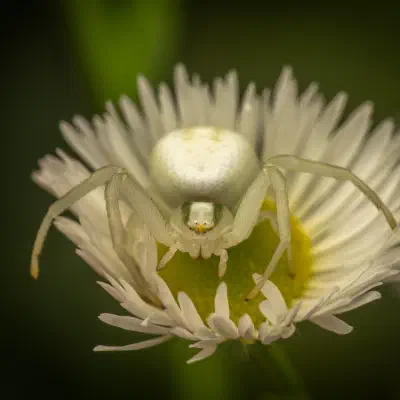
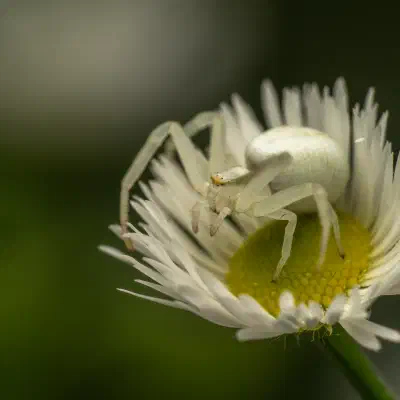
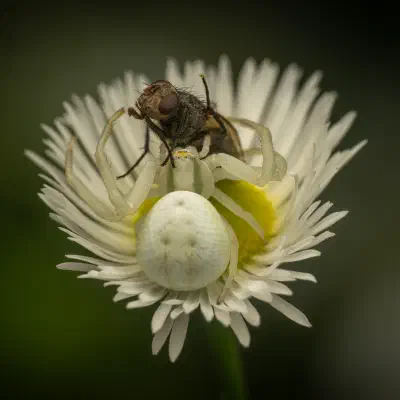
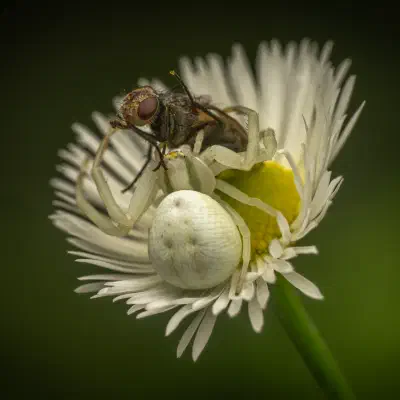
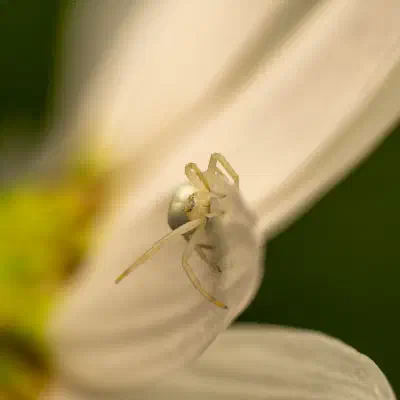
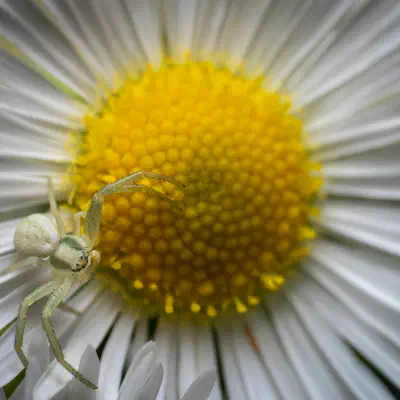
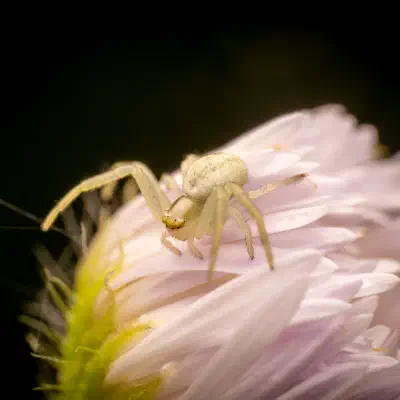
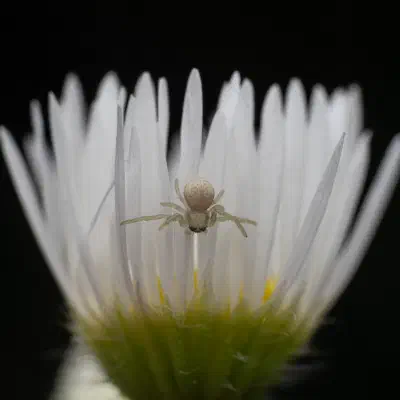
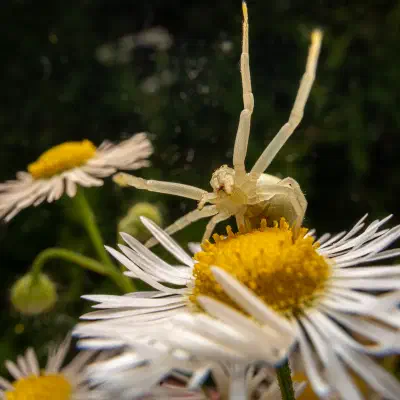
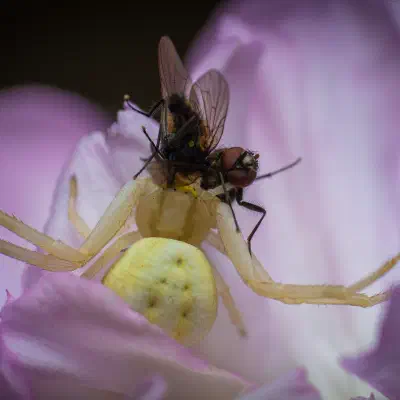
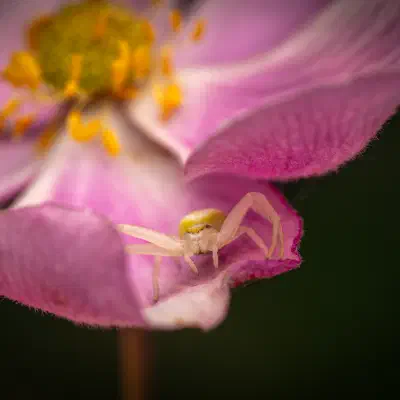
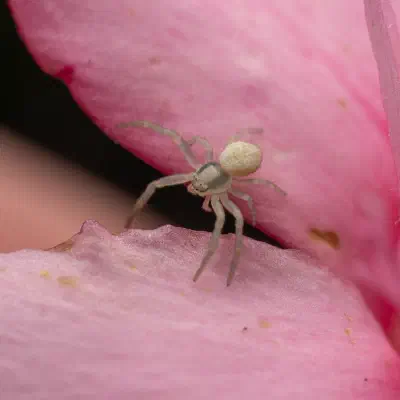
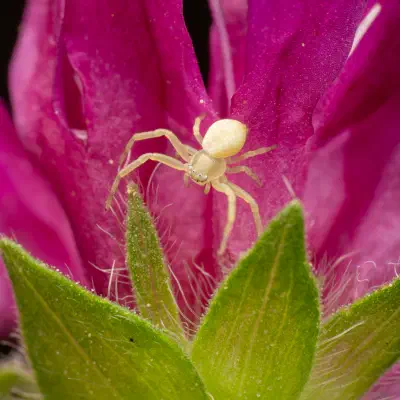
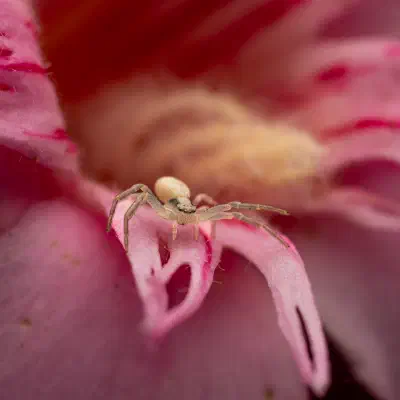
Misumena vatia is a species of crab spider with holarctic distribution. In North America, where it is the largest and best-known flower spider, it is called the goldenrod crab spider or flower (crab) spider, because it is commonly found hunting in goldenrod sprays in the autumn. Young males in the early summer may be quite small and easily overlooked, but females can grow up to 10 mm (excluding legs); males reach 5 mm at most.

Goldenrod Crab Spider – Taxonomy and phylogeny

Taxonomy and phylogeny

The species Misumena vatia was first described by Swedish arachnologist and entomologist Carl Alexander Clerck in his book Aranei Svecici. Misumena vatia belongs to the family Thomisidae, or spiders known as crab spiders. The family includes more than 2,000 species, which are found all over the world. The genus Misumena includes many other species which are found worldwide. Misumena vatia falls into the Thomisus clade. Other clades in the family Thomisidae include the Borboropactus clade, the Epidius clade, and the Stephanopis clade.

Goldenrod Crab Spider – Description

Description

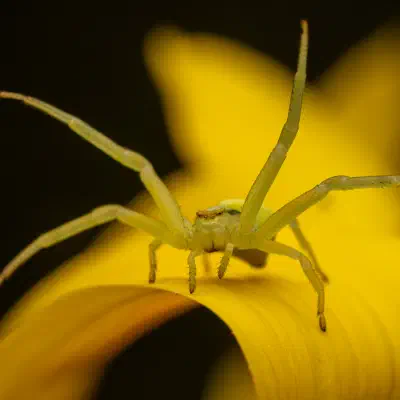
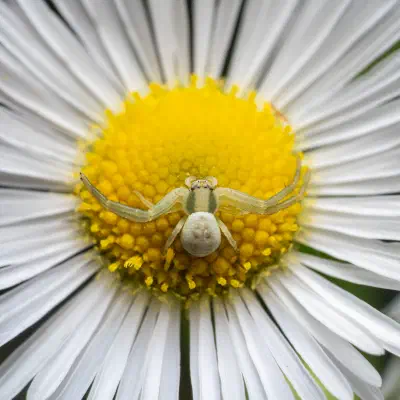
This species has a wide, flat body that is short and crab-like. It can walk sideways in addition to being able to move forward and backward. Of its eight legs, the first two pairs are the longest. These sets of legs are usually held open, as the spider uses them to capture its prey. Misumena vatia is harmless to humans, as its fangs are not powerful enough to penetrate human skin and its venom is too weak to harm larger animals.

Goldenrod Crab Spider – Habitat and distribution

Habitat and distribution

Misumena vatia is found only in North America and Europe. Other species of crab spiders, however, can be found all over the world. The species prefers a temperate climate and generally inhabits forest biomes. Misumena vatia is terrestrial and can be found on several plants and flowers such as milkweed and goldenrod in North America, as well as trillium, white fleabane (Erigeron strigosus), ox-eye daisy (Chrysanthemum leucanthemum), red clover (Trifolium pratense) and buttercups (Ranunculus acris)."

Goldenrod Crab Spider – Reproduction and lifecycle

Reproduction and lifecycle

Sex ratios among Misumena vatia vary from a ratio of 1.5 females per male at hatching to a ratio of 2.5–5.1 females per male by the time they reach adulthood. Since males must spend considerable time searching for females, they face danger from the environment, reducing their numbers. Males cannot mate multiple times in quick succession but require a two-day interval between matings. In nature, Misumena vatia produces a single brood. However, females are capable of producing another brood if artificially induced.

Goldenrod Crab Spider – External links

Media related to Misumena vatia at Wikimedia Commons

Ancestry graph

Arthropods Arachnids Typical Spiders Crab Spiders Common Crab Spider Eurasian Green Crab Spider Goldenrod Crab Spider Xysticus kochi

Copyright and source information

This project wouldn’t exist without Wikipedia and iNaturalist! As citizen scientists, we benefit enormously from the community’s shared knowledge. This article uses material from Wikipedia and iNaturalist. The images on this website are licensed under Attribution-NonCommercial-ShareAlike 4.0 International.

This article uses material from the Wikipedia article Misumena vatia the free encyclopedia Wikipedia which is released under Creative Commons Attribution-ShareAlike 4.0 International License). On Wikipedia a list of authors is available.

This is not intended to be a dry lexicon. Personal stories and sensitive articles form the framework for our pictures: „Konny and the blues — Diary of a 26-legged being“ Konny the woodlouse struggles with the challenges of a 26-legged life and talks to a flying visitor about the dangers of climate change.

Full post

Konny and the blues — Diary of a 26-legged being

Goldenrod Crab Spider – image 1
Goldenrod Crab Spider – image 2
Goldenrod Crab Spider – image 3
Goldenrod Crab Spider – image 4
Goldenrod Crab Spider – image 5
Goldenrod Crab Spider – image 6
Goldenrod Crab Spider – image 7
Goldenrod Crab Spider – image 8
Goldenrod Crab Spider – image 9
Goldenrod Crab Spider – image 10
Goldenrod Crab Spider – image 11
Goldenrod Crab Spider – image 12
Goldenrod Crab Spider – image 13
Goldenrod Crab Spider – image 14
Goldenrod Crab Spider – image 15
Goldenrod Crab Spider – image 16
Goldenrod Crab Spider – image 17
Goldenrod Crab Spider – image 18
Goldenrod Crab Spider – image 19