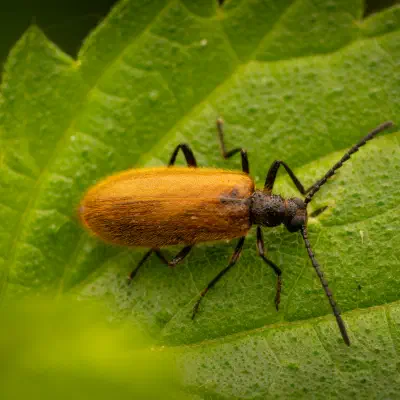
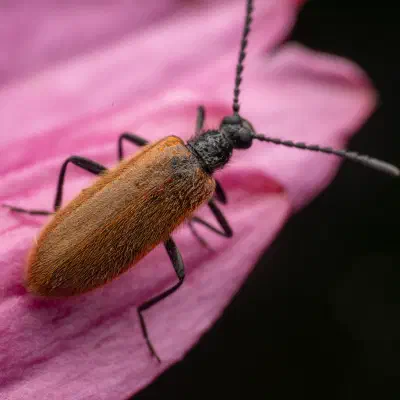
Rough-haired Lagria Beetle (lat. Lagria hirta)
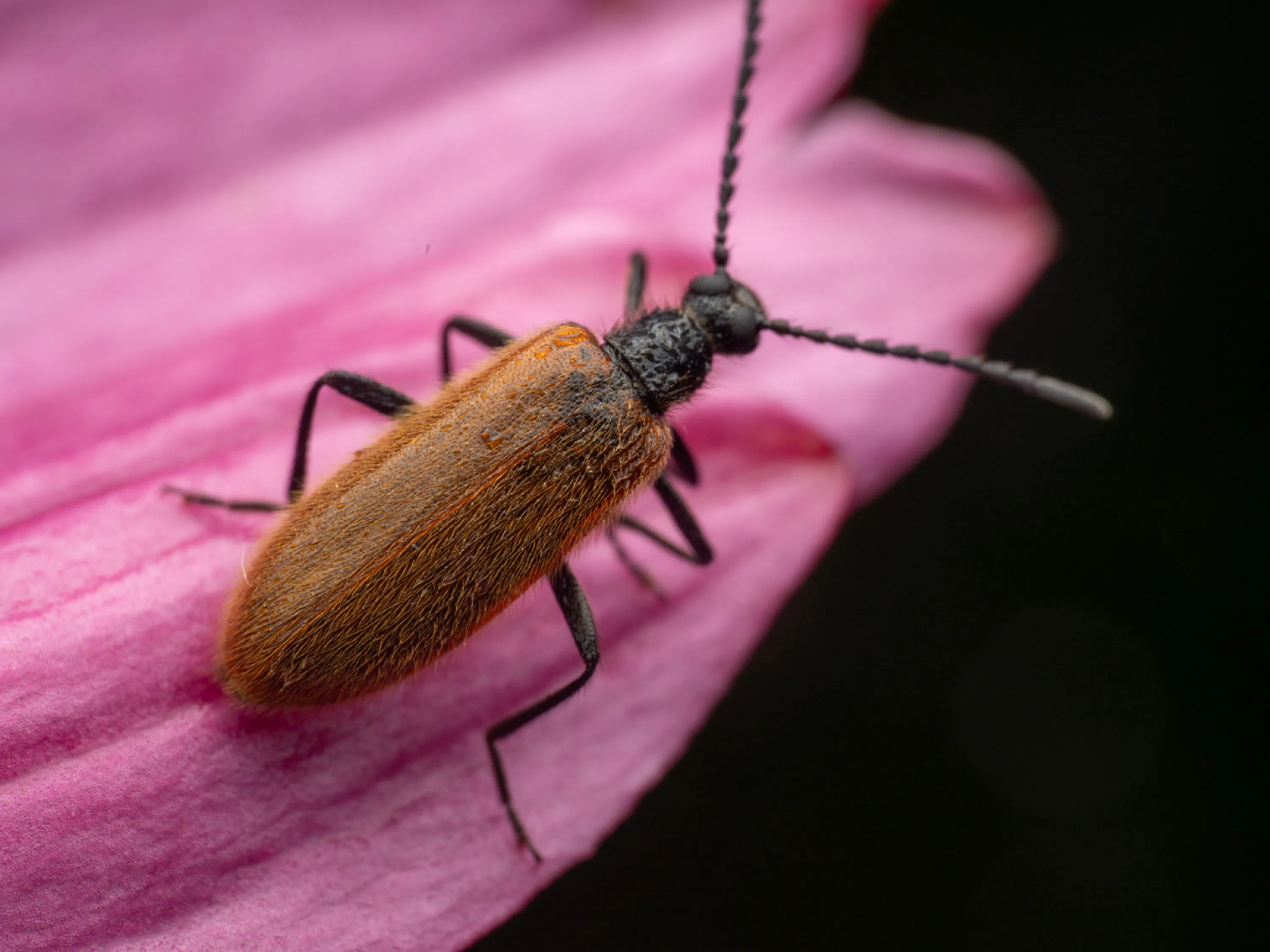
Rough-haired Lagria Beetle

Etymology

The species name hirta comes from the Latin hirtus meaning rough hair or rough wool, referring to the coarse, fuzzy appearance of the beetle.

Copyright and source information
Rough-haired Lagria Beetle

Distribution

This species is present in Europe, in North Africa (Algeria, Morocco), in Russia (Western and Eastern Siberia), in Israel, Turkey, Iran, Iraq, Paraguay, Kazakhstan, Turkmenistan, Uzbekistan and Tajikistan.

Copyright and source information
Rough-haired Lagria Beetle

Habitat

L. hirta prefers areas with sandy soils. It can be found in open woods, deciduous forests, forest clearings, forest edges, grasslands, and wet meadows, but also in dry valleys and wet areas.

Copyright and source information
Rough-haired Lagria Beetle

Description

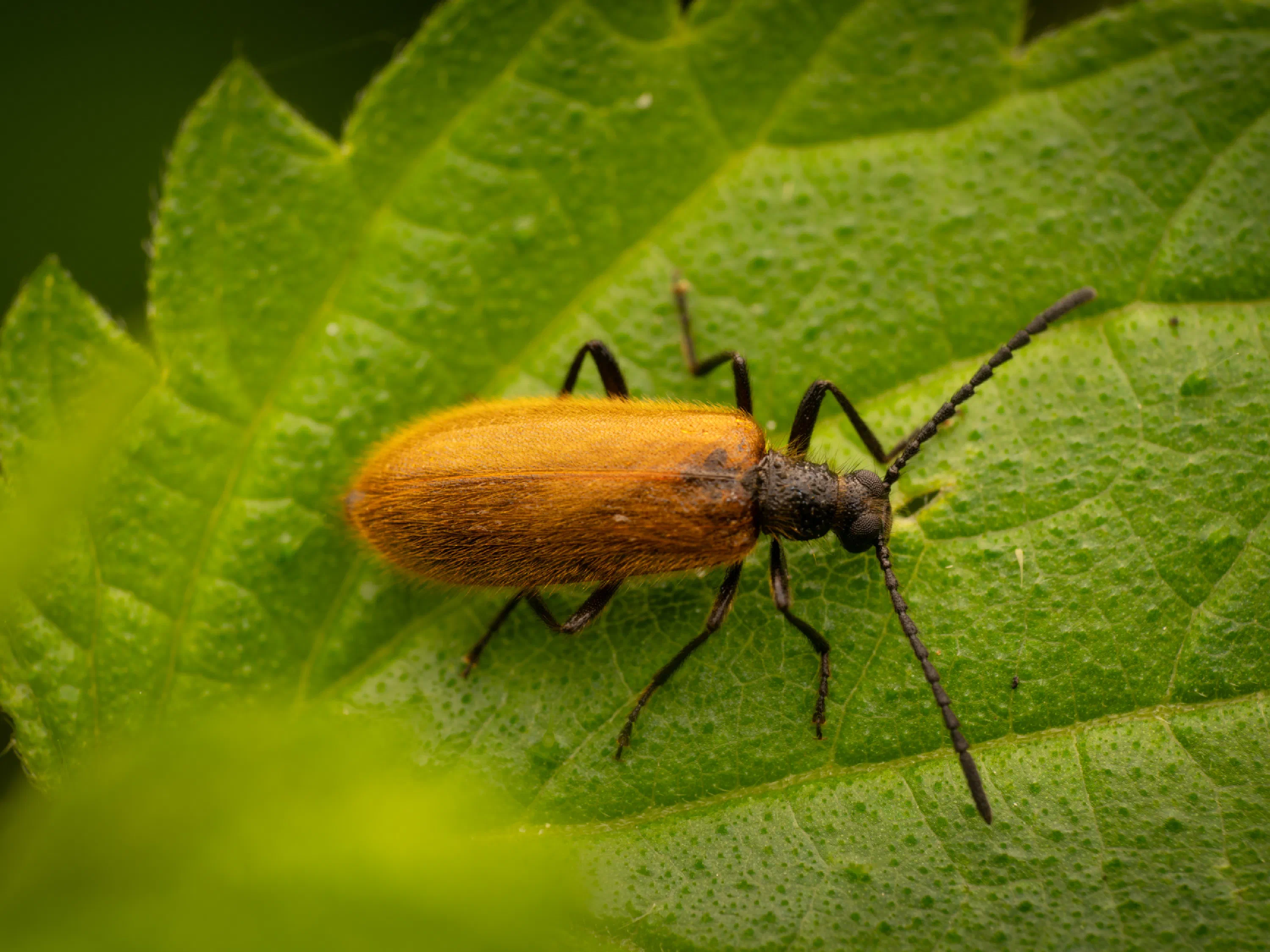
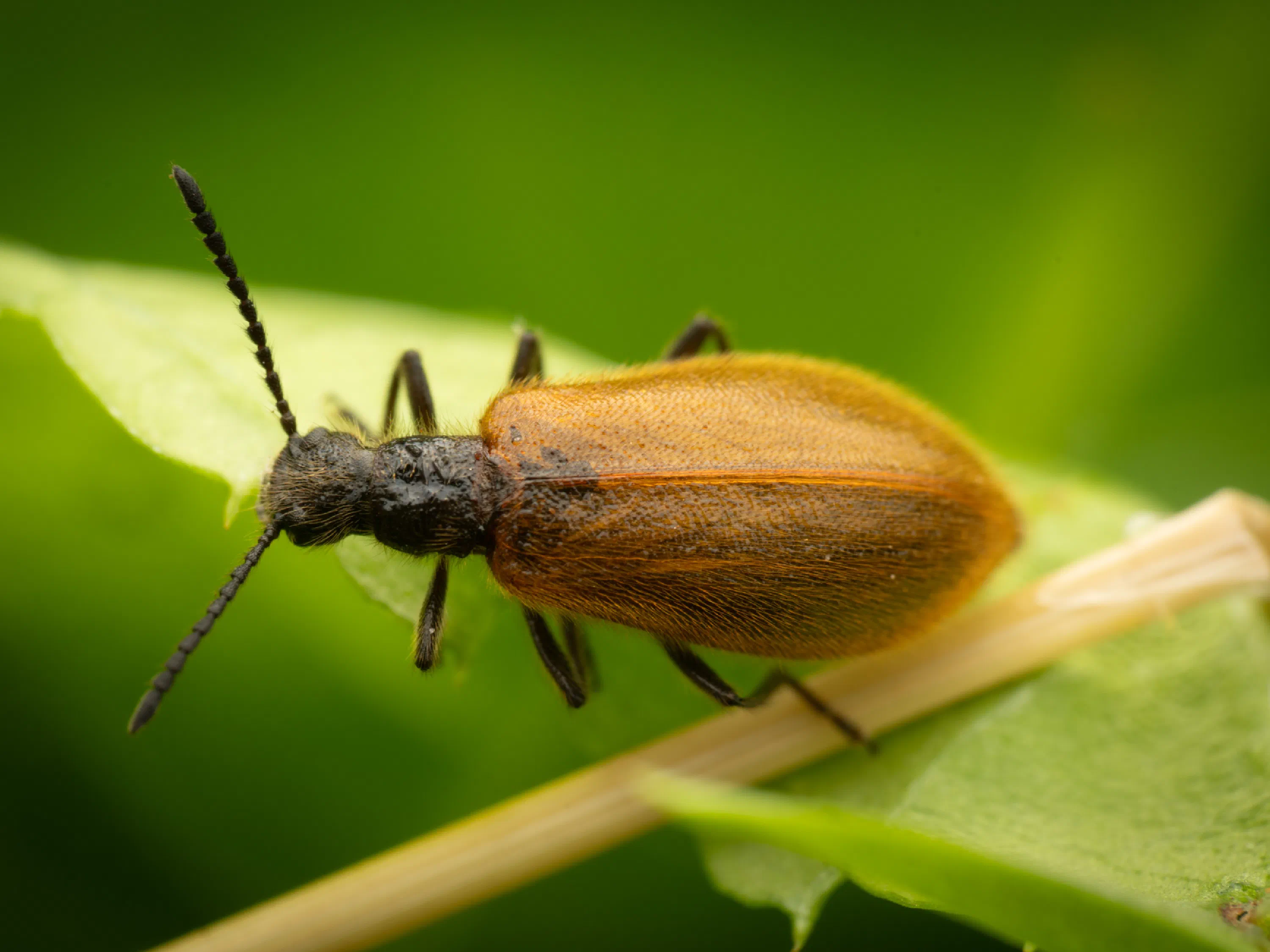
Lagria hirta can reach a length of 7–8 millimetres (0.28–0.31 in). These beetles have a soft and elongated body and a head and thorax brown or shiny black. The relatively elongated elytra are yellowish-brown and covered by dense fine light yellowish-brown hairs. The rest of the body is also hairy, but they are less clearly visible. L. hirta's antennae, underside of body and legs are black. This species has eyes, large and round. Antennae are

composed of eleven segments. The elytra of the females are more extended backward than in the males and the female's abdomen looks from above wider than in the males. The male, in addition to its slimmer body, is distinguished from the females by their larger eyes and by the length of the last segment of the antennae, which is nearly twice the corresponding segment in the female. The hind wings are transparent.

Copyright and source information
Rough-haired Lagria Beetle

Biology

The fully formed beetles can be seen from late May to September. The adult beetles feed on nectar and pollen. Females lay eggs in the soil, where they hatch after about eight days. The larvae live in the humus where they feed on decaying vegetables. After having overwintered, larvae pupate in early summer of the next year and a new generation of beetles will then develop.

Copyright and source information
Rough-haired Lagria Beetle

Bibliography

Michael Chinery, Insectes de France et d'Europe occidentale, Paris, Flammarion, 2012, 320 p. (ISBN 978-2-0812-8823-2), p. 276 Vladimir Novák: Beetles of the family Tenebrionidae of Central Europe. Praga: Academia, 2014, s. 203–235, Zoological Keys

Copyright and source information
Rough-haired Lagria Beetle

External links

L. hirta on Zin.ru Aliquò, M., Rastelli, M., Rastelli, S., Soldati, F. "Coleotteri Tenebrionidi d'Italia - Darkling Beetles of Italy" INPN

Copyright and source information

This is not intended to be a dry lexicon. Personal stories and sensitive articles form the framework for our pictures: „The jumper and the algorithm“ A spider becomes a content star

Full post

The jumper and the algorithm