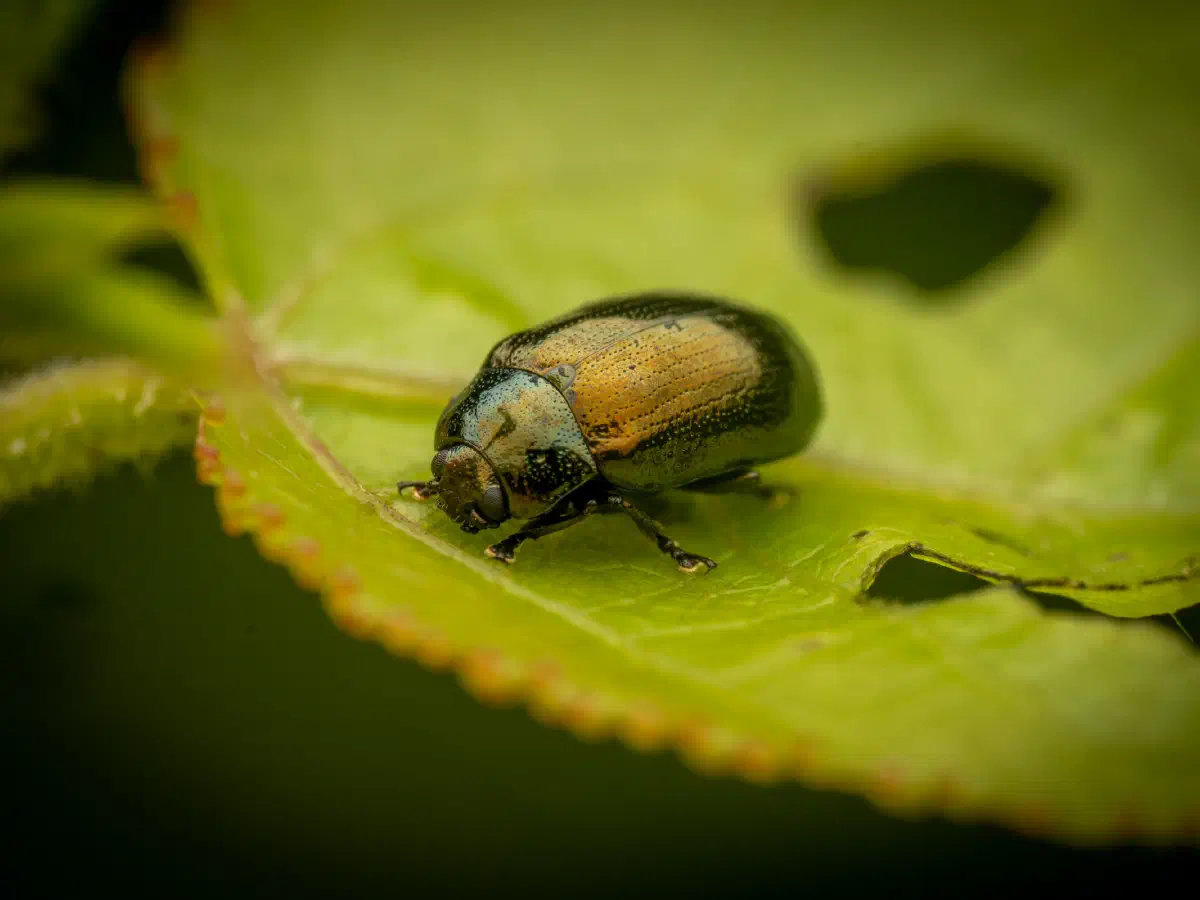
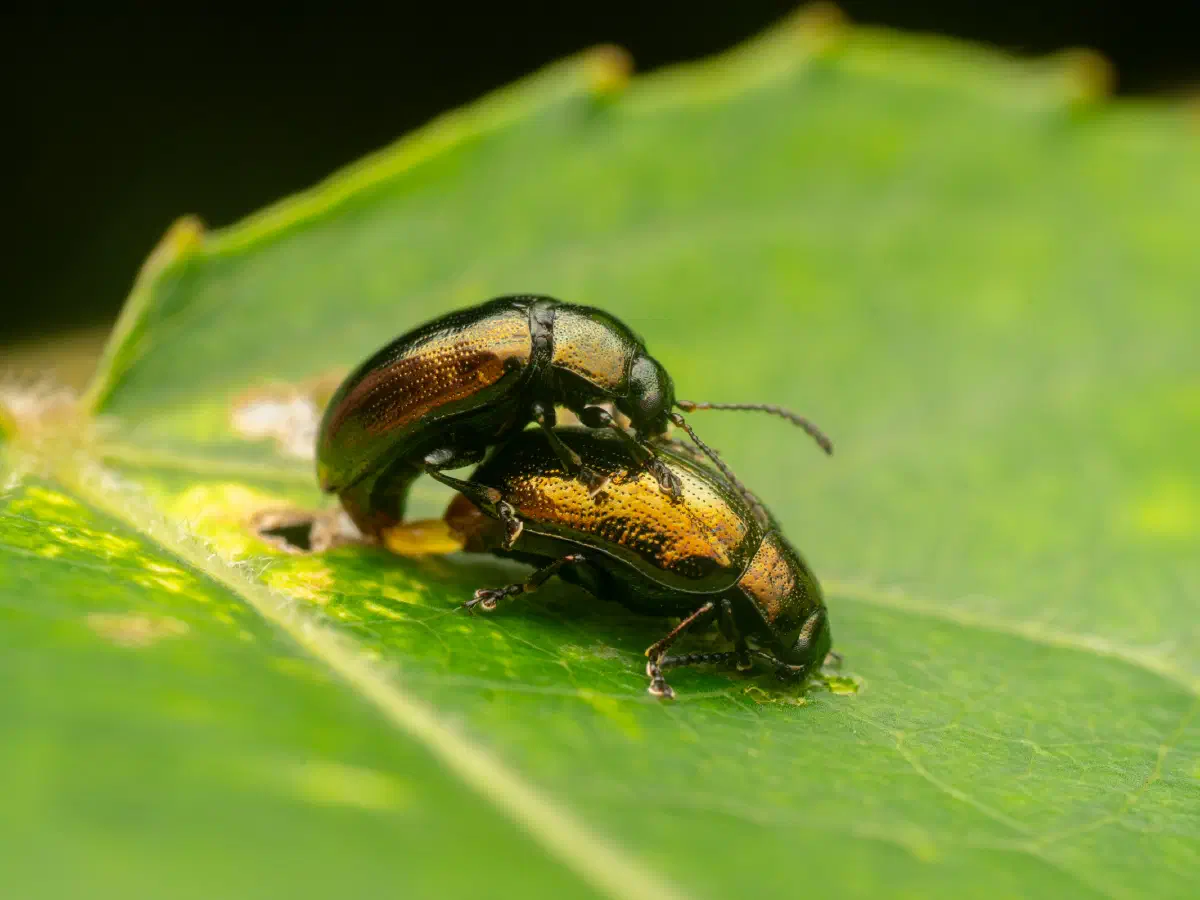
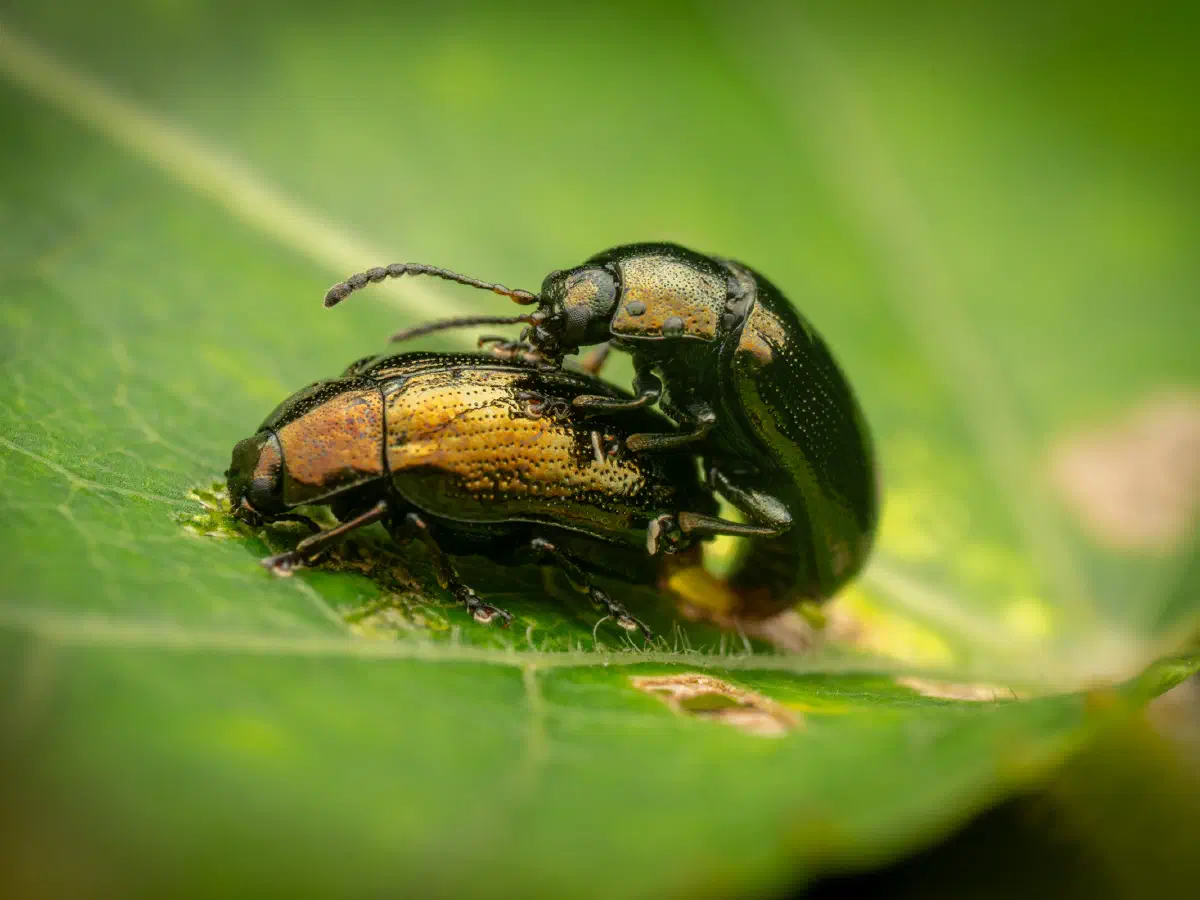
As noted above, P. vitellinae is widespread and common and has an unusual mechanism for metabolizing host plant secondary compounds to make its own defensive secretion. Researchers have been interested in host plant chemistry and how it relates to the suitability of potential hosts for the diet of P. vitellinae for decades. They have also studied the effects of its host-derived defensive secretion on natural enemies, and these studies have often concentrated on generalist predators
that are relatively easy to use in laboratory feeding trials. A summary of representative host plant and laboratory predator studies follows.
Rowell-Rahier (1984) published companion studies of field observations of P. vitellinae on different host plants in eastern France and laboratory tests of P. vitellinae feeding preferences. She found that salicylate-rich willows and poplars were favored over the salicylate-poor willows Salix caprea and Salix cinerea. Both of the salicylate poor species have dense hairs or trichomes
on the undersides of their leaves, which might repel P. vitellinae. On the other hand, these hosts are favored and frequently used by Phratora vulgatissima, which suggests that the beetles can overcome the potential physical defense of leaf trichomes.
Tahvanainen et al. (1985) published a study of host plant preferences among native and introduced Finnish willows that varied in phenolglycoside chemistry for four species of leaf beetles occurring in Finland, including P. vitellinae. The native species
included the salicylate-rich Salix myrsinifolia and Salix pentandra and the salicylate-poor Salix phylicifolia and Salix caprea and the introduced species included Salix cv. aquatica, Salix dasyclados, Salix triandra, and Salix viminalis. Overall, P. vitellinae preferred the willow species rich in salicylates over the other species, while the other leaf beetles tended to favor the salicylate-poor willows. The researchers considered leaf texture to be a less important trait for the beetle than the chemistry of the
host leaves. They also noted that Salix pentandra was relatively unpalatable, possibly because it contained high levels of a phenolglycoside not found in the other willows.
Denno et al. (1990) hypothesized that the host plant use of P. vitellinae would be based on levels of salicylates in the leaves and that higher predation from natural enemies on salicylate-poor plants would generate a selection pressure favoring leaf beetle specialization on willows with higher salicylates. They evaluated preference
and performance among three willows: Salix dasyclados (salicylate-rich, dense trichomes), Salix euxina (syn. S. fragilis), (salicylate-rich, sparse trichomes), and Salix viminalis (salicylate-poor, dense trichomes). They also evaluated the suitability of these host plants to another beetle Galerucella lineola that does not use host plant compounds to produce a larval defensive secretion. Their results showed that P. vitellinae preferred, performed, and survived better on S. euxina over the other two hosts, suggesting that host plant
salicylates play a role in its host preference but also demonstrating that other factors might favor P. vitellinae avoidance of some salicylate-rich plants.
Rank et al. (1998) focused on host preference and performance among three co-occurring Finnish willow species that were among the native willows investigated by Tahvanainen et al. (1985): salicylate-rich Salix myrsinifolia and Salix pentandra and the salicylate-poor Salix phylicifolia, and they measured larval survival on all three host species in the wild
in the presence of natural predators. Their results showed that beetle larvae can develop and survive on all three willows, but adults strongly preferred the salicylate-rich willows over Salix phylicifolia and the larvae developed more rapidly on them. Larvae produced the largest amount of defensive secretion on Salix pentandra, which contains the highest levels of salicylates, but they developed more slowly and survived more poorly on S. pentandra than Salix myrsinifolia. Results supported the findings
of Kohlemainen et al (1995) that revealed that P. vitellinae is stimulated to feed by salicylates and extracts of them, but salicylates found in S. pentandra may be more difficult for the beetles to metabolize.
Taken together, these studies suggest that the host preference of P. vitellinae is based on host plant chemistry and that beetles tend to specialize on plants where they obtain host plant compounds present in their larval defensive secretion. It is also
notable that P. vitellinae grows well on a broader range of hosts than have been observed as host plants in the field and that other factors influence its performance on different host plants.