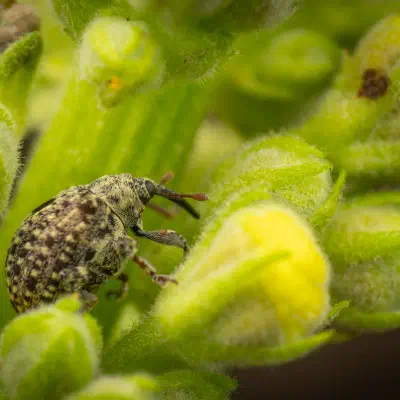
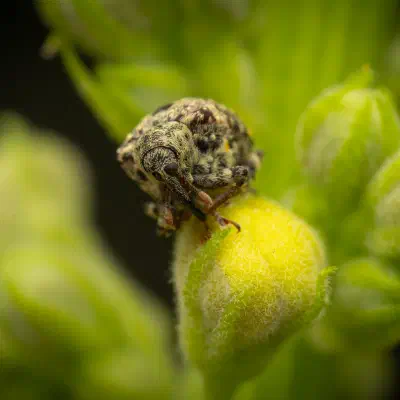
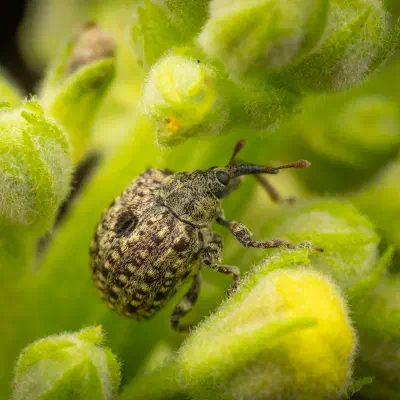
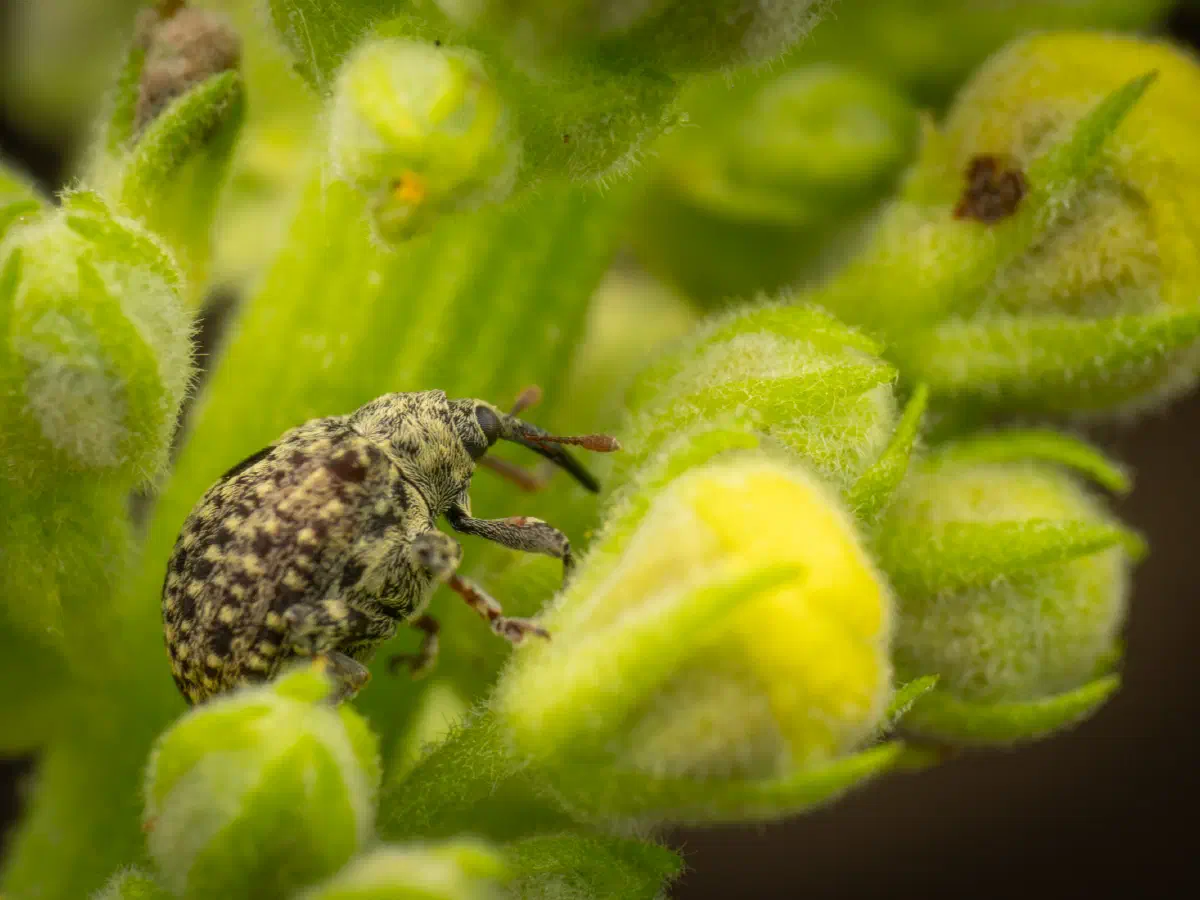
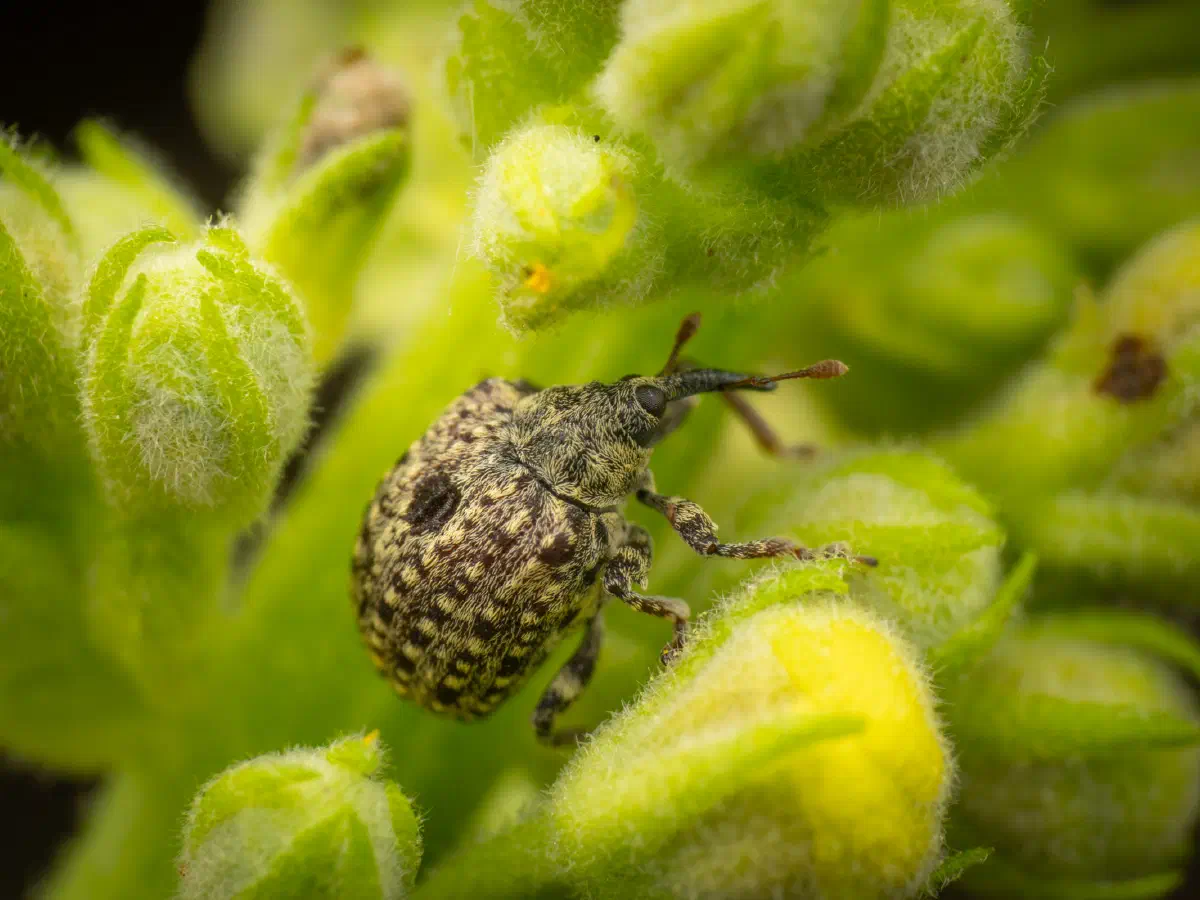
The genus name Cionus derives from the Greek kíonos, meaning column, with reference to the shape of the snout. The Latin species name hortulanus means garden warden.
garden figwort weevil (lat. Cionus hortulanus)
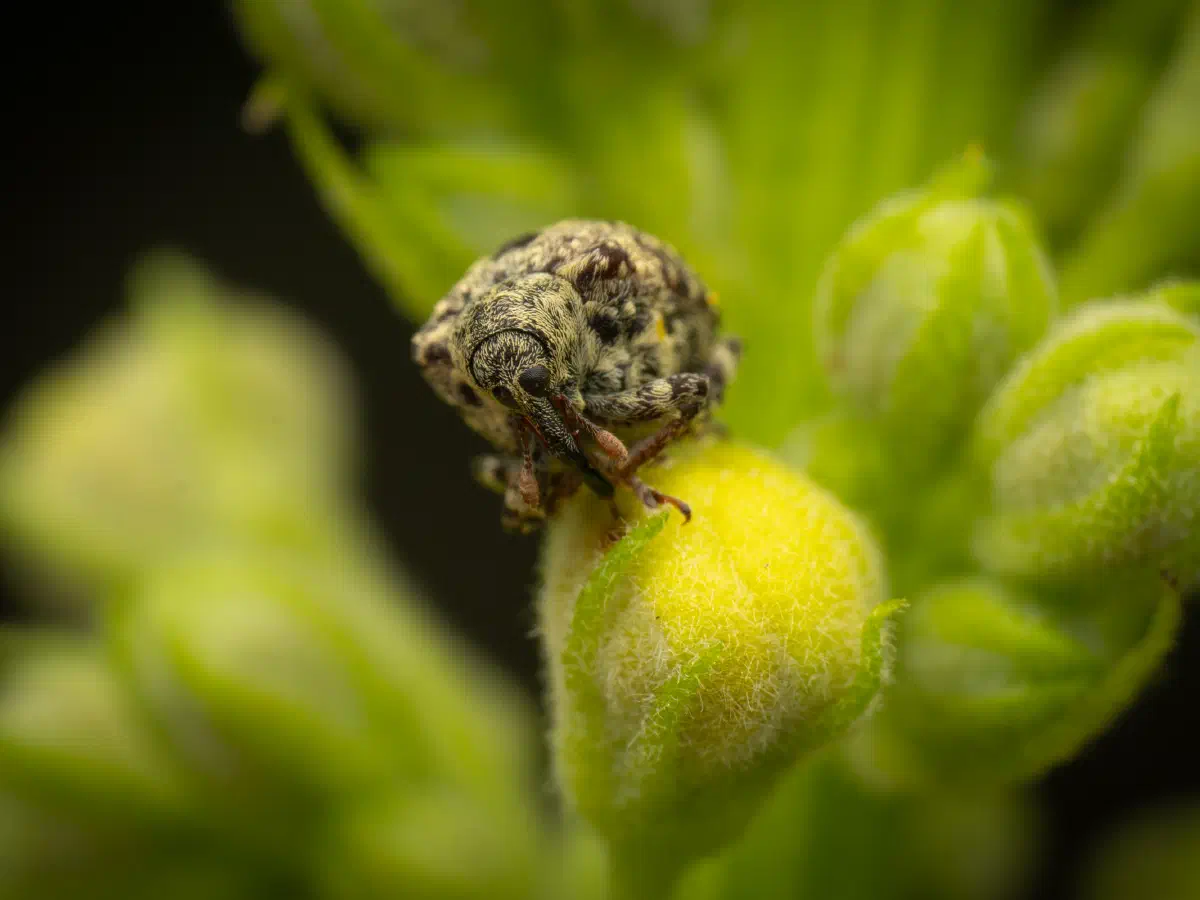
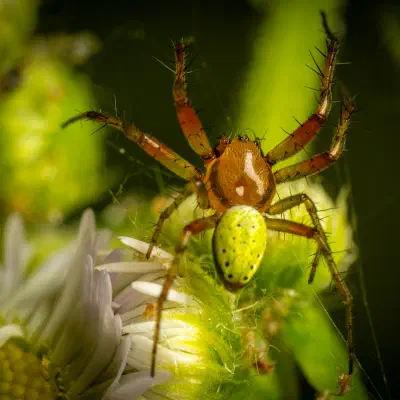
This is not intended to be a dry lexicon. Personal stories and sensitive articles form the framework for our pictures: „The spider’s vacation in an apartment“
Elio was looking for a quiet escape from the wild – but ended up caught in the middle of a whole new adventure.
Copyright
This project wouldn’t exist without Wikipedia and iNaturalist! As citizen scientists, we benefit enormously from the community’s shared knowledge. This article uses material from Wikipedia and iNaturalist. The images on this website are licensed under Attribution-NonCommercial-ShareAlike 4.0 International.

This article uses material from the Wikipedia article Cionus hortulanus the free encyclopedia Wikipedia which is released under Creative Commons Attribution-ShareAlike 4.0 International License). On Wikipedia a list of authors is available.