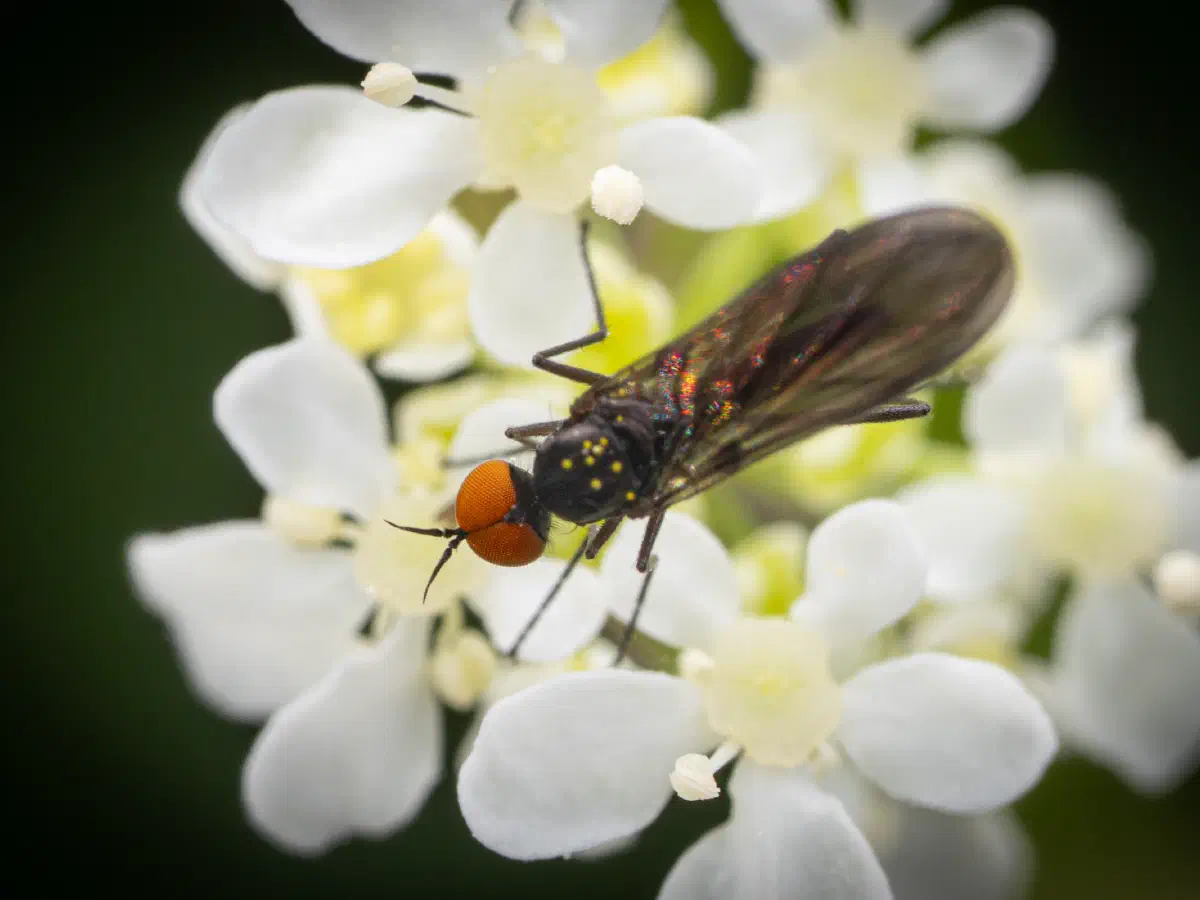
Long-tailed Dance Fly (lat. Rhamphomyia longicauda)

Long-tailed Dance Fly

Territoriality

During the mating season (May–July), females congregate in leks 10 minutes before sunset and remain together for up to 40 minutes just after dawn or before dusk. Females return to the same lek every night, even if already inseminated, unless there is significant inclement weather, like continued rain or winds above 14 km/h. Unique to this species, the lek site is not a grounded surface; they hover above the aggregation site in a horizontal plane

.3 m-.6 m above the ground/vegetation under an opening in an otherwise enclosed canopy.
Copyright and source information
Long-tailed Dance Fly

Food resources

Females cannot hunt for food: they only receive protein from nuptial gifts brought to them by males. Female dependence on males for nutrition is the principal cause for sex role reversal in this species of fly. Males hunt an hour before sunset within a range of 30m from the lek site. They rapidly scour the area in a figure-8 flight pattern looking for food. Males will eat any prey they can find, but they normally capture

swarming insects. More specifically, most tend to prey on flies (Diptera), which make up 70% of their combined prey. They also feed on mayflies (Ephemeroptera) and caddisflies (Trichoptera), and infrequently feed on male ants, moths,[2] and mosquitoes. The size of their captures varies significantly, ranging from 2–4.5mm in one 5-year study.

Copyright and source information
Long-tailed Dance Fly

This is not intended to be a dry lexicon. Personal stories and sensitive articles form the framework for our pictures: „Dance of love — our exclusive interview“ Lisa and Linus, two large dragonflies, share their personal mating experiences, often described as a dance, shedding light on the associated challenges and misunderstandings.

Full post

Dance of love — our exclusive interview