Phaonia pallida (lat. Phaonia pallida)

Phaonia pallida
Phaonia pallida

Distribution and habitat

This species is distributed across parts of the Palearctic – Europe (including Sicily and the Azores), Russia, and Asia (Israel, Turkey, and Iran). These flies mainly inhabit deciduous forests and woodland, especially spruce forest edge.

Copyright and source information
Phaonia pallida

Description

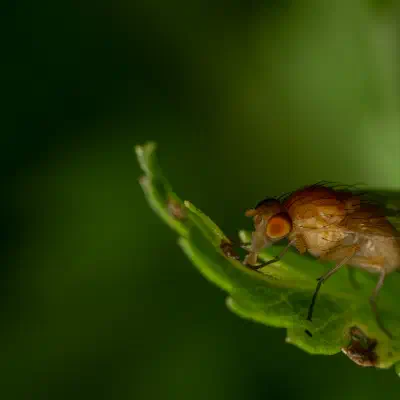
Phaonia pallida can reach a length of about 5.5–7.9 millimetres (0.22–0.31 in). These flies have an orange body with a very hairy thorax. The antennae are composed by three articles and bear a feathery arista. The legs and the balancers are yellow, while the tarsi are black. The eyes are dark red, separated by a yellow marking in the females, while in males they are very close to each other.

Copyright and source information
Phaonia pallida

Biology

Adults fly from May to September, feeding on nectar of flowers (especially of Heracleum sphondylium). Its larvae have been found growing in various fungi (Amanita rubescens, Clitocybe nebularis, Paralepista flaccida, Xerula radicata, Hymenopellis radicata, Amanita muscaria) but also in rotten wood and under tree bark. The last larval instar of Phaonia pallida is carnivorous, feeding on small insects.

Copyright and source information
Phaonia pallida

Bibliography

Chandler, Peter J. (2010). A Dipterist's Handbook (2nd Edition). The Amateur Entomologist. 15. Orpington, Kent, England: Amateur Entomologists' Society. pp. 525pp D'Assis Fonseca, E.C.M (1968). Diptera Cyclorrhapha Calyptrata: Muscidae. Handbooks for the Identification of British Insects. 10. London.: Royal Entomological Society of London. pp. 118pp. Gregor, F.; Rozkosny, R.; Bartak, M.; Vanhara, J. (2002). The Muscidae (Diptera) of Central Europe. Scientiarum Naturalium Universitatis Masarykianae Brunensis. 107. Masaryk.: Masaryk University. pp. 280pp.

Copyright and source information
Phaonia pallida

References

Data related to Phaonia pallida at Wikispecies Media related to Phaonia pallida at Wikimedia Commons

Copyright and source information

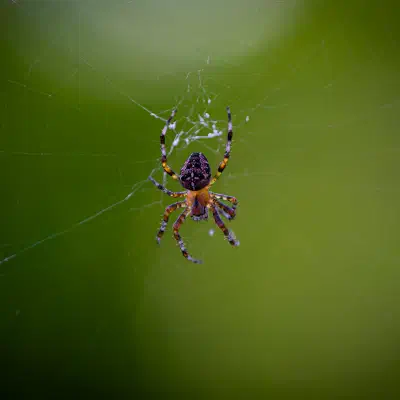
This is not intended to be a dry lexicon. Personal stories and sensitive articles form the framework for our pictures: „In my web“ I am Natalie, the cucumber green spider, and I live hidden in the coniferous forest. I hope that people will recognize the art of my webs and my true beauty.

Full post

In my web