
Description
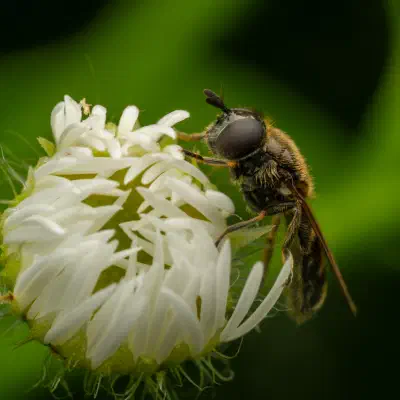
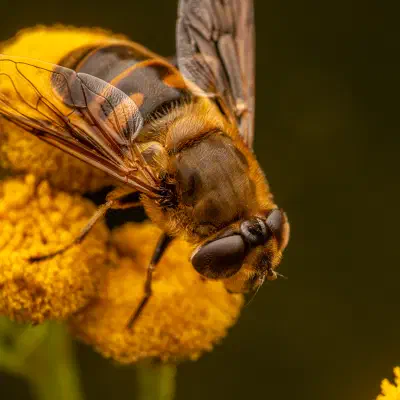
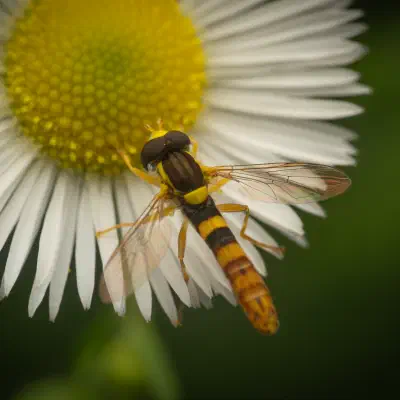
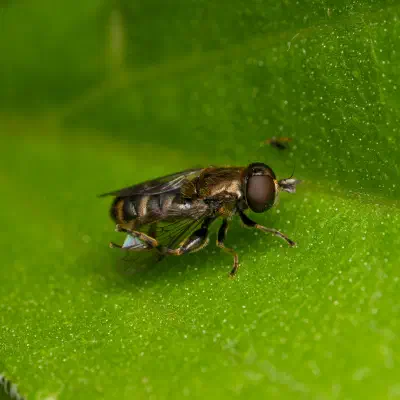
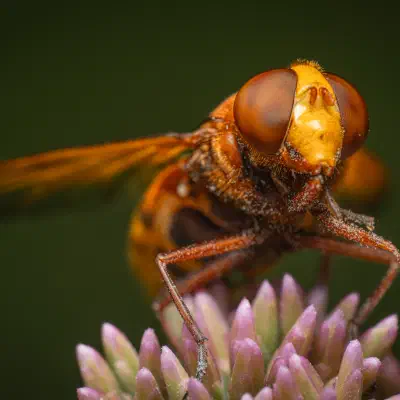
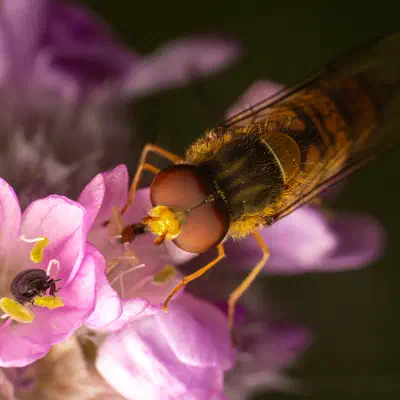
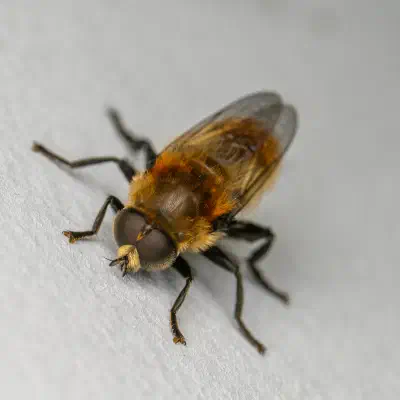
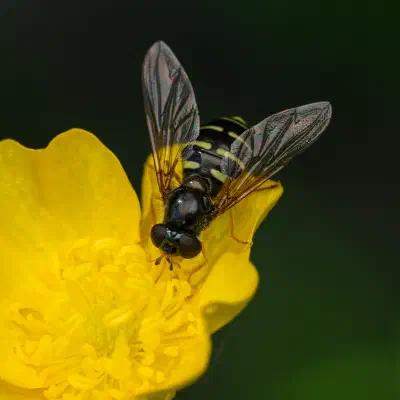
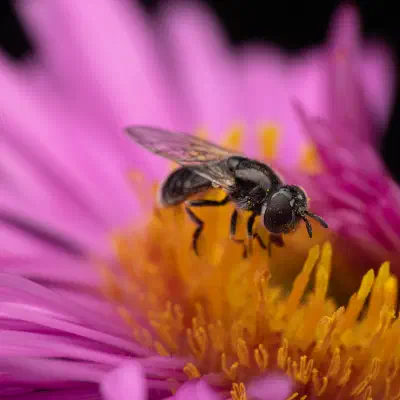
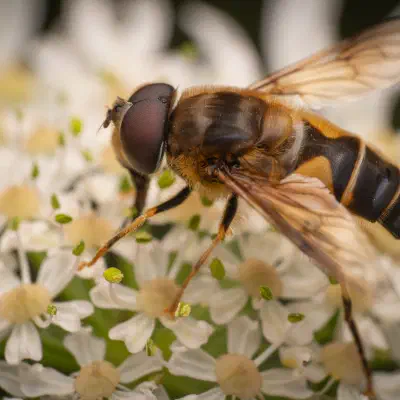
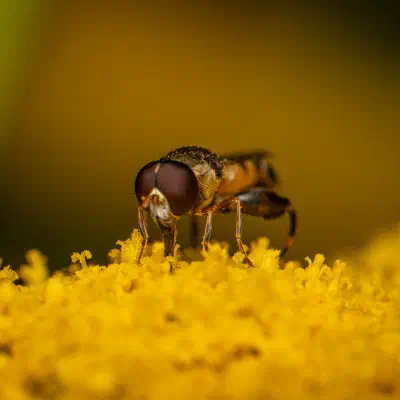
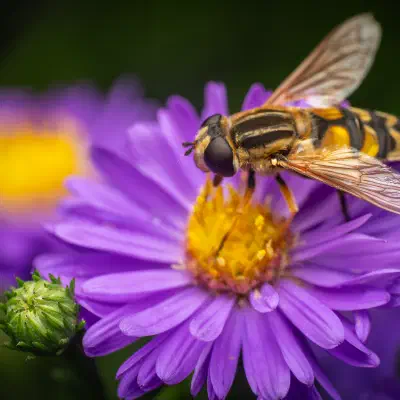
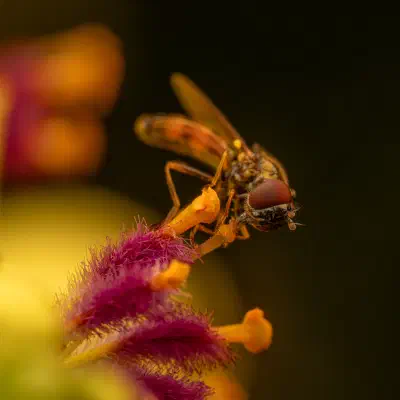
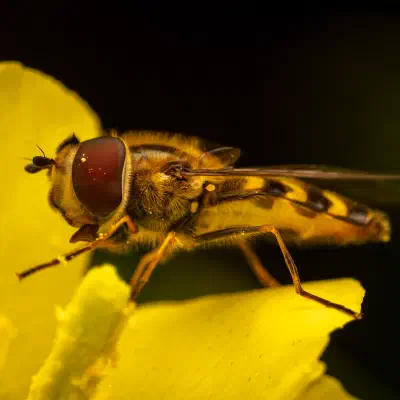
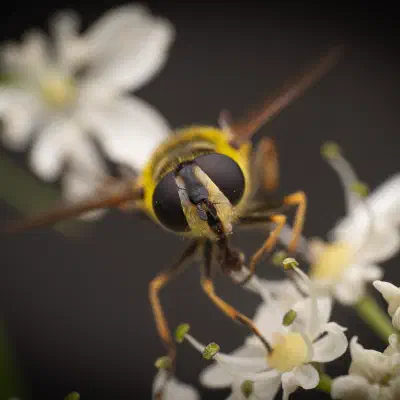
The size of hoverflies varies depending on the species. For example Paragus tibialis is 3–5 mm (1⁄8–13⁄64 in) long, while Criorhina nigriventris is 13.6–20.6 mm (17⁄32–13⁄16 in) long. Some, such as members of the genus Baccha, are small, elongated, and slender, while others, such as members of Criorhina, are large, hairy, and yellow and black. As members of the Diptera, all hoverflies have a single functional pair of wings, with the hind wings reduced to balancing organs. Many species are brightly colored, with spots, stripes, and bands of yellow or brown covering their bodies. Due to this coloration, they are often mistaken both by insect-eating birds and by humans for wasps or bees; they exhibit Batesian mimicry. Despite this, hoverflies are harmless to humans. Drone flies, Eristalis tenax, are an example of a species of hoverfly who exhibit Batesian mimicry. With a few exceptions, Hoverflies are distinguished from other flies by having a spurious vein, located parallel to their fourth longitudinal wing vein. Adults feed mainly on nectar and pollen. Many species also hover around flowers, lending to their common name. Bee flies of the family Bombyliidae often mimic Hymenoptera and hover around flowers, as well, rendering some bombyliid species hard to tell apart from Syrphidae at first glance. Hoverflies can, nevertheless, be distinguished in the field by anatomical features such as:
The legs and mouthparts of hoverflies are usually not particularly long and thin (some bombyliids have a long and needle-like proboscis, many have legs that are noticeably longer and thinner than in similar-sized syrphids) Their facial cuticle often has prominent bulges and/or beak- to knob-like projections (most bee flies have an evenly curved or sloping face). The wings are often clear or have smooth gradients of tinting, and their veins merge posteriorly into a “false edge” that runs parallel to the wing’s true rear edge and extends along half or more of the wing length (bombyliid wings lack a “false rear edge” and often have large dark areas with sharp boundaries, or complex patterns of spots). Their abdomens and thoraces often have glossy cuticular body surfaces, abdominal colors are usually mainly due to cuticular pigments (bee flies are usually very hairy, their abdominal colors are almost always due to pigmentation of hairs and not the underlying cuticle).