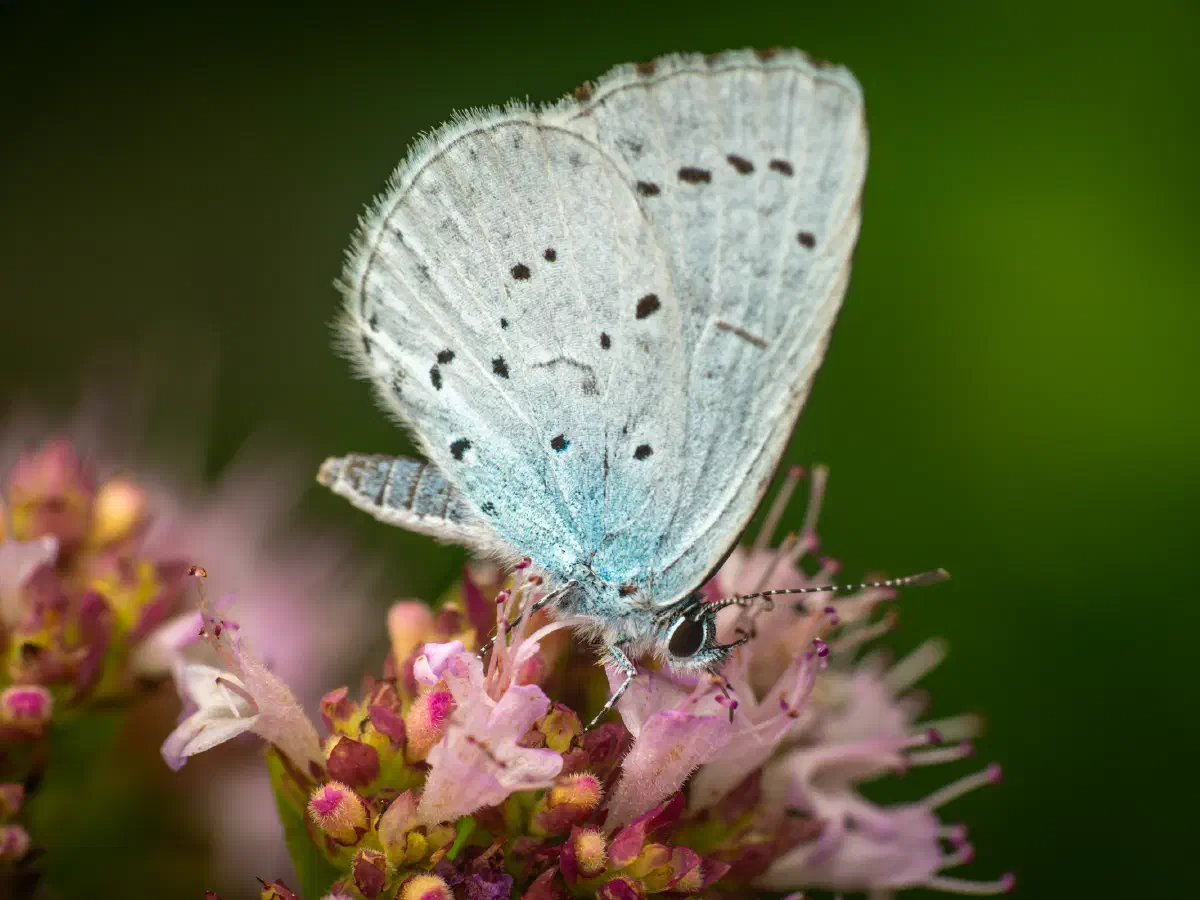
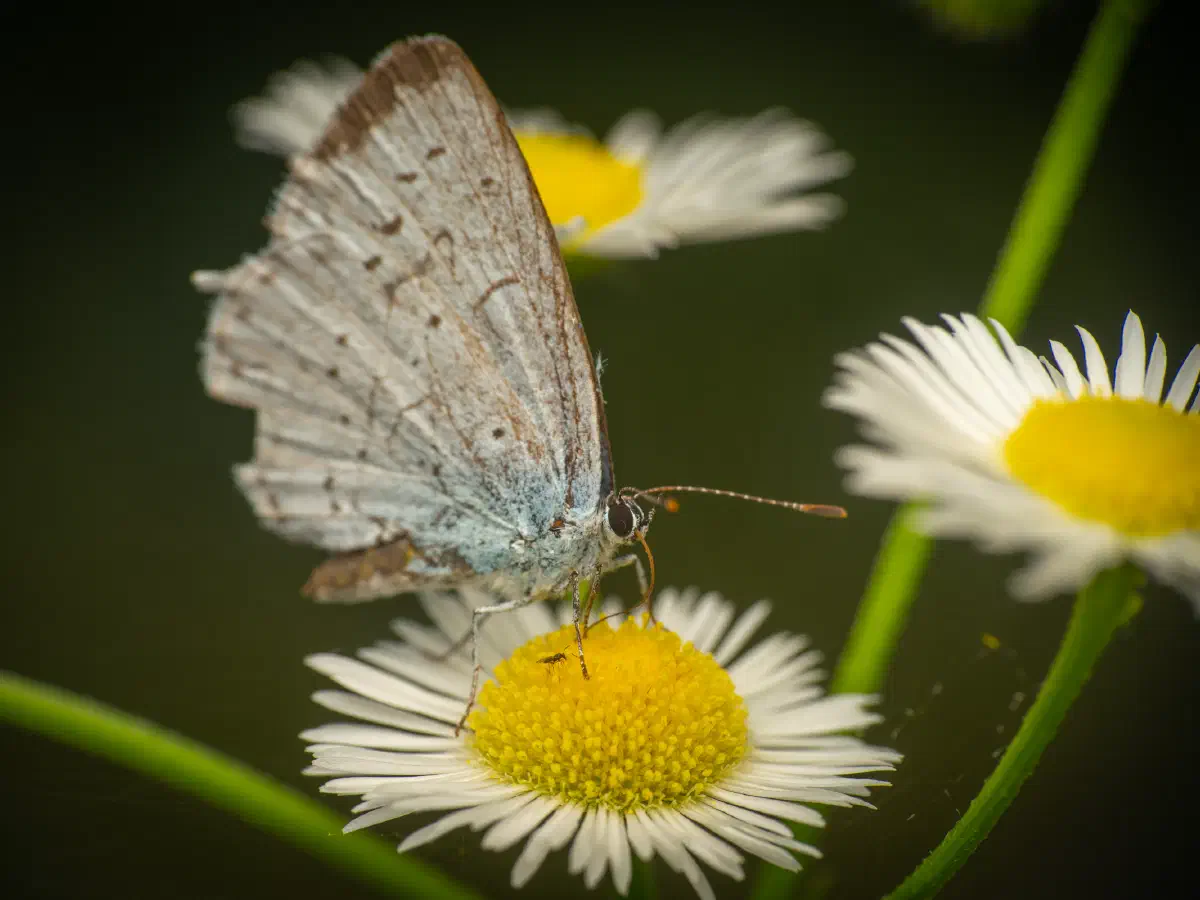
Holly Blue (lat. Celastrina argiolus)

Holly Blue
Holly Blue

Description

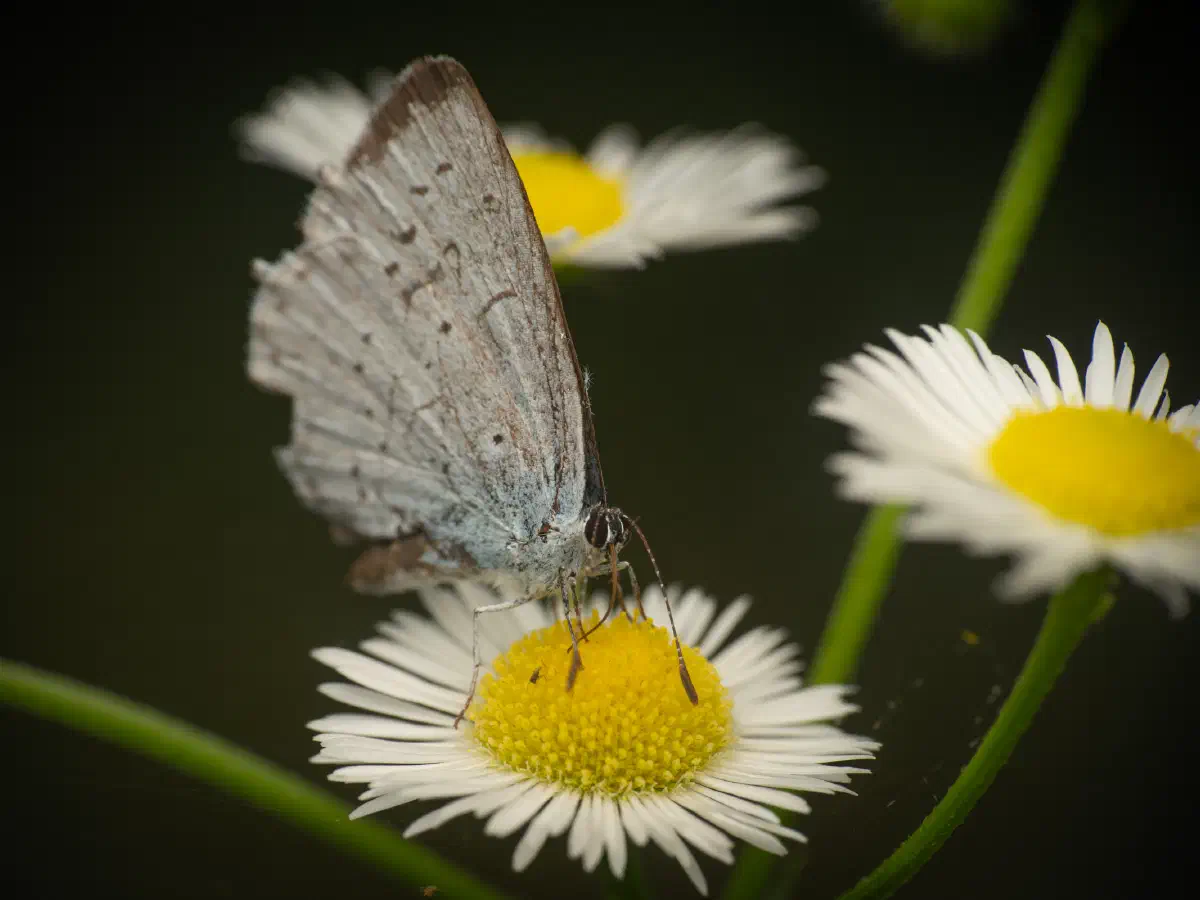
The holly blue has pale silver-blue wings spotted with pale ivory dots. Seitz describes it "Male above shining violet blue, only the apical portion of the costal margin being minutely edged with white. The female has both wings broadly bordered with dark, the margin of the hindwing bearing vestiges of ocelli. Underside silver-white, in the disc a row of black dots, some of which are elongate, and before the margin blackish shadowy dots. Egg very

flat, whitish. Larva green or brown, marked with yellowish white, bearing catenulate (chain-like) stripes on the back, on segment 7 a gland to attract ants; head brown. On Ivy, Ilex, Euonymus, Rhamnus, Robinia, Genista, Spartium, Astragalus, Rubus, Erica, Pyrus and many other plants; in Europe visited usually by ants of the genus Lasius; in June and the autumn. Pupa mostly fastened to the underside of a leaf, ochreous with brown spots and markings. The butterflies

in the spring and again in July, occasionally a third time at the end of August and in September, everywhere common, particularly at the flowers of ivy and brambles." In Europe, the first generation feeds mainly on the holly species Ilex aquifolium but the second generation uses a range of food plants. The holly blue is the national butterfly of Finland.
Copyright and source information
Holly Blue

Taxonomy

This species was originally described as Papilio argiolus by Carl Linnaeus in 1758, and refers to the examples flying in Europe. In their monograph on the Lycaenopsis group of polyommatine genera, Eliot & Kawazoe, 1983, list 14 taxa as valid subspecies names, plus many further synonyms to which they accord lesser status. According to Eliot & Kawazoe, 1983, these 14 subspecies are divided into four groups as follows:

Copyright and source information
Holly Blue

Common names

In India, C. argiolus is known as the hill hedge blue.

Copyright and source information
Holly Blue

Range

Found in Eurasia. In South Asia, it occurs from Chitral in Pakistan to Kumaon in India.

Copyright and source information
Holly Blue

Population cycle

The holly blue is subject to marked population cycles which appear to be caused by interactions with the parasitoid ichneumon wasp Listrodromus nycthemerus. The wasp lays an egg on a holly blue caterpillar, inserting the egg into the caterpillar's body and the adult wasp emerges from the chrysalis, killing the chrysalis before its emergence. The population of the butterfly is tracked by that of the wasp, when butterfly populations are low the wasp population falls

and this allows the butterfly population to increase and the population of L. nycthemerus can increase as there are more hosts available to be parasitised. As more caterpillars are parasitised the butterfly population crashes.

Copyright and source information
Holly Blue

See also

List of butterflies of India List of butterflies of India (Lycaenidae) List of butterflies of Great Britain

Copyright and source information
Holly Blue

References

Beccaloni, George; Scoble, Malcolm; Kitching, Ian; Simonsen, Thomas; Robinson, Gaden; Pitkin, Brian; Hine, Adrian; Lyal, Chris. "The Global Lepidoptera Names Index (LepIndex)". Natural History Museum, London. Retrieved 2016-10-15. Eliot, J. N. and Kawazoe, A., 1983. Blue butterflies of the Lycaenopsis group: 1–309, 6 pls. London. Evans, W.H. (1932). The Identification of Indian Butterflies (2nd ed.). Mumbai, India: Bombay Natural History Society. Willmott, Ken and Freed, Tim (1999). The Holly Blue Butterfly. Butterfly Conservation, Colchester, UK, 20p. ISBN 0-9522602-7-1. "Celastrina

argiolus". Integrated Taxonomic Information System. Retrieved 6 February 2006.

Copyright and source information
Holly Blue

External links

Savela, Markku. "Celastrina argiolus (Linnaeus, 1758)". Lepidoptera and Some Other Life Forms. Archived from the original on April 3, 2018. Retrieved April 3, 2018.

Copyright and source information

This is not intended to be a dry lexicon. Personal stories and sensitive articles form the framework for our pictures: „Konny and the blues — Diary of a 26-legged being“ Konny the woodlouse struggles with the challenges of a 26-legged life and talks to a flying visitor about the dangers of climate change.

Full post

Konny and the blues — Diary of a 26-legged being