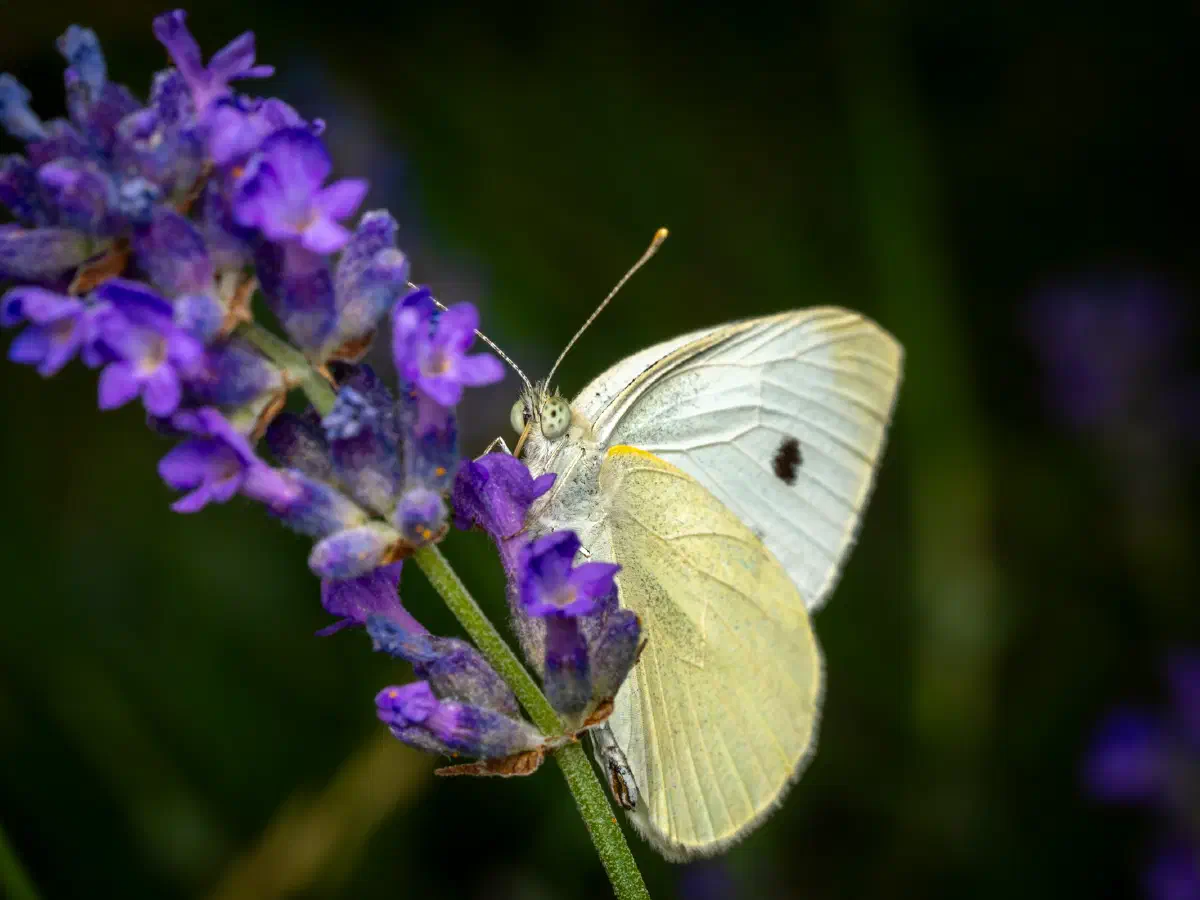
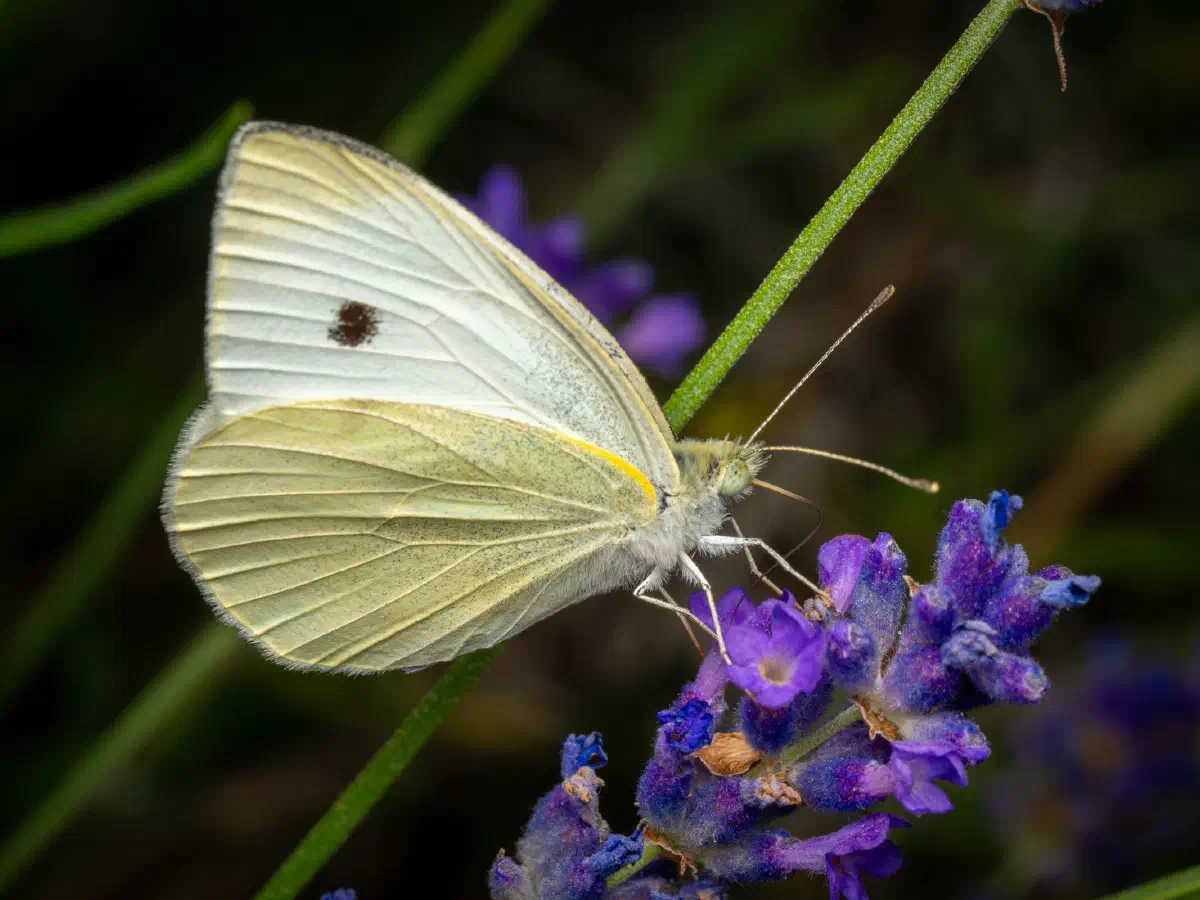
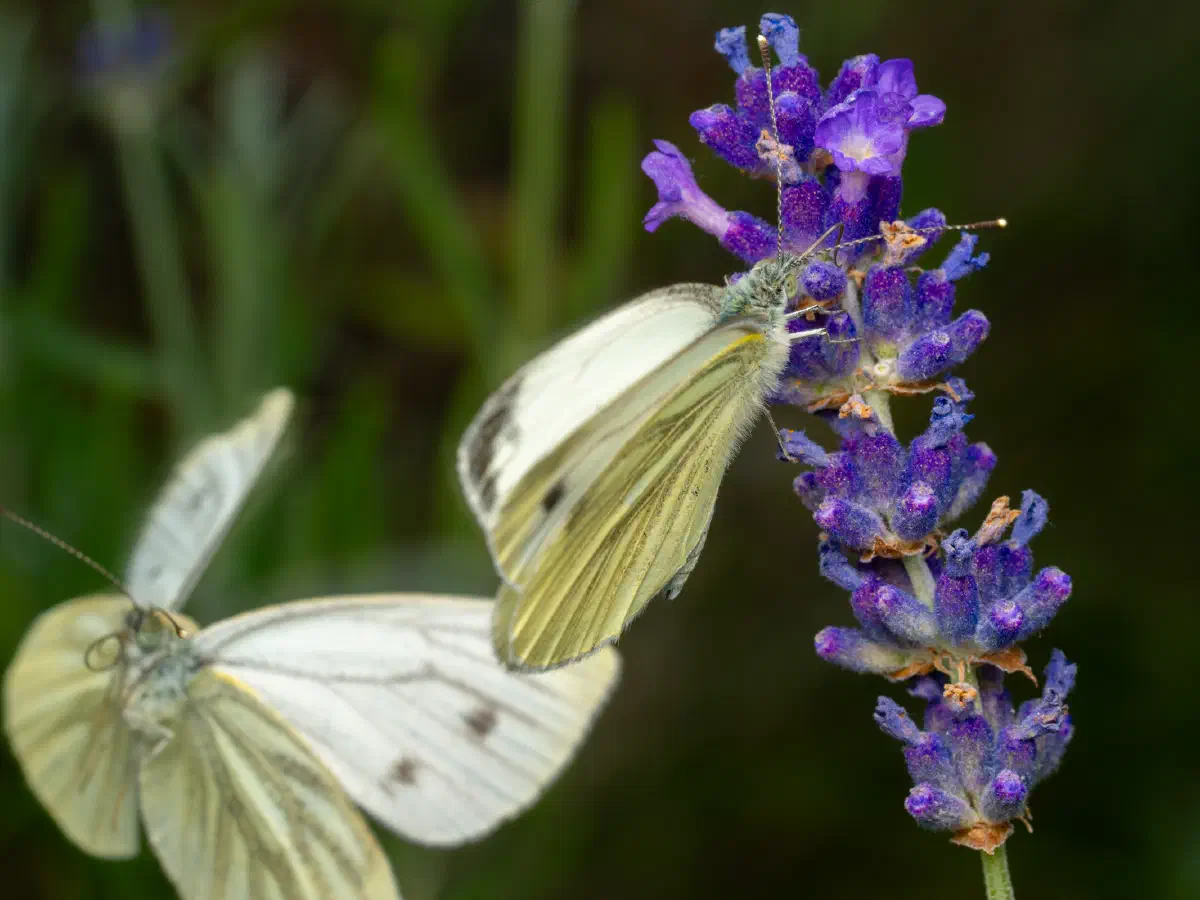
The small white will readily lay eggs on both cultivated and wild members of the cabbage family, such as charlock (Sinapis arvensis) and hedge mustard (Sisymbrium officinale). P. rapae is known to lay eggs singularly on the host plant. The egg is characterized by a yellowish color and 12 longitudinal ridges. The egg production peaks about a week after adulthood in lab and the female can live up to 3 weeks. Females tend to lay
fewer eggs on plants in clumps than on isolated plants. It has been suggested that isothiocyanate compounds in the family Brassicaceae may have been evolved to reduce herbivory by caterpillars of the small white. However, this suggestion is not generally accepted because the small white has later been shown to be immune to the isothiocyanate forming reaction due to a specific biochemical adaptation. In contrast, the small white and relatives seem to have evolved as
a consequence of this biochemical adaptation to the isothiocyanate-forming glucosinolates.
Traditionally known in the United States as the imported cabbage worm, now more commonly the cabbage white, the caterpillars are bluish-green, with tiny black spots, a black ring around the spiracles, and a lateral row of yellow dashes, and a yellow middorsal line. Caterpillars rest on the undersides of the leaves, making them less visible to predators. Although the larval instars have not been fully studied,
different instars are easily differentiated simply by comparing sizes, especially the head alone. During the first and second instar the head is entirely black; third instar has the clypeus yellow but the rest of the head black. In the fourth and fifth instar, there is a dark greenish-yellow dot behind each eye but with rest of the head black. However, the color of the caterpillar head does not necessarily indicate specific instar, as the time
of color change is not fixed. In the larval stage, the small white can be a pest on cultivated cabbages, kale, radish, broccoli, and horseradish. The larva is considered a serious pest for commercial growth of cabbage and other Brassicaceae.
The pupa of P. rapae is very similar to that of P. napi. It is brown to mottled-gray or yellowish, matching the background color. It has a large head cone, with a vertical abdomen and flared
subdorsal ridge. The two (pupa of P. rapae and P. napi) can be easily distinguished by comparing the proboscis sheath. In P. rapae, the proboscis sheath extends far beyond the antennal sheath while in P. napi, only a very short distance.
Like its close relative the large white, the small white is a strong flyer and the British population is increased by continental immigrants in most years. Adults are diurnal and fly throughout the day, except
for early morning and evening. Although there is occasional activity during the later part of the night, it ceases as dawn breaks. Adult P. rapae can move many kilometers in individual flights. Adults have been observed to fly as much as 12 km in one flight. On average, a female flies about 0.7 km per day and moves 0.45 km from where she starts. Males patrol all day around host plants to mate with females.