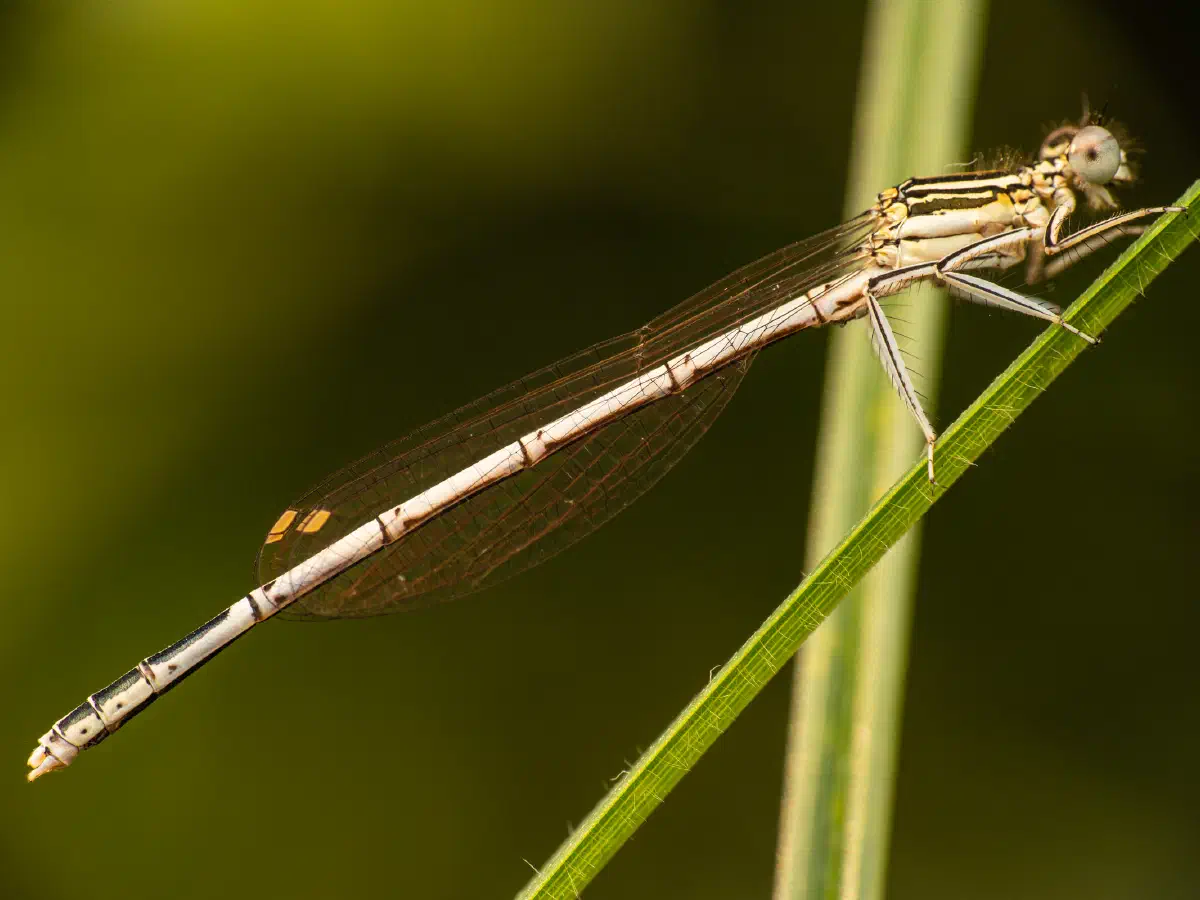
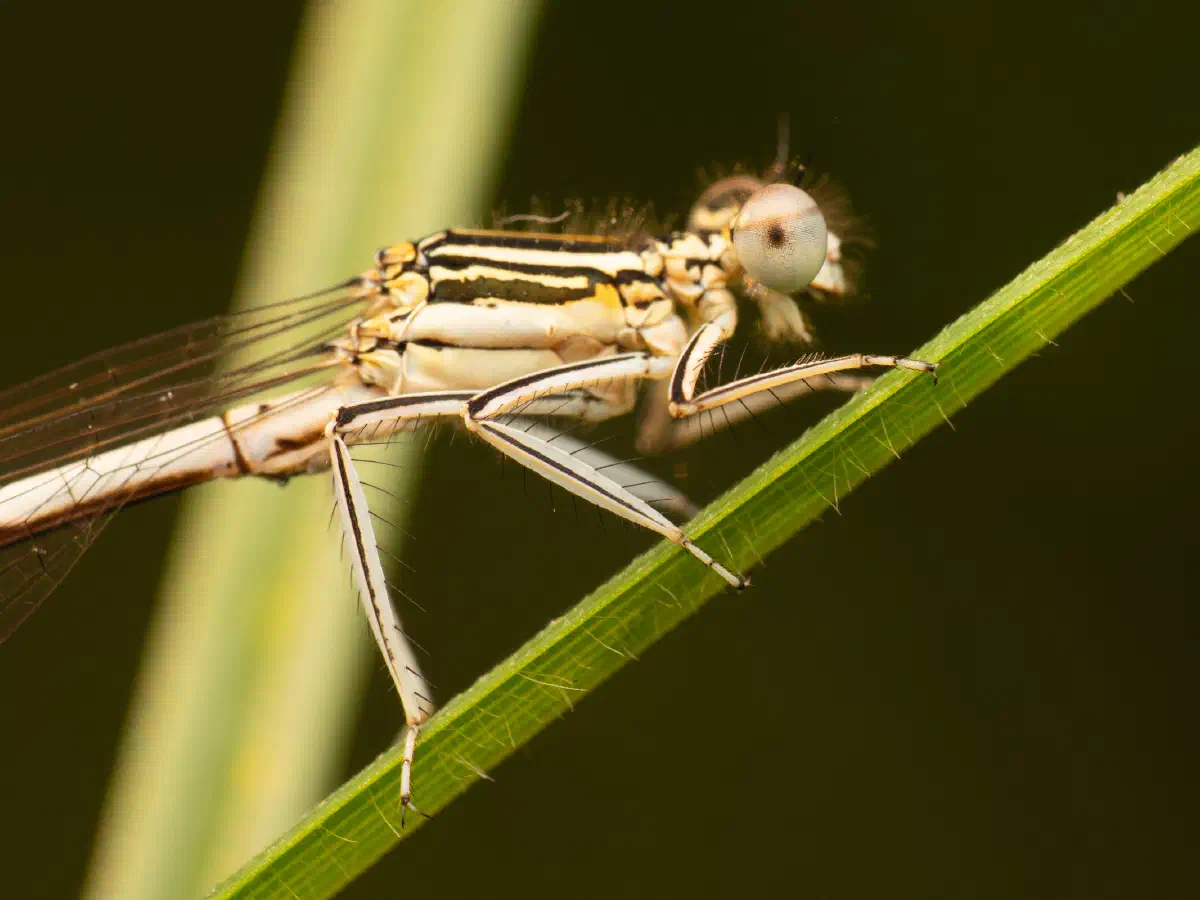
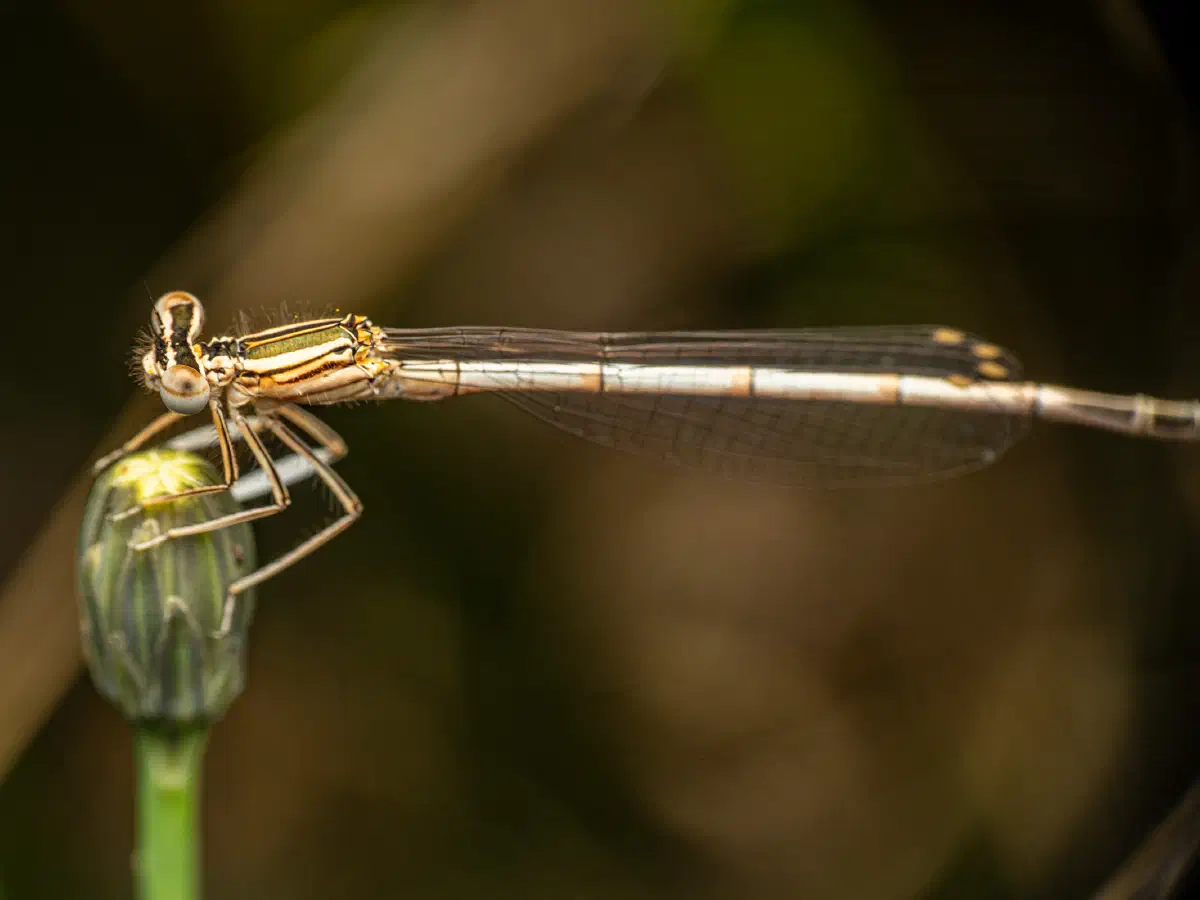
Platycnemis pennipes is about 32 millimetres (1.3 in) long. Mature adults differ from most other blue damselflies in having expanded white edges to the tibiae, paired black markings down most of the abdomen, broad pale brown double antehumeral stripes, wider head and a pale brown pterostigmata. The male has a blue abdomen that is often pale and usually has a greenish thorax. The female is a very pale yellow-green colour with black markings.
White-legged Damselfly (lat. Platycnemis pennipes)
This is not intended to be a dry lexicon. Personal stories and sensitive articles form the framework for our pictures: „The paradox of security“
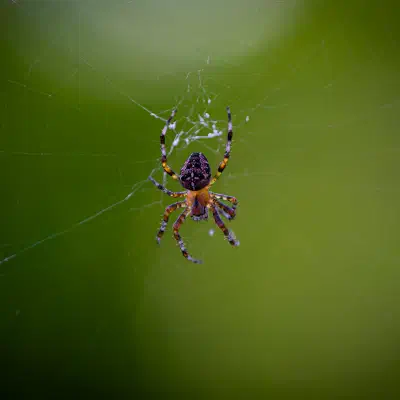
A tomcat and a cat meet. And a spider secretly listens in.
Copyright
This project wouldn’t exist without Wikipedia and iNaturalist! As citizen scientists, we benefit enormously from the community’s shared knowledge. This article uses material from Wikipedia and iNaturalist. The images on this website are licensed under Attribution-NonCommercial-ShareAlike 4.0 International.

This article uses material from the Wikipedia article Platycnemis pennipes the free encyclopedia Wikipedia which is released under Creative Commons Attribution-ShareAlike 4.0 International License). On Wikipedia a list of authors is available.