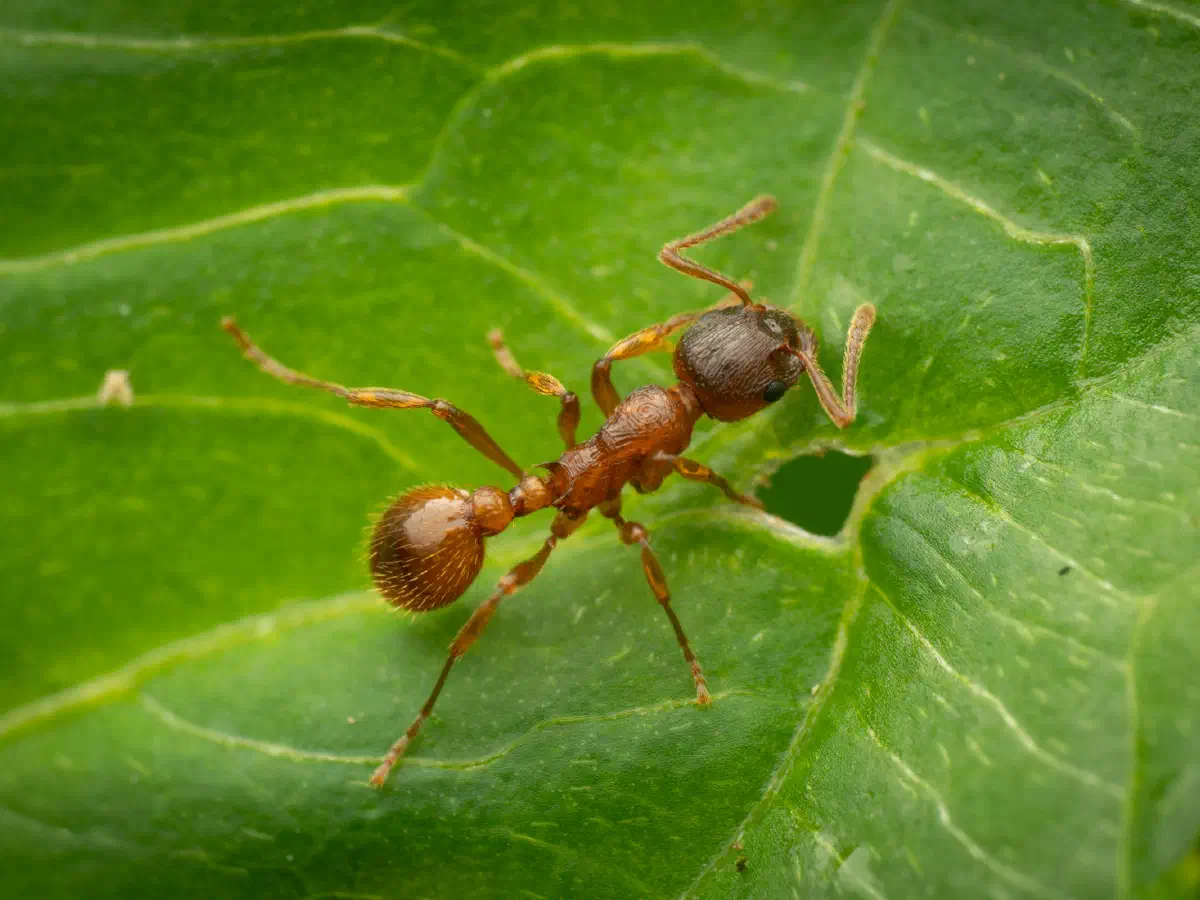
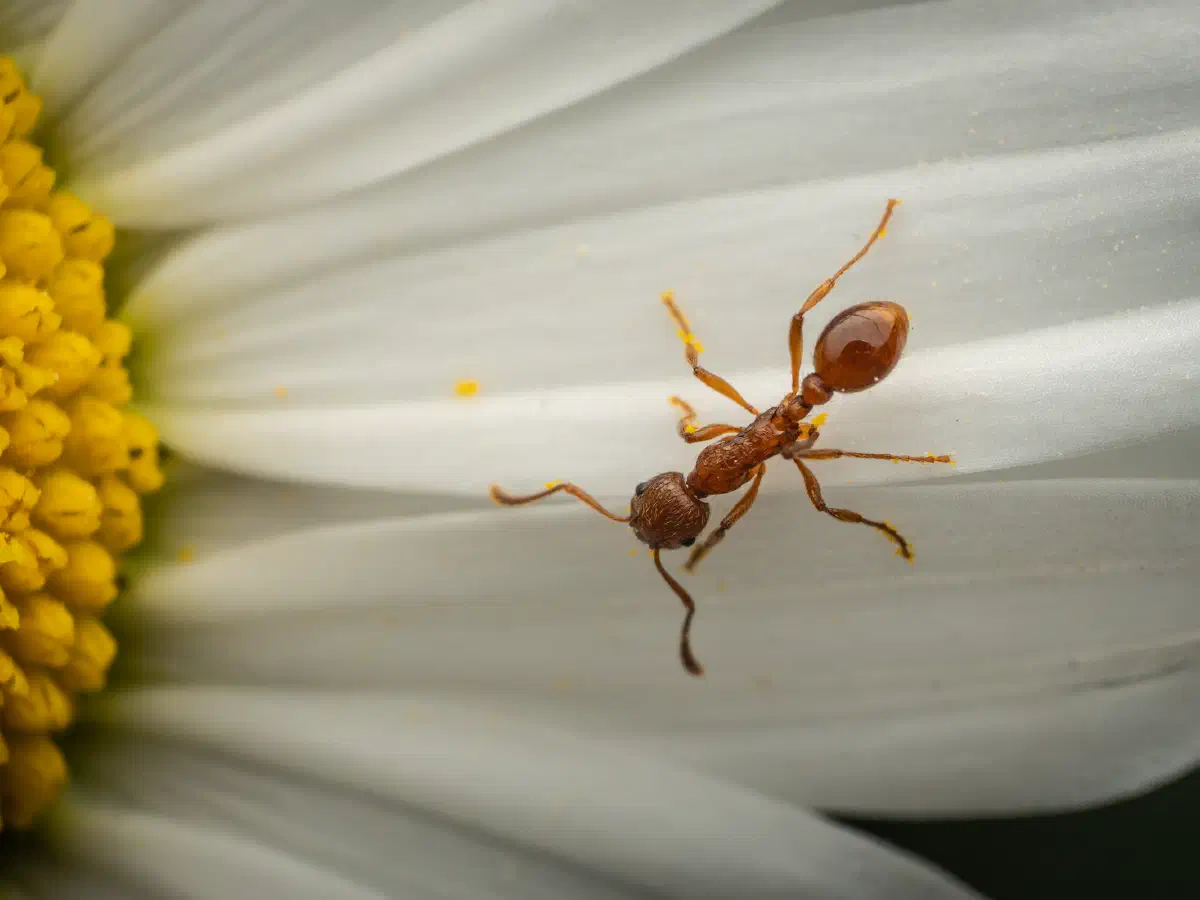
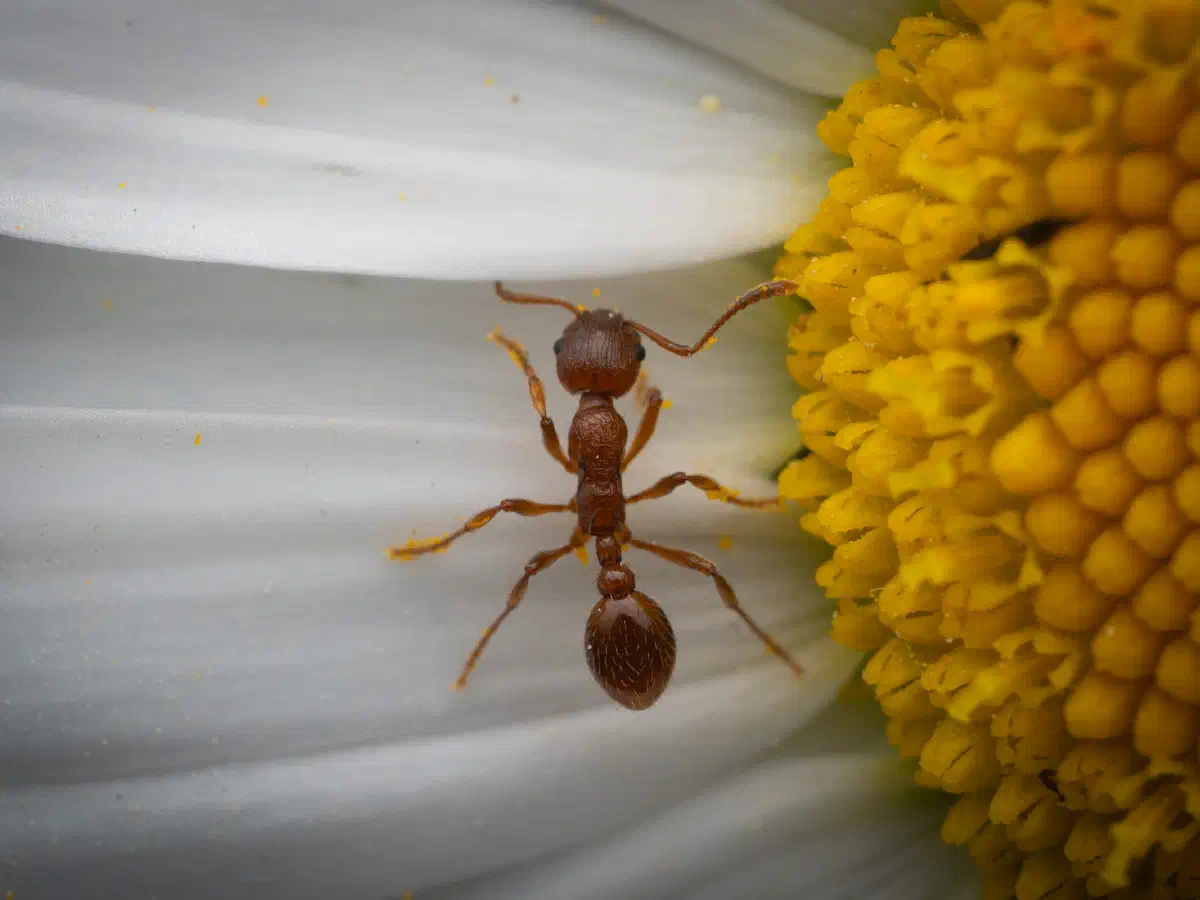
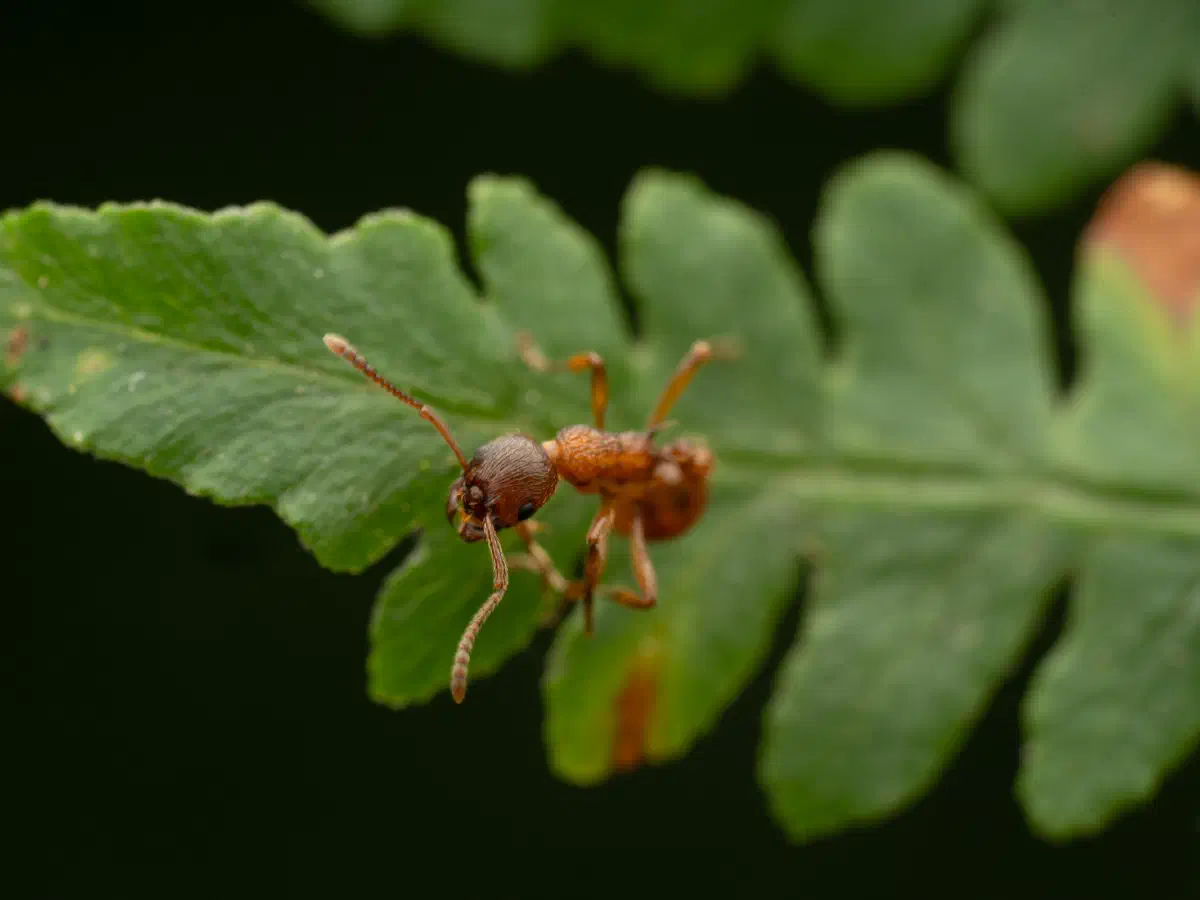
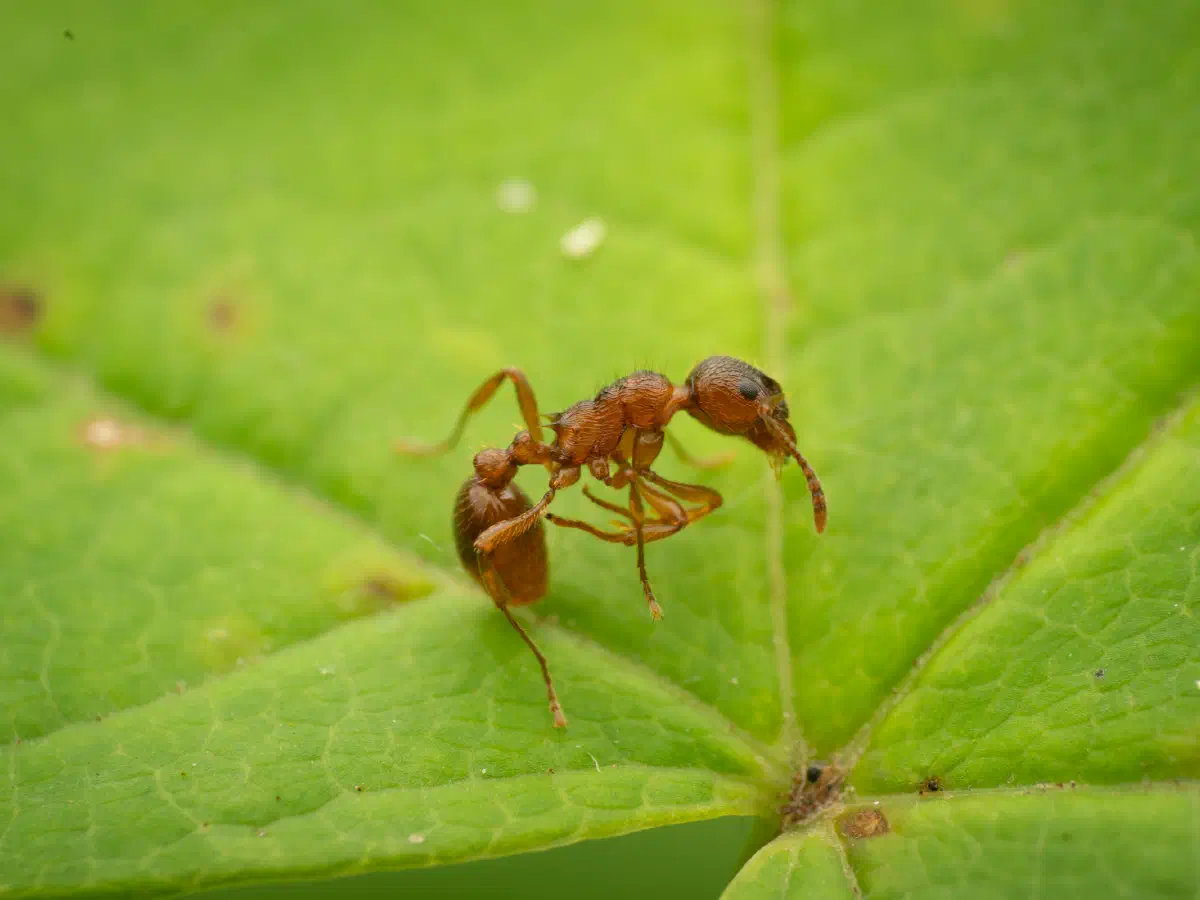
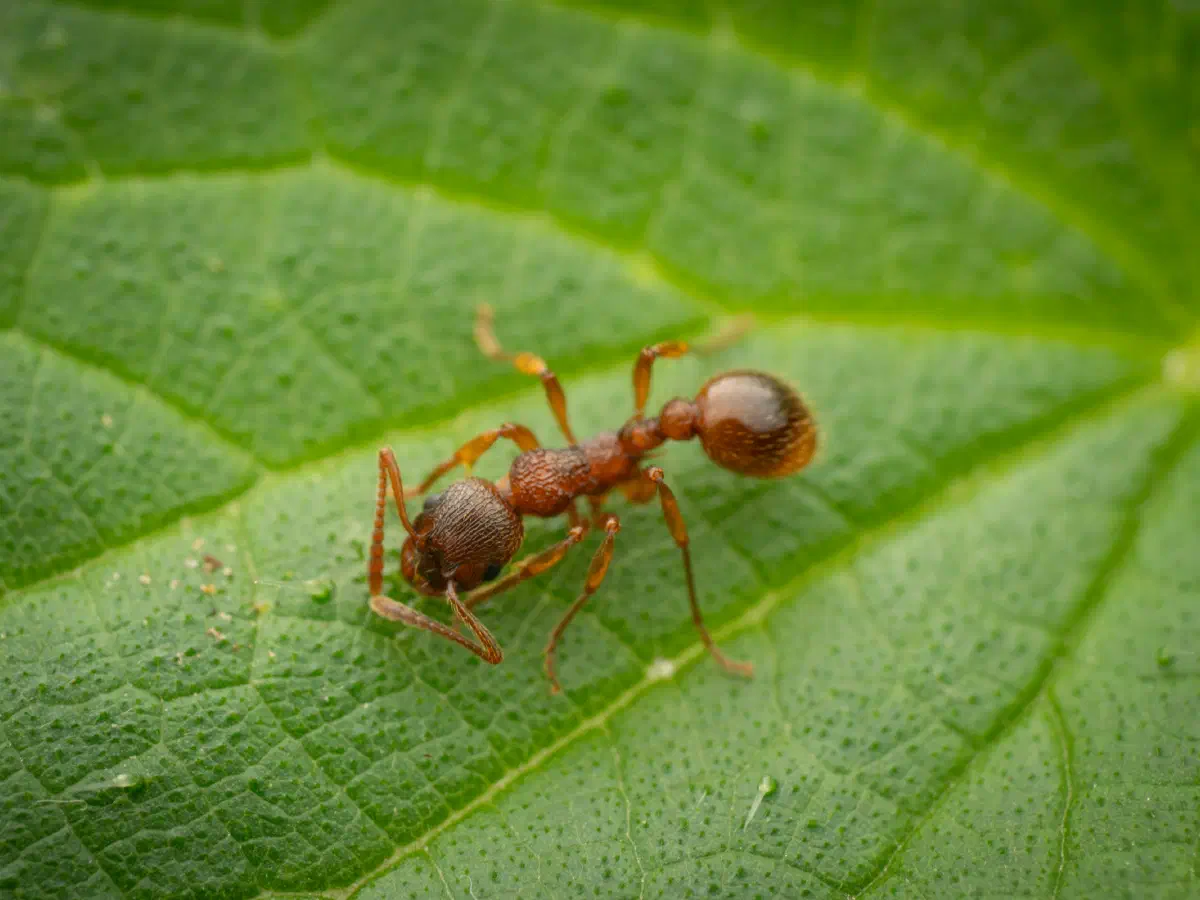
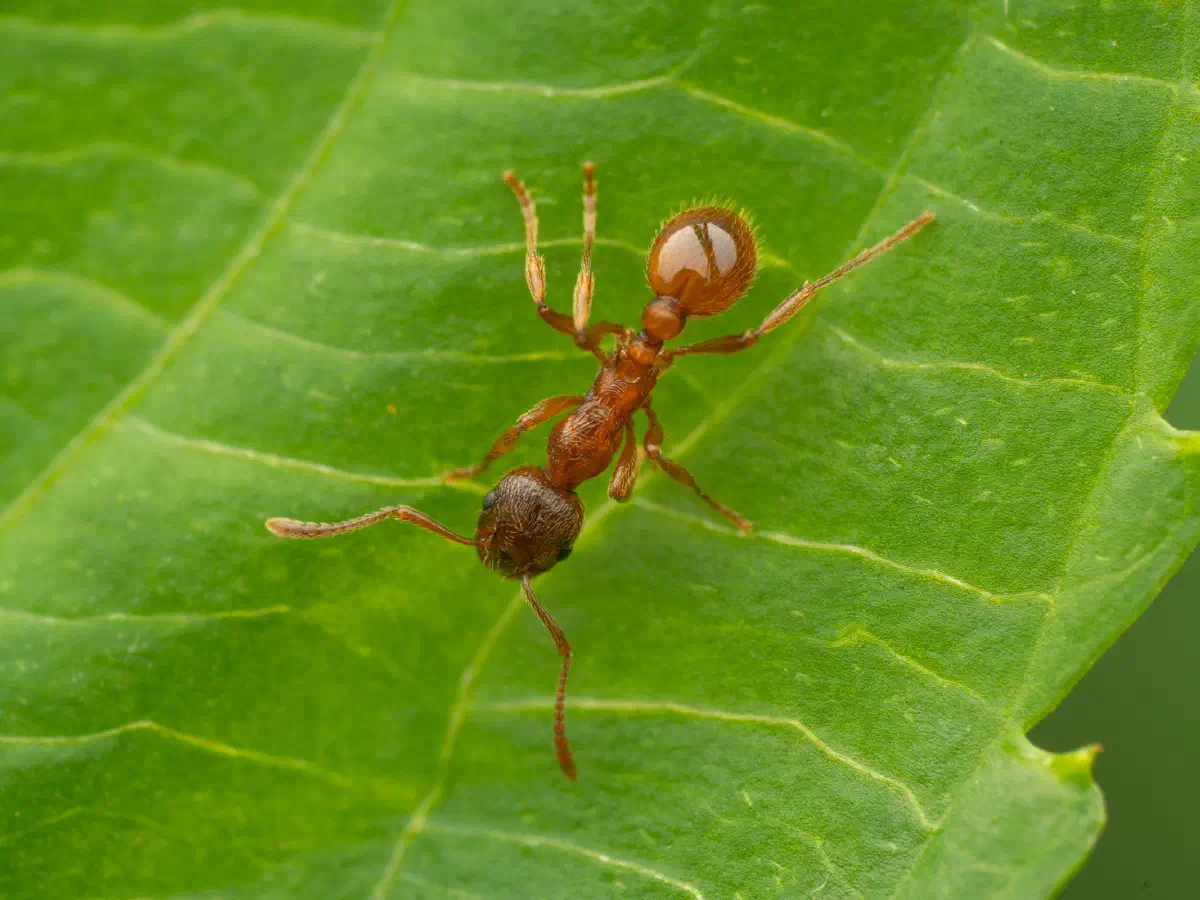
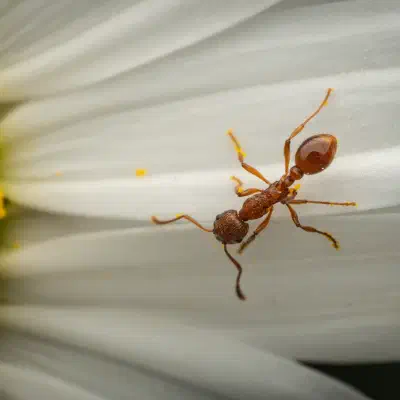
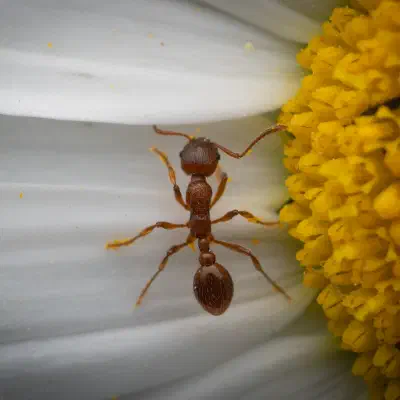
This ant's colonies have a polygyne form and can include up to one hundred queens per nest. These queens will have gathered together after their nuptial flight, formed a nest and laid their eggs in it. The species is also polydomous, with many nest sites per individual colony. The queens can live up to fifteen years. Nuptial flights take place normally in late July to mid-August in Europe. Hundreds of young queens and males take
to the air to mate together. Afterwards, the males die and the queens shed their wings to make a new colony. No nuptial flights have been witnessed yet from this species where it is living in North America, however male-only mating swarms have been recorded in Newfoundland, Canada.
In addition to the regular queens (macrogynes), M. rubra also have a microgyne caste. These queens are smaller in size compared to the macrogyne and were previously believed
to be a different species of social parasite (M. microrubra). More recent DNA analysis suggest that they share a gene pool with the macrogyne and are therefor not a different species. While the roles of these microgynes are not yet fully understood, they are often found in nests with regular queens and this is believed to be a form of intraspecific parasitism where the microgyne are a social parasite of the larger macrogyne. The microgynes
are also known to act as an alternative reproductive morph and found their own colonies.
The ants explore the surrounding area around their nest and look for materials, both plant and animal, to feed their colonies. When they find dead bodies, undertakers pick up the dead bodies and quickly carry them away from their nest up to 3 metres (9.8 ft) away. They choose locations randomly, and so this species does not create cemeteries.