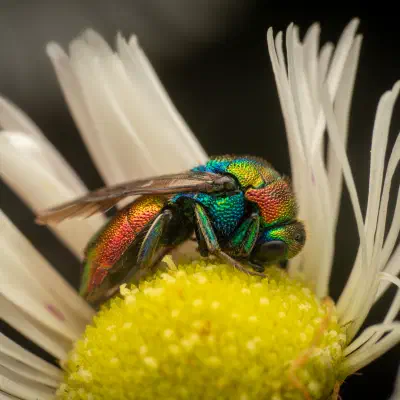
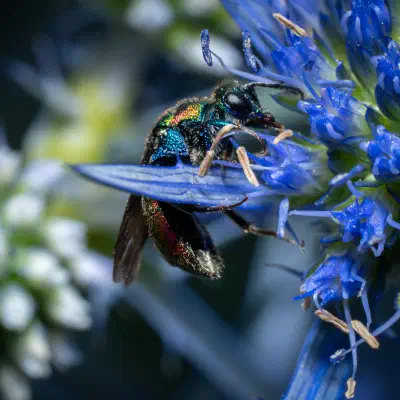
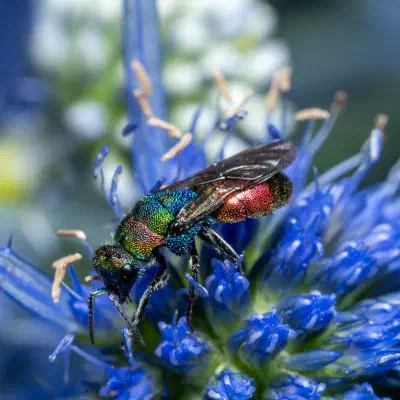
Chrysis ignita (lat. Chrysis ignita)

Chrysis ignita
Chrysis ignita

Taxonomy and phylogeny

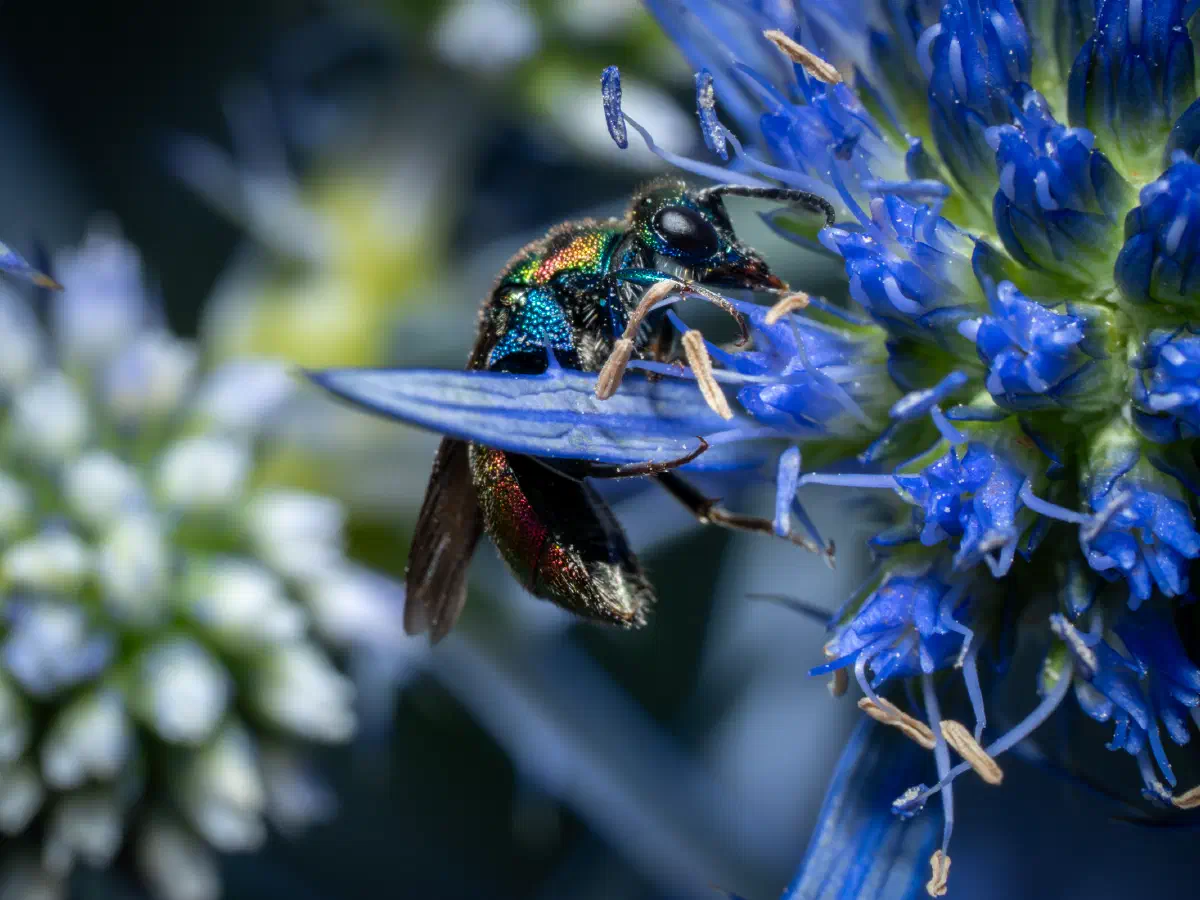
Chrysis ignita is a chrysidid wasp with a typical colorful, metallic exoskeleton; the stinger is reduced in size and used as an ovipositor.

Copyright and source information
Chrysis ignita

Description and identification

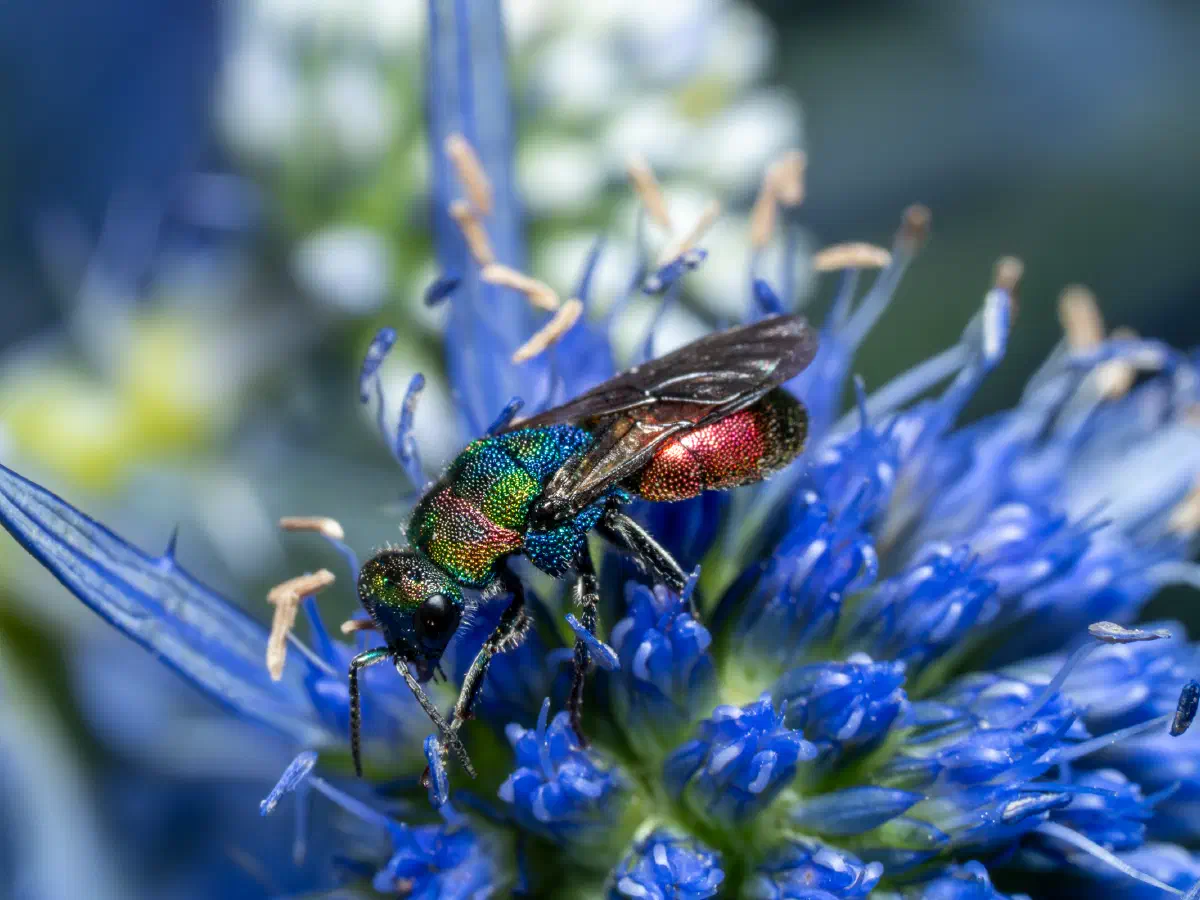
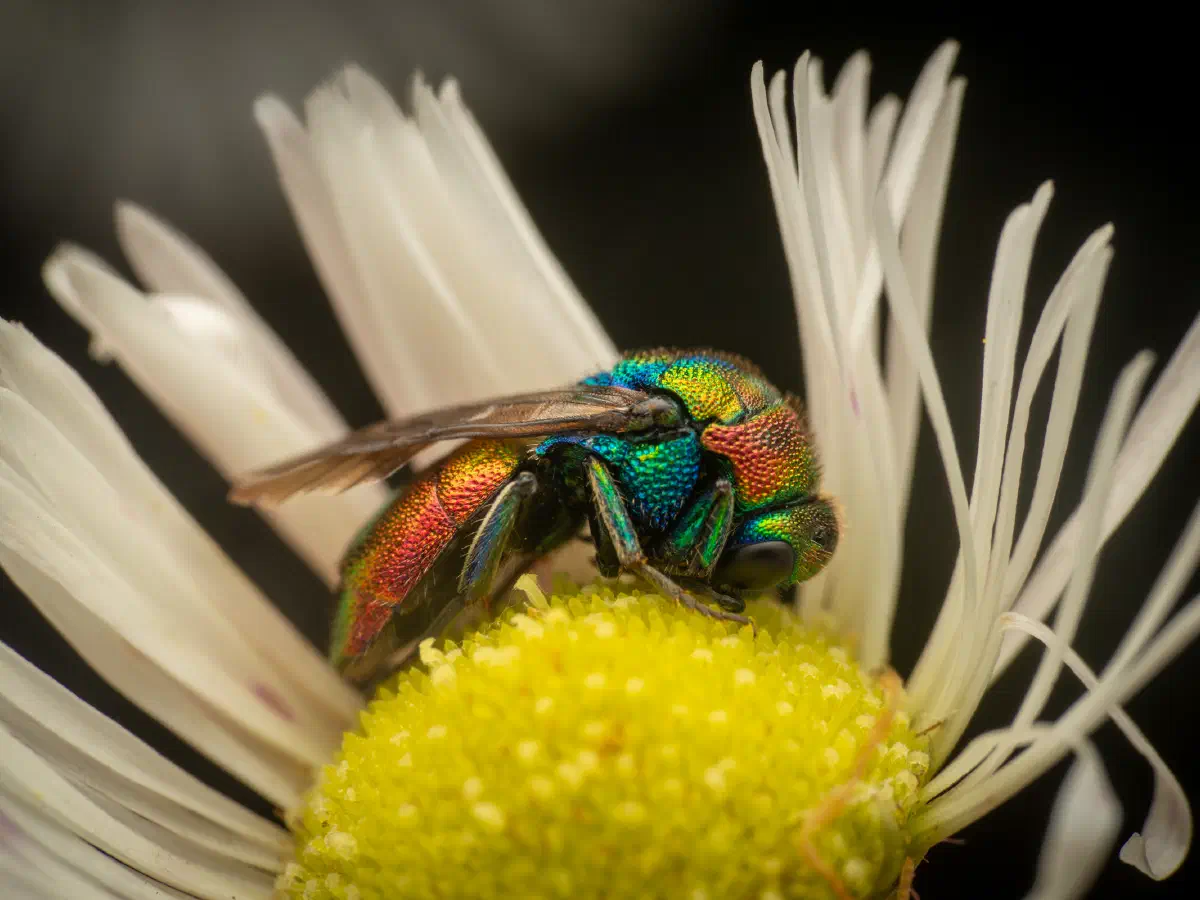
Chrysidids differ from other aculeate wasps (stinging Hymenoptera) in their reduction of the number of external body segments, the presence of 11 antennal articles, and wing veins enclosing 5 cells. Chrysis ignita is the best known of a group of very similar ruby-tailed wasps. The head and thorax range from a shiny green to blue, sometimes layered with a golden sheen. The abdomen, a deep ruby color, is its most distinctive feature. The exoskeleton sculpture

appears textured, like a golf ball, with dimples, projections, crests, and holes ranging from micrometric to millimetric in size.

Copyright and source information
Chrysis ignita

Distribution and habitat

Chrysis ignita can be found in Britain and Ireland, in continental Europe, and through Russia to China and Japan at the eastern edge of the Palearctic. Its habitats overlap with those of its hosts, and thus it can be found near walls, quarries, bare cliff faces, and around dead wood in sunny places. Since chrysidids are solitary wasps whose lives are linked to and dependent on their hosts, they live in strict microhabitats. These microhabitats

can be further categorized as places of rest and of parasitic activity. The environments in which they are found facilitate their identification and are often characterized by flowers, arid and sandy soil, old wood exposed to sunlight, pebbles, and aphid infested plants.

Copyright and source information
Chrysis ignita

Known hosts

The hosts of Chrysis ignita sensu stricto are believed to be potter wasps such as Ancistrocerus parietum. Chrysis ignita has been alleged to parasitize a wide variety of wasps and bees. However, most of these host records, including all those of bee species, are considered doubtful: attributable to misunderstandings, misidentifications, and taxonomic inconsistency.

Copyright and source information
Chrysis ignita

Methods of field study

As with other species, study may proceed using a Malaise trap, the more basic Moericke trap, or simply hunting on sight. Alternatively, nests of host wasps can be bred in the hope that some will be parasitized by Chrysis ignita.

Copyright and source information
Chrysis ignita

Chemical mimicry

Host-parasite interactions are prime examples of evolutionary arms races. The host evolves methods of detecting the parasite, and the parasite counters by evolving methods of evasion. It has been reported in some specialized Chrysis species that the cuckoo wasp chemically camouflages itself when infiltrating the nest of its host. Field observations indicate that the cuckoo wasp is only attacked when the host wasp visually recognizes it. If the cuckoo wasp can make it into the

nest in the dark, research has shown that it can disguise itself chemically by secreting saturated and unsaturated hydrocarbons to match the scent profile of the host wasp. In these situations, even when the host wasp encounters the cuckoo wasp head on in the dark, the cuckoo wasp remains undetected.

Copyright and source information

This is not intended to be a dry lexicon. Personal stories and sensitive articles form the framework for our pictures: „Explained as easy as pie — Why small creatures have big differences“ This article is about the evolutionary adaptation that has led to the impressive diversity of arthropods — including insects, crustaceans, and arachnids.

Full post

Explained as easy as pie — Why small creatures have big differences