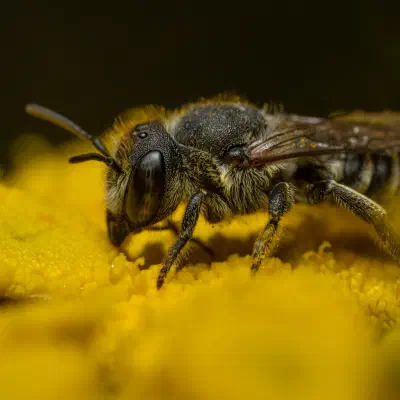
Alfalfa Leafcutter Bee (lat. Megachile rotundata)

Alfalfa Leafcutter Bee

Taxonomy and phylogeny

Megachile rotundata is a member of the subfamily Megachilinae, which includes more than 4,000 bee species; this currently makes this family the second-largest among all bee families. This subfamily is one of four other subfamilies of Megachilidae, the other three being the Fideliinae, Pararhophitinae, and Lithurginae. Phylogenetic studies suggest that this subfamily is monophyletic. More specifically, it belongs to the genus Megachile, which contains 52 subgenera and 1,478 species. The genus Megachile consists of bees

that cut leaf pieces to line their nests.

Copyright and source information
Alfalfa Leafcutter Bee

Description and identification

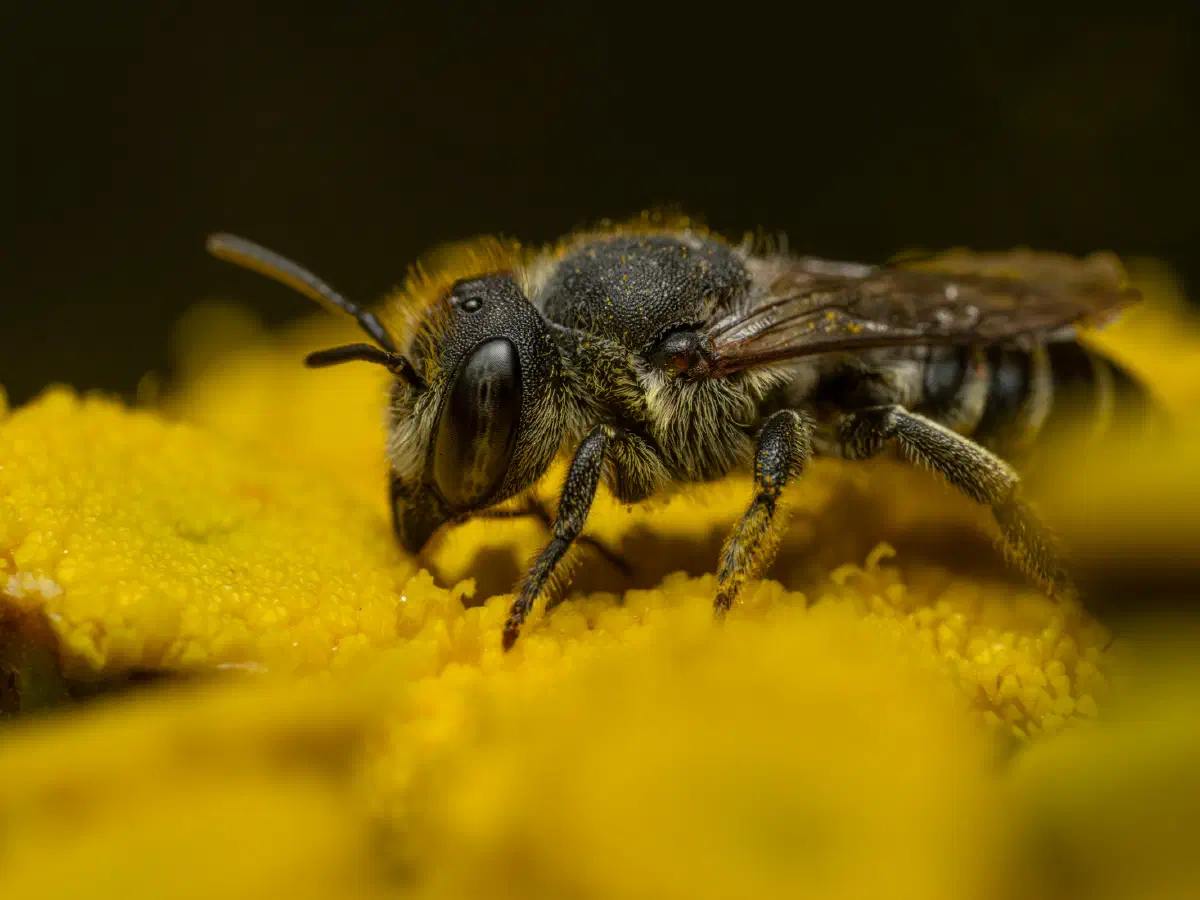
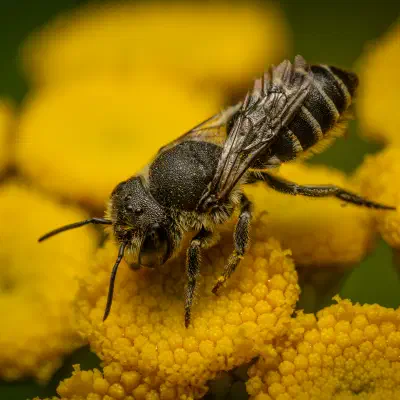
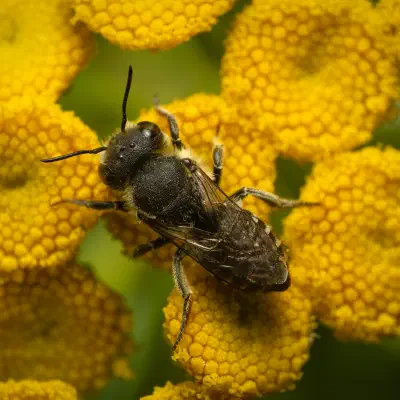
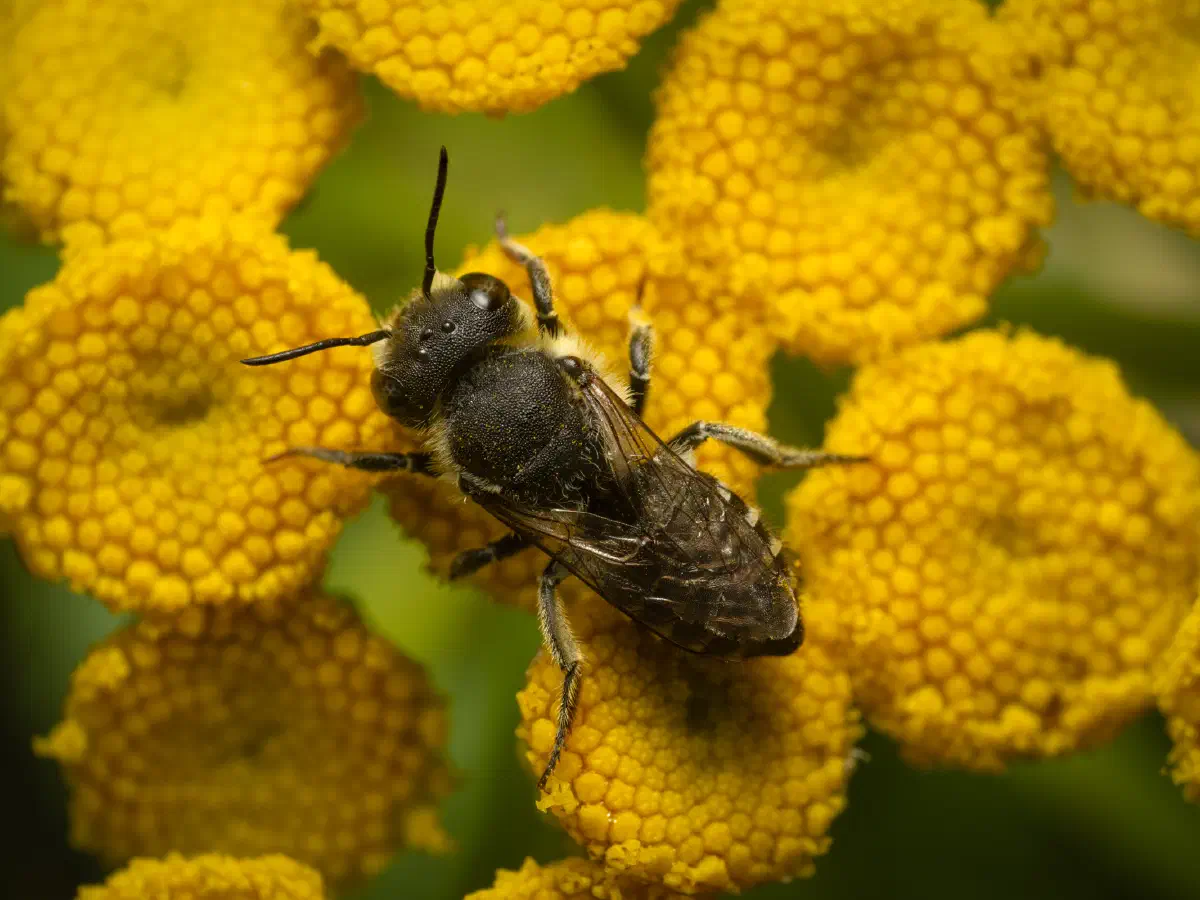
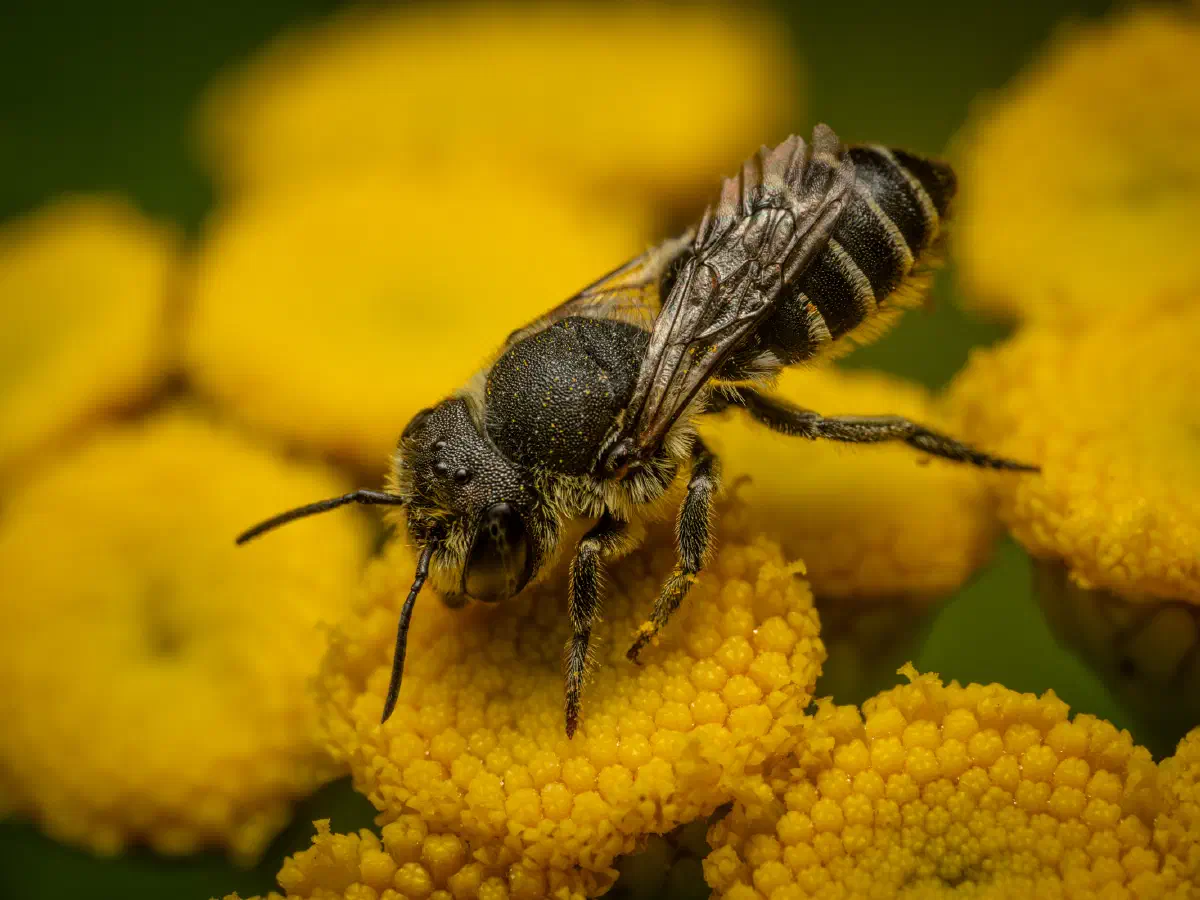
Megachile rotundata is a European leaf-cutting bee placed in the subgenus Eutricharia, the "small leaf-cutting bees"; they are 6–9 mm (0.24–0.35 in) in length. They are partially bivoltine, meaning that under the right conditions they can produce two generations per year. These bees present a sexual dimorphism, in which the males are smaller than the females and differently marked. Megachile rotundata bees are a dark grey color. Females have white hairs all over their bodies,

including on their scopae. In contrast, males have white and yellow spots on their abdomens.

Copyright and source information
Alfalfa Leafcutter Bee

Distribution and habitat

Megachile rotundata is currently found on all continents except Antarctica. In North America, the species was deliberately imported to assist in the pollination of food crops, but has now become feral and widespread. M. rotundata was also introduced to New Zealand in 1971 and Australia in 1987 to assist in the pollination of alfalfa (known locally as lucerne).

Copyright and source information
Alfalfa Leafcutter Bee

Life cycle

As a member of the Hymenoptera order, the alfalfa leafcutter bee is haplodiploid. Adults emerge by the end of the summer through one of two developmental pathways: larvae will develop by the end of one summer and proceed through the a prepupal diapause phase until the next summer; or larvae, known as "second-generation" bees, skip this phase and emerge as adults in the same summer. The larva transitions through four instar stages before emerging as an

adult. During its development, which occurs rapidly, the larva consumes the pollen ball and enters diapause when the pollen is fully consumed. In its progression into the diapause phase, the larva defecates pellets in a ring formation and then spins its cocoon out of silk threads. The next spring, the mature larva pupates, a process that lasts 3–4 weeks, and completes its development. Once the bee is developed, it cuts its way out from the

nest by chewing itself out of its cocoon. Upon emergence, females mate immediately and begin constructing their nests after a week. Progeny released via the two alternative pathways for emergence display different sex ratios and sizes. Among adults that emerge during the summer of the same year, the sex ratio is biased towards males. Among the "second-generation bees", however, the sex ratio is female biased. Further, spring-emergent adults weigh more than summer-emergent ("second-generation") adults. These differences have

been proposed to be attributed to the chances of survival to mating of the two sexes and the metabolic costs involved in development. Bees that undergo diapause and emerge in the spring must endure the long winter, so require more food stores. As a result, they will be larger when they mature. Another explanation has been that smaller bees mature faster, thus are able to mate more quickly when they emerge in the summer to

avoid the cold, harsh conditions of the winter. The sex ratio of the offspring also depends on the distance between nesting and foraging sites. Females have been observed and determined to bias their offspring sex ratio to males at larger flight distances from the nest.
Copyright and source information
Alfalfa Leafcutter Bee

See also

List of Megachile species

Copyright and source information
Alfalfa Leafcutter Bee

External links

Effectiveness of the Alfalfa Leafcutter Bee as a pollinator of legume forage crops (ISHS membership required) How to Manage Alfalfa Leafcutting Bees for Wild Blueberry Pollination

Copyright and source information

This is not intended to be a dry lexicon. Personal stories and sensitive articles form the framework for our pictures: „“Yuck,” said the poodle – A lesser housefly in the dog salon“ We really ought to talk about the value of every living being.

Full post

“Yuck,” said the poodle – A lesser housefly in the dog salon