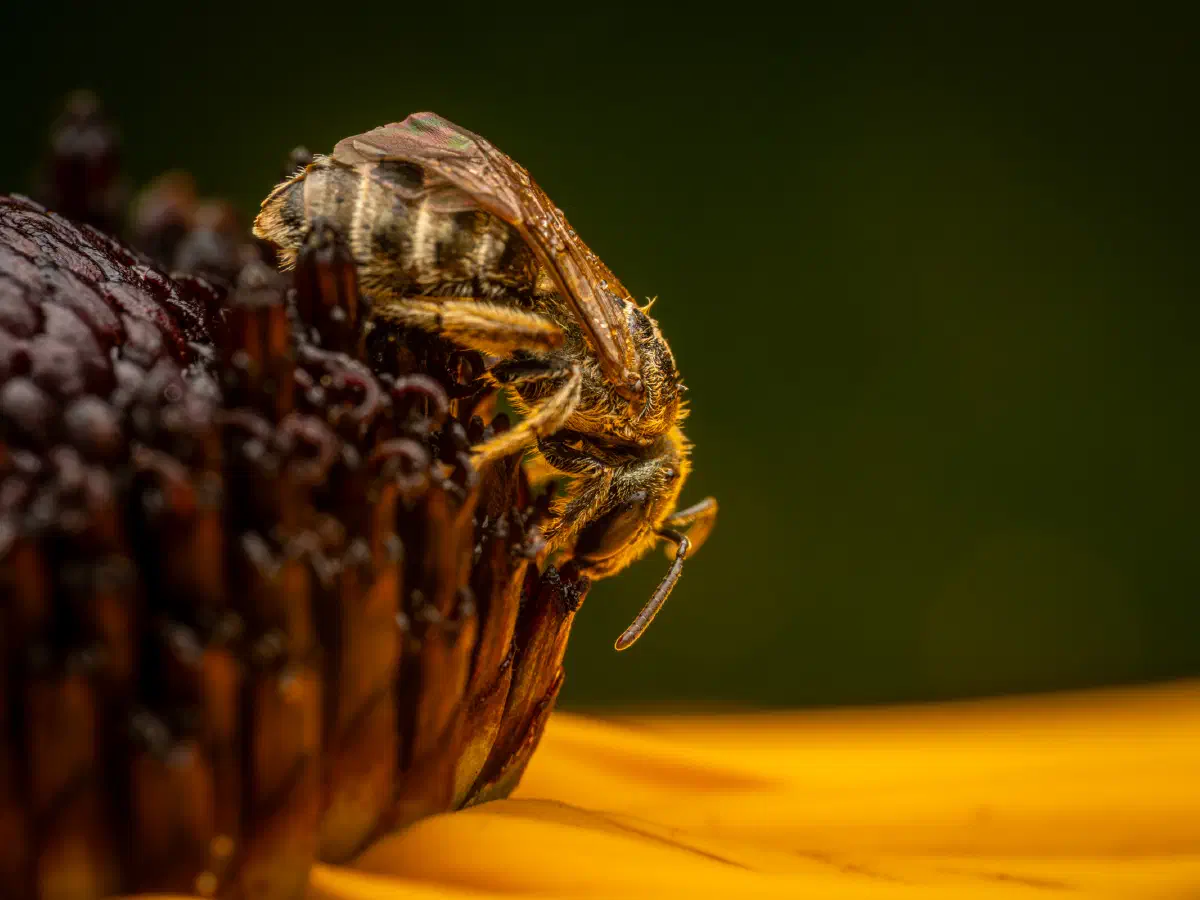
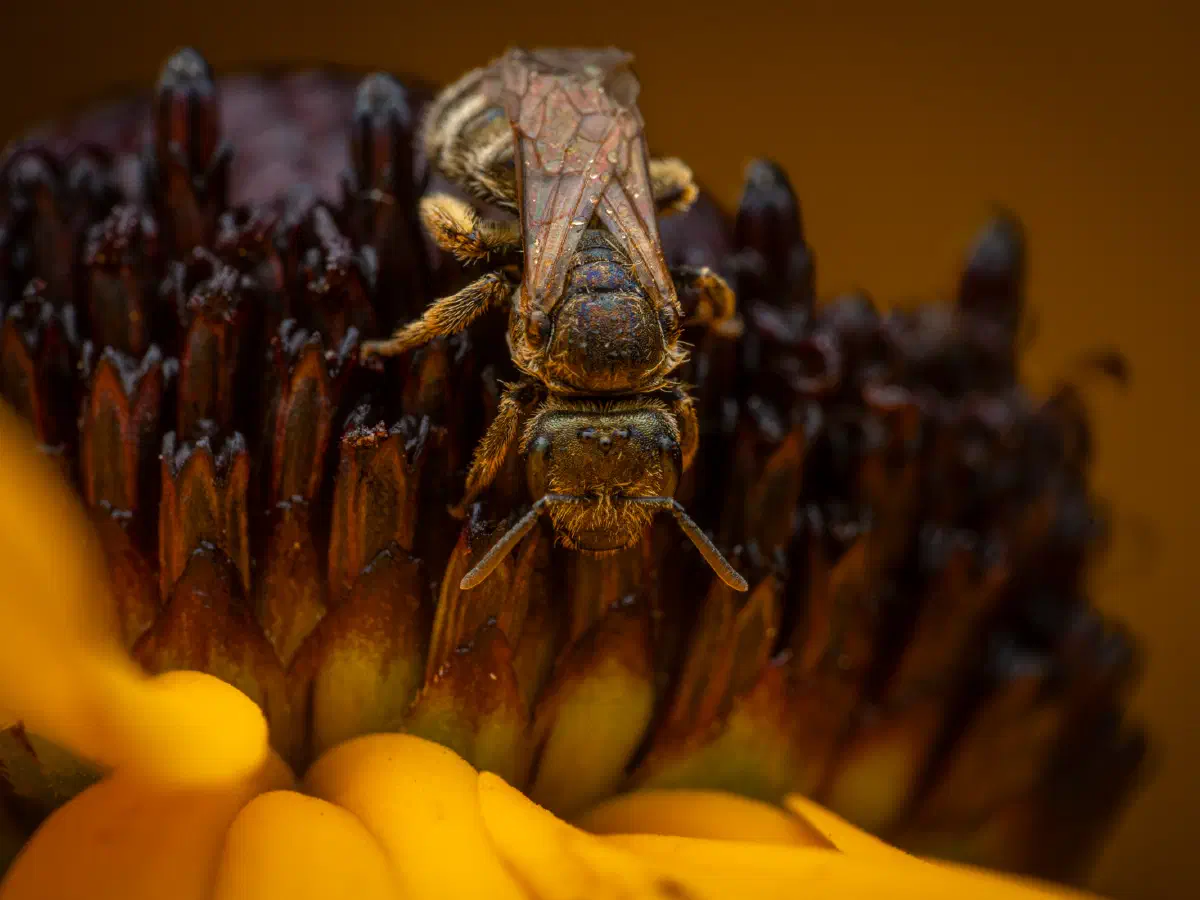
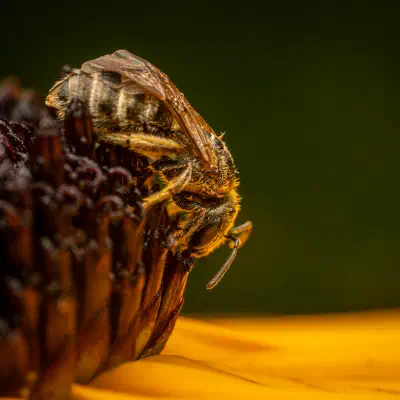
Halictus confusus in Britain shows a strong association with sandy areas, such as sandy heaths and sand pits, but in other areas this species appears to be more generalist in its habitat choices, given its wide range. It is a polylectic bee which feeds on a wide variety of flowers, visiting a variety throughout the season. In one study in North America, spring beauty (Claytonia virginica) was favoured by the newly emerged queens, while the
toothwort Cardamine concatenata was used to a lesser extent. When these woodland flowers faded in April the bees switched to dandelions as their main food source. These early plants were mainly used to immediately feed the newly active bees. When the wintercress (Barbarea vulgaris) began to flower abundantly in meadows and orchards this species became the main plant used, and the bees collected this pollen for provisioning their nests. When flowers became scarce in late
May the bees still foraged but widened their choice of flowers visited, until they closed the nests off in June and remained in the nests with the developing brood. When the first brood of workers emerged, these and subsequent broods foraged on clover. In late summer, the last brood fed on other species of flower as the clovers faded, including Lespedeza lineata and Symphyotrichum ericoides. These late bees were reproductive females and males, the females
of which would overwinter after mating.
Halictus confusus nests in aggregations and exhibits a primitive form of eusociality, with castes that are behaviorally distinct but not morphologically different. The nests have the potential to develop into a matriarchy with a mother queen and daughter workers.A queen will found a new nest each Spring which has a horizontal entrance tunnel beneath a mound, this entrance is guarded by the bees. In this species, as in related species,
the workers may become reproductively capable, and the queen's ability to prevent this depends on the size of the colony and the difference in size between the queen and the workers.
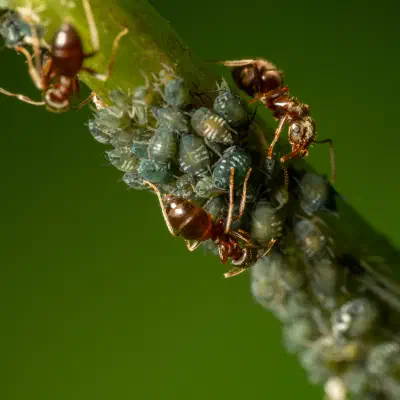
Foraging adults are preyed on by crab spiders and predatory bugs while ants are the main predators of the nests, especially unguarded nests, although they may attack guarded nests by overcoming the guard bee. The main parasites of the adult females are flies of the
family Conopidae, while flies of the family Phoridae will lay eggs within the nests, tailgating returning workers to get past the guards. The parasitic beetle Ripiphorus walshi is a larval parasite and its triungulin larvae attach themselves to the adults when they visit flowers and are transported back to the nest. Other parasites include fungi and nematodes.