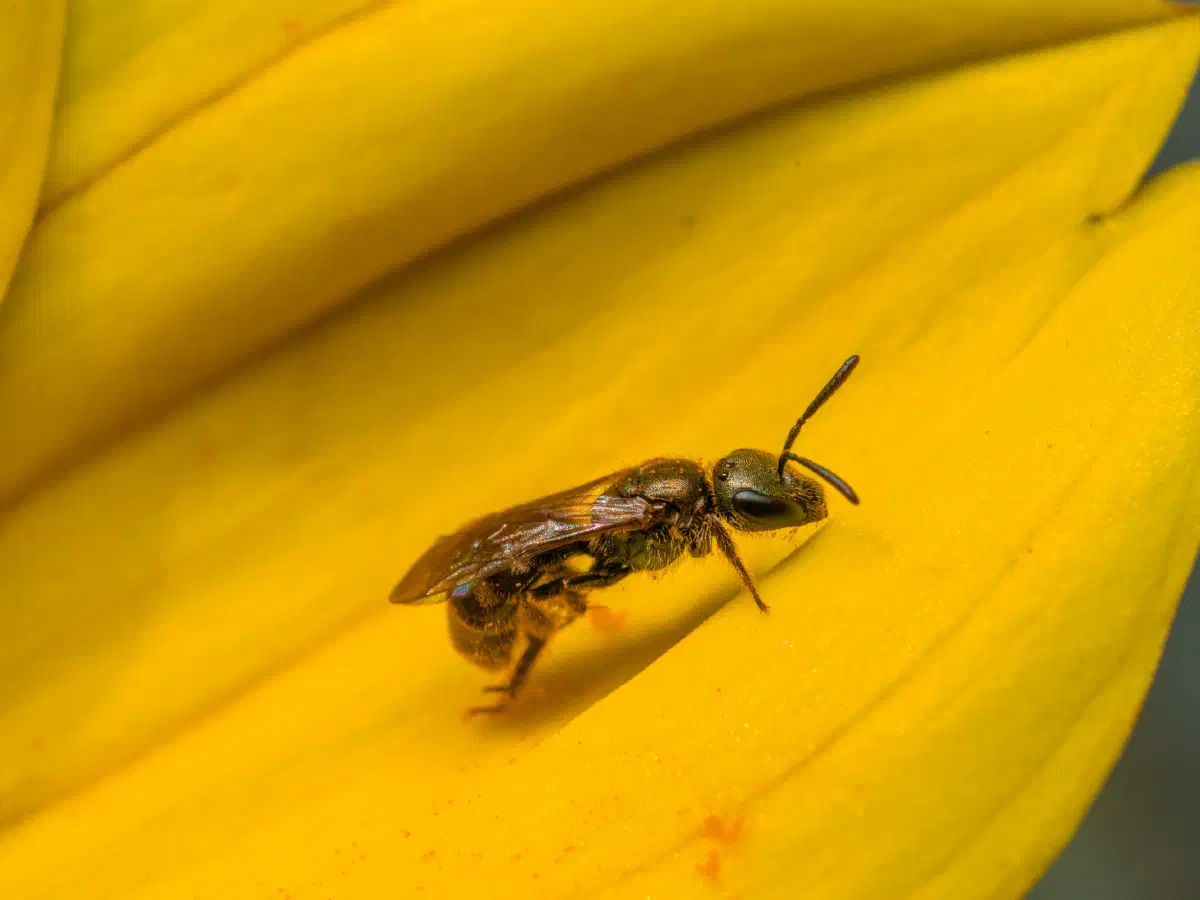
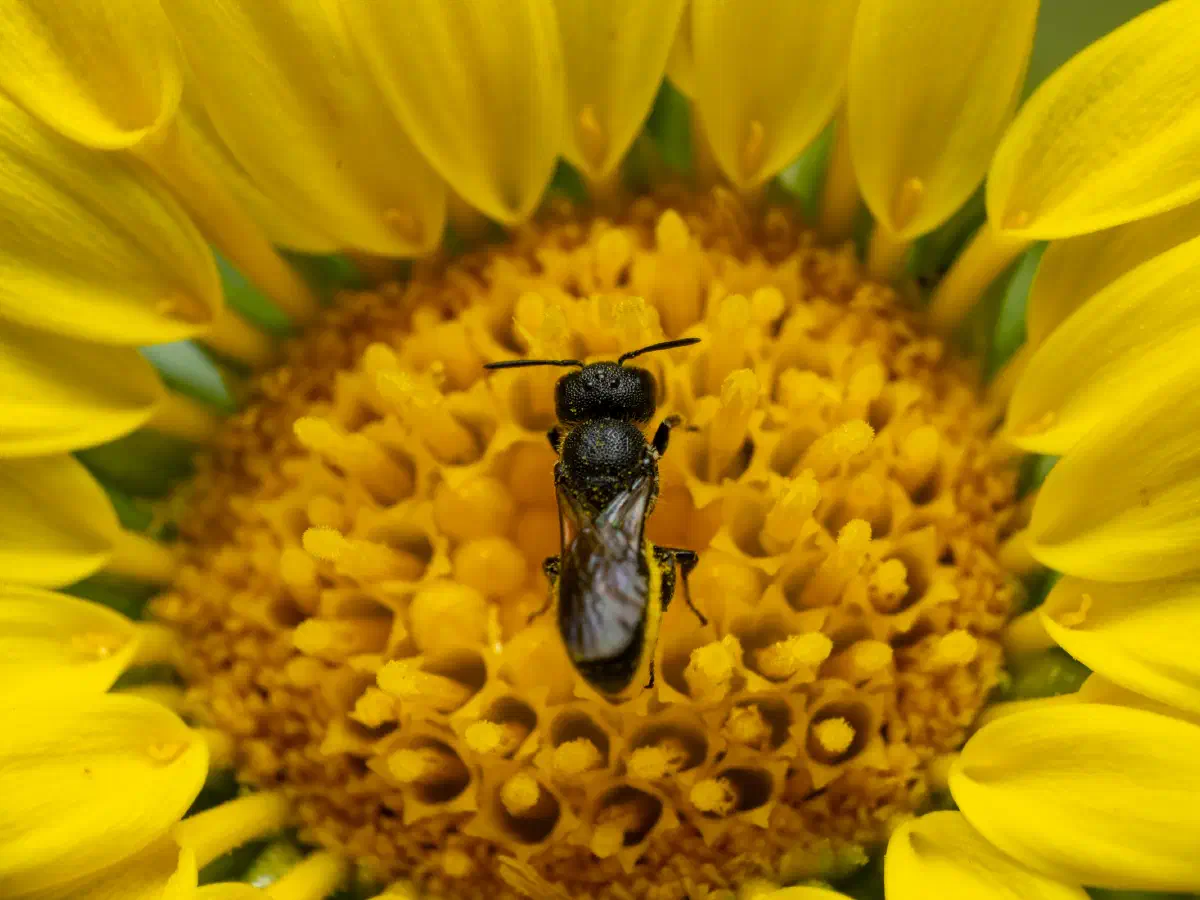
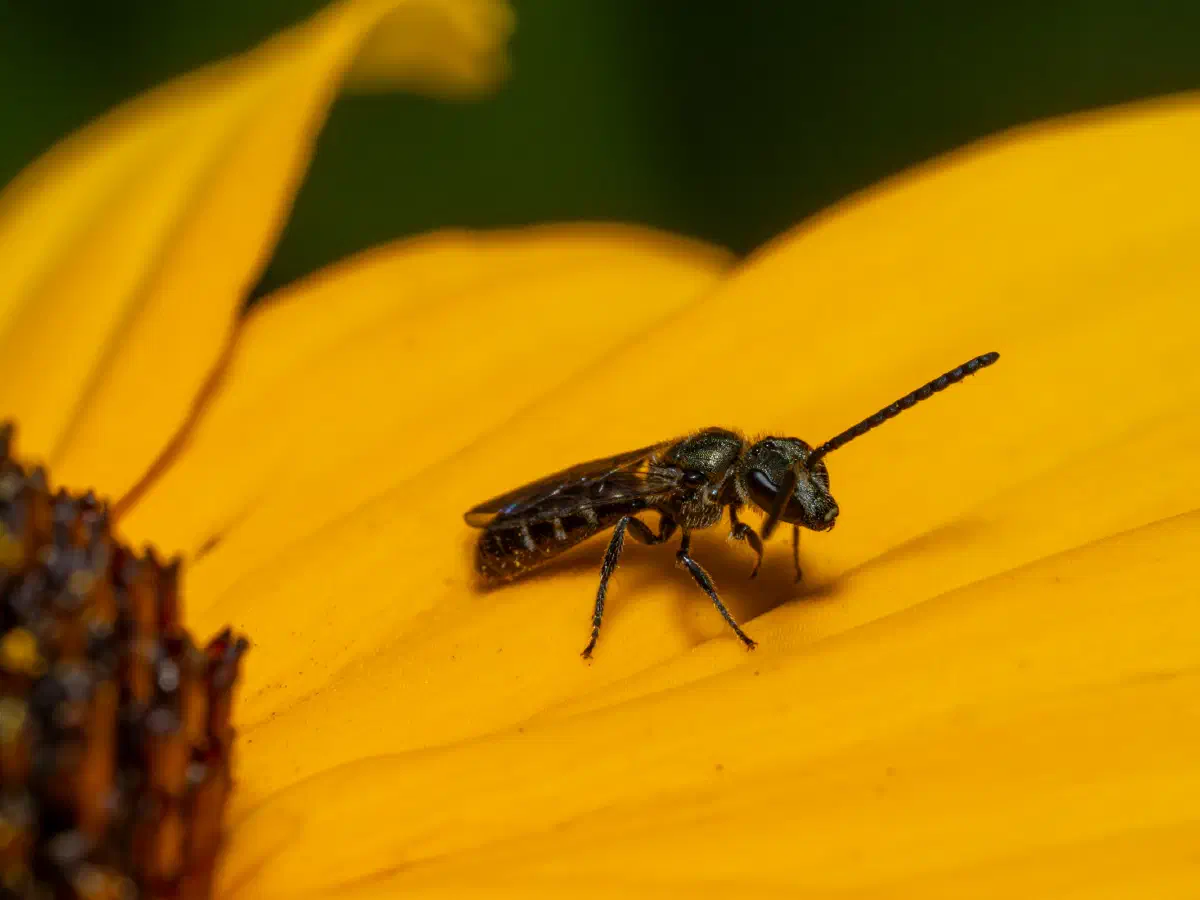
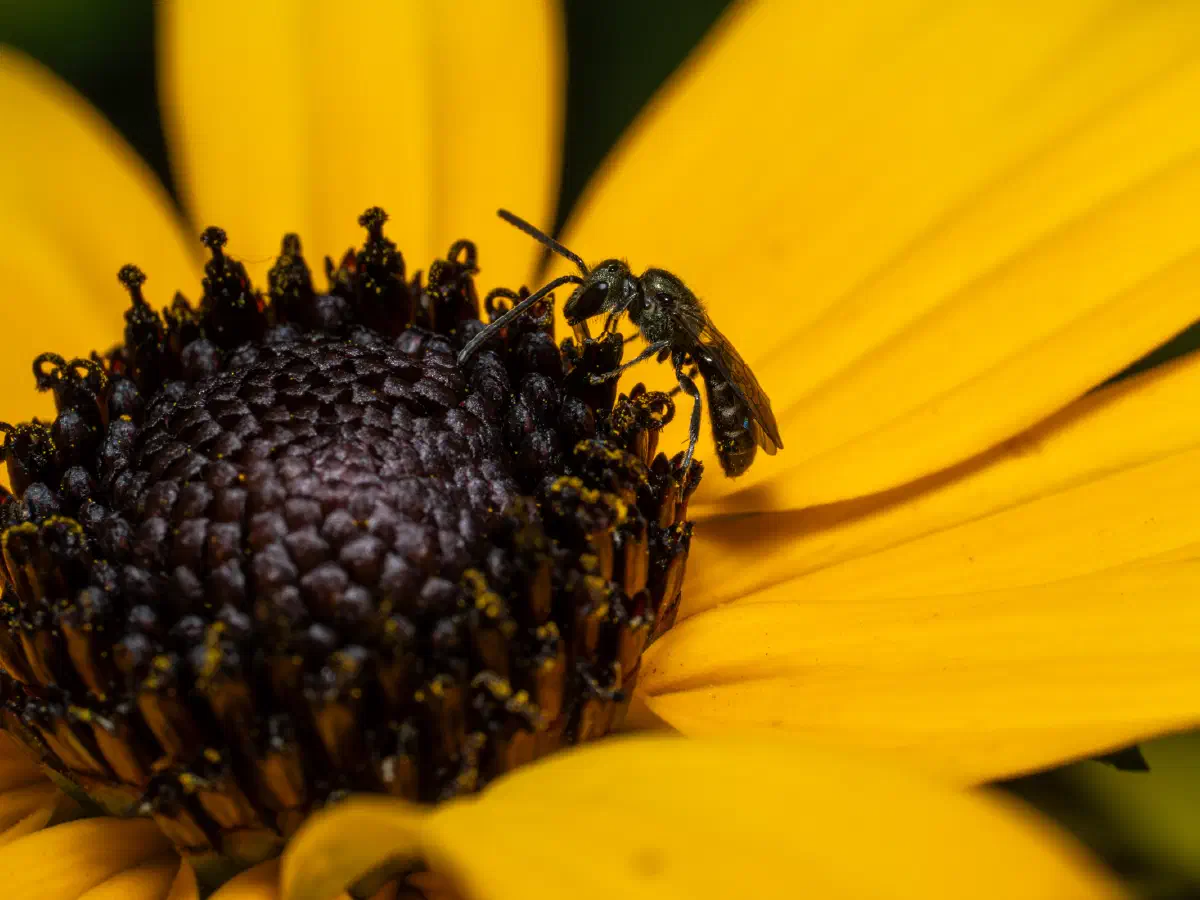
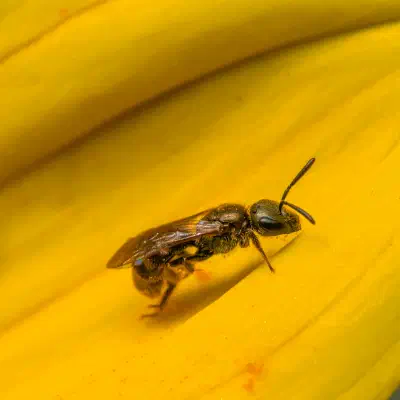
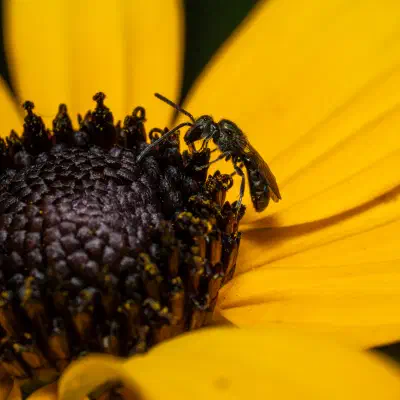
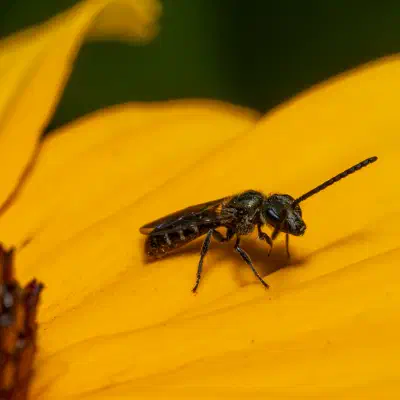
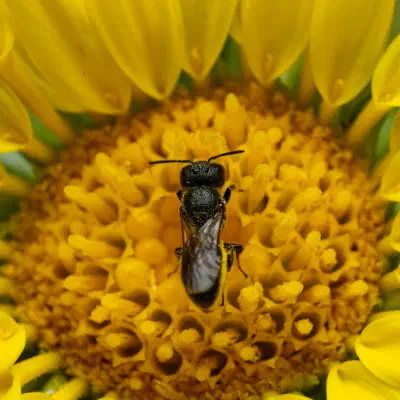
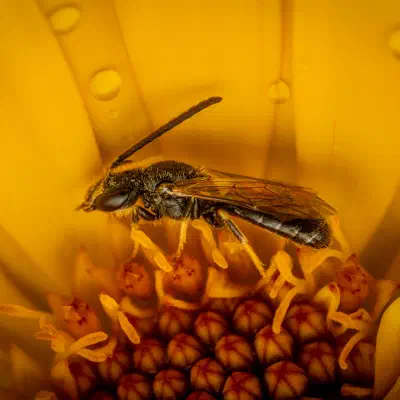
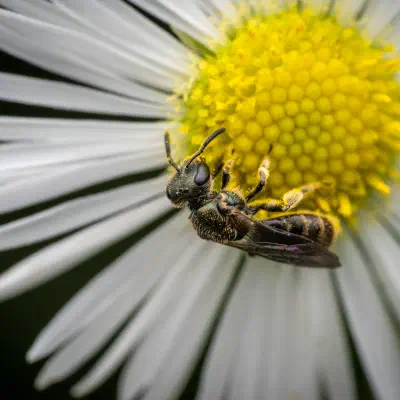
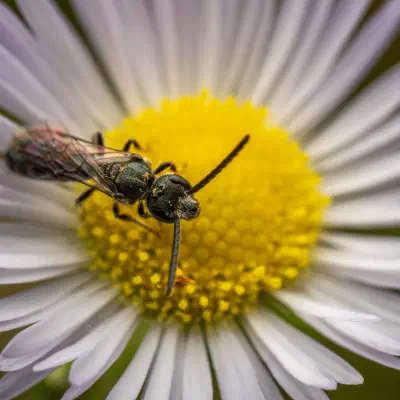
The queens of L. malachurum, following fertilization the previous year, begin to appear in the spring, when food sources are plentiful to sustain them after the long overwintering period. Although several females usually outwinter in the same burrow with little conflict, they start to act aggressively until a single female is left in possession of the burrow, leaving the evicted females to obtain or excavate burrows of their own.
Each female with a nest tunnel then
begins to build brood cells in short side passages which she excavates to the side of the main passage. Immediately following construction, each brood cell is mass-provisioned with a mixture of pollen and nectar in the form of a firm, doughy mass. An egg is laid on each pollen mass and the individual cell sealed by the female. Each egg takes 22 days to develop from an egg to a full adult. She then goes
on to construct more, similar cells containing eggs and pollen masses. During this time, before the first worker brood has emerged, containing only about five workers, the foundress queen frequently leaves the nest to find provisions to build the brood cells of the nest. These nest absences are accompanied by high risk of intraspecific usurpation. Once the brood is provisioned, the queen seals the nest synchronously with all other queens in the aggregation, and all
above-ground activity ceases for three weeks.
Larvae from the earliest eggs are full grown and start pupation by the end of May in Central Europe (or much earlier in warmer climates), emerging from their cells by mid-June. For bees in cooler climates with shorter breeding seasons, these adults are all non-reproductive female workers, somewhat smaller than their mother. The original maternal female bee remains within the nest and guards the entrance to the burrow, now acting
as a queen while her non-reproductive daughters act as workers; they go out foraging for food and help in the construction of new brood cells, in which the queen lays new eggs. For bees in warmer climates with longer breeding seasons, some of the female workers have reproductive capacity and can help breed up to two subsequent worker broods before the eventual gyne brood.
Males begin to emerge from the final brood of the season by
the beginning of August in Central Europe, or May–June in the Mediterranean region. Several days later, reproductive females begin to emerge, as well, which are morphologically similar to their queen. During sunny weather, the nest aggregation becomes a lek and the males vie for territory on the ground. The males mate with the new reproductive females (from both their own and separate nests), although they do not attempt mating with the non-reproductive females. Impregnated females
may continue to live in their mothers' nests, although it is thought that they only forage for their own food and do not contribute to the rest of the nest.
With the arrival of the colder autumn weather, the males and non-reproductive females die off, and the impregnated reproductive females go on to spend the winter in diapause and repeat the lifecycle the following year. The lifecycle is longer, with two successive broods of workers, in
southern Europe. Soil temperature specifically has been linked to decreasing the overall length of the nesting cycle. Workers in warmer soil tend to require less time to provision a new brood, possibly because they have more active time each day.