


Description
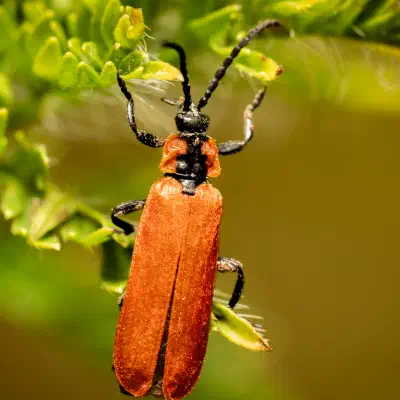
Beetles of this family are elongated and usually found on flowers or stems. Adult males are about 10–15 mm in length, while females are a bit larger. The adults of some species are nectarivores, while some may have short adult lives during which they may not feed at all. The head is triangular and the antennae are long, thick, and serrated. Most of them are brick-red in colour. They are protected from predators by being toxic. In several lineages, females retain a larval shape as adults (larviform females). Although older literature reports the larvae to be predatory, the most common mode of feeding is probably microphagy on myxomycetes or metabolic products of fungi. Some Lycidae larvae might be found preying on soft larvae of Diptera or small molluscs.


