Agricultural pest
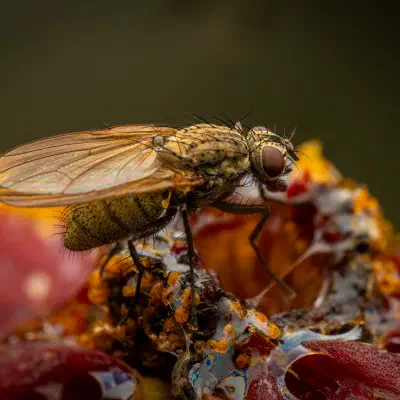
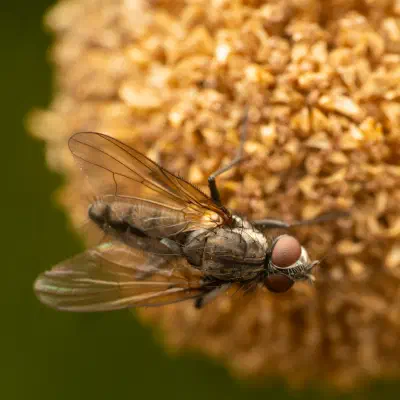
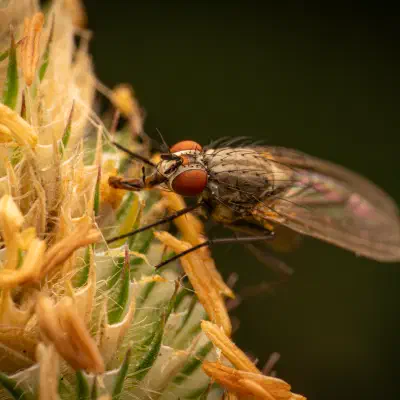
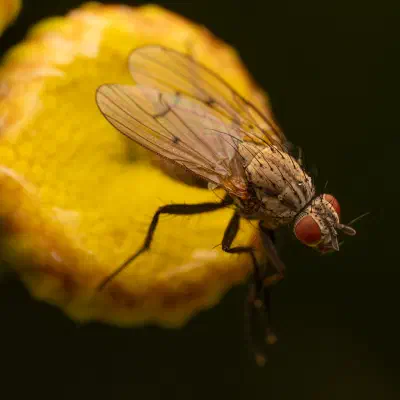
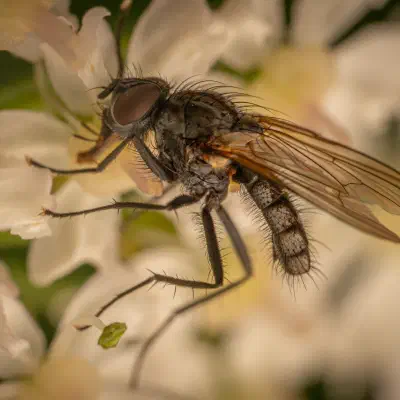
Six species of Delia (D. antiqua, D. floralis, D. florilega, D. planipalpis, D. platura, D. radicum) are common agricultural pests during their larval stage, causing severe economic loss throughout North America and Europe. The most notable species are D. radicum and D. antiqua.
Delia radicum larvae, commonly known as cabbage maggot, has caused significant damage by feeding and burrowing within the roots of members of the Brassica family including cabbage (Brassica oleracea), canola (Brassica napus), rutabaga (Brassica napobrassica), broccoli (Brassica oleracea var. italica), cauliflower (Brassica oleracea var. botrytis), turnip (Brassica rapa subsp. rapa), and radish (Raphanus sativus).
Delia antiqua larvae, commonly known as the onion maggot, is a prominent agricultural pest on members of the Allium genus including onions (Allium cepa), garlics (Allium sativum), chives (Allium schoenoprasum), shallots (Allium cepa var. aggregatum), and leeks (Allium porrum).
Gravid females will oviposit in the soil near the crops or on the host plant itself, and when the eggs hatch the larvae cause extensive damage to the plants when they feed. For example, D. radicum maggots feeding on the roots of canola crops cause damage to the plants’ phloem, periderm, and xylem parenchyma. Damage to the phloem and xylem tissue can disrupt the transportation of photosynthetic products and water, respectively. Additionally, this damage can also lead to vulnerabilities against pathogenic microorganisms. If the root damage is severe enough it can lead to a variety of issues including stunted growth, lodging, decreased flowering, decreased size and yield of seeds, or plant death.
There are many factors that will affect the susceptibility of a plant to Delia oviposition, and subsequent larval infestation. These factors include the species or variety of plant, the morphology of certain plant parts (root shape and size, wax levels on leaves, colour of foliage), and the physiology (age, chemical composition of certain secondary plant substances). For example, as a specialist of cruciferous crops, D. radicum, is attracted to the organic compound isothiocyanates found in these variety of plants in order to identify it as a suitable host. In addition to being attracted to the olfactory cues of this type of plant, visual cues such as colour, position, and visual prominence of the flowers influence which plant they will infest. In addition to the plant itself, studies with D. radicum and D. floralis have shown that other environmental factors such as soil moisture, average daily air temperature, and total precipitation can all have a positive correlation with the crop’s susceptibility to infestation.