
Etymology
The name may be derived from Greek coen meaning shared or common and agrio meaning fields or wild.

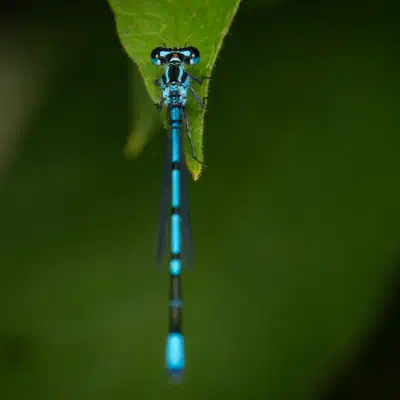
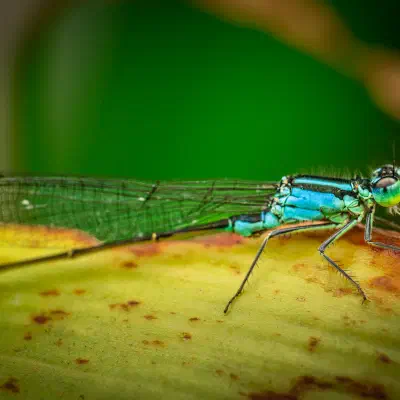
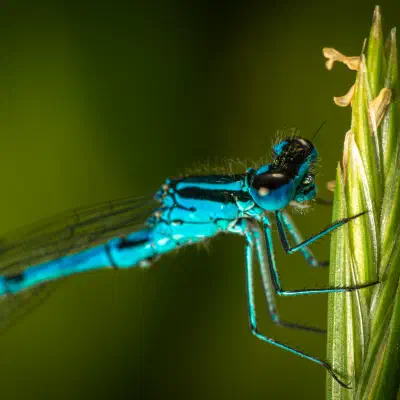
The insect family Coenagrionidae is placed in the order Odonata and the suborder Zygoptera. The Zygoptera are the damselflies, which although less known than the dragonflies, are no less common. More than 1,100 species are in this family, making it the largest damselfly family. The family Coenagrionidae has six subfamilies: Agriocnemidinae, Argiinae, Coenagrioninae, Ischnurinae, Leptobasinae, and Pseudagrioninae.
The name may be derived from Greek coen meaning shared or common and agrio meaning fields or wild.

Usually have a black pattern Ground color may be green, blue, yellow, orange, or purple Narrow, stalked, usually colorless and clear wings Two antenodal cross veins Vein M3 arising nearer to nodus than arculus Adults are seen around various habitats including ponds and wetlands. The females lay their eggs among living or dead submerged vegetation, and in some species, even crawl about underwater depositing their eggs. The nymphs are usually found in debris or among living or dead submerged plant material.

These genera belong to the family Coenagrionidae:
List of damselflies of the world (Coenagrionidae)
Info and Photos at BugGuide Images from Georgia, US Media related to Coenagrionidae at Wikimedia Commons Data related to Coenagrionidae at Wikispecies

This article uses material from the Wikipedia article Coenagrionidae the free encyclopedia Wikipedia which is released under Creative Commons Attribution-ShareAlike 4.0 International License). On Wikipedia a list of authors is available.

Little beings in print
Order our calendars and books today!
Compiled with love. Printed sustainably. Experience our little beings even more vividly in print. All our publications are available for a small donation.


