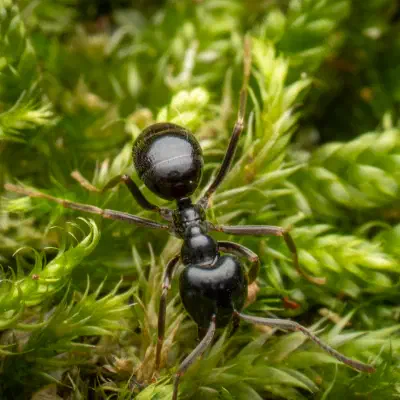
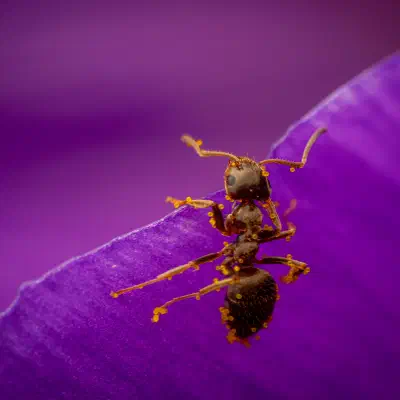
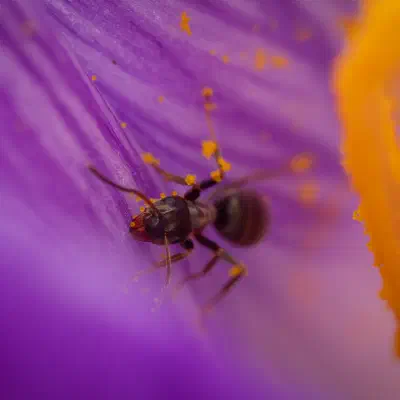
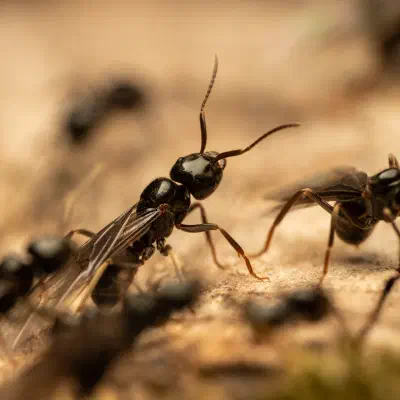
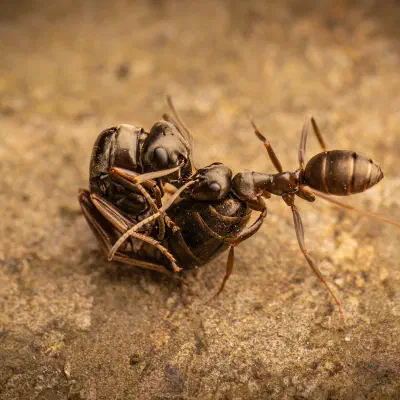
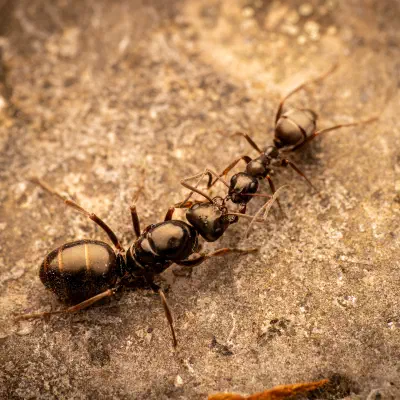
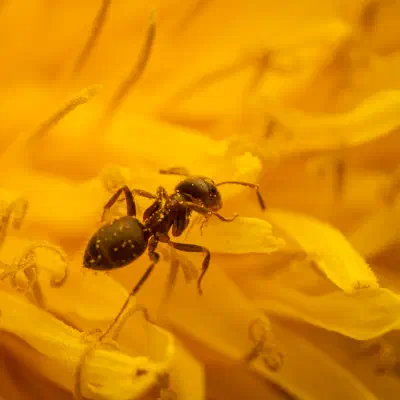
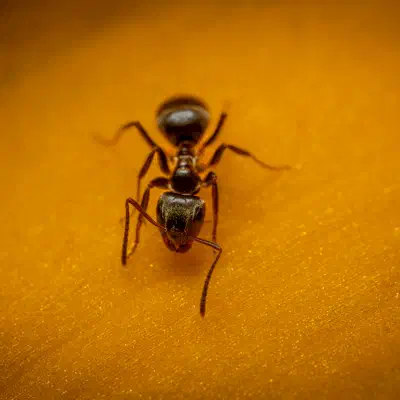
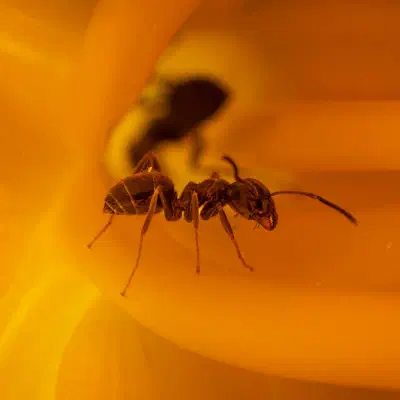
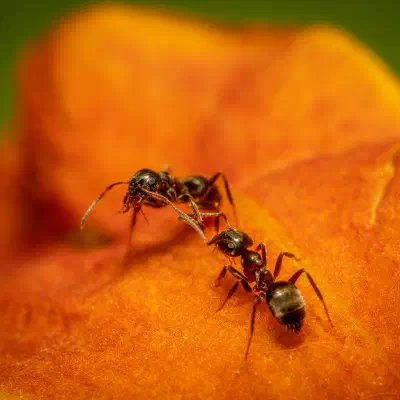
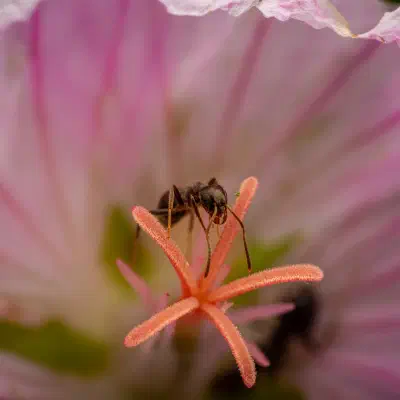
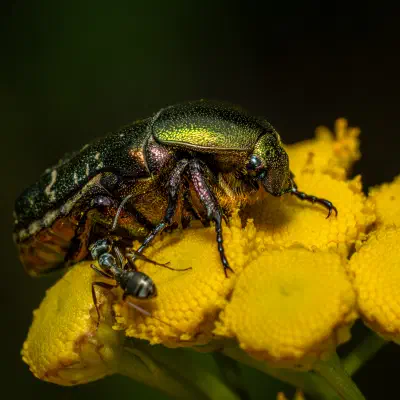
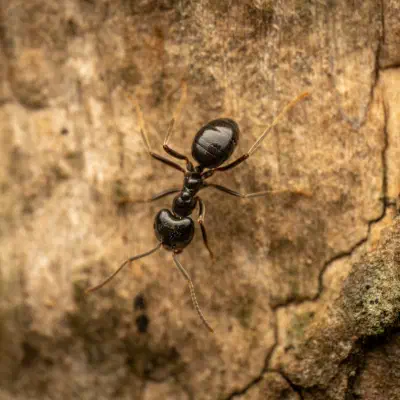
Black Garden Ant (lat. Lasius niger)

Black Garden Ant
Scroll to read on

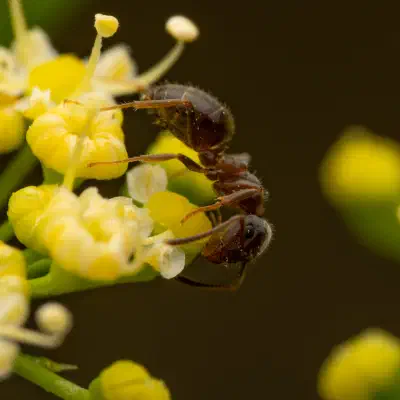
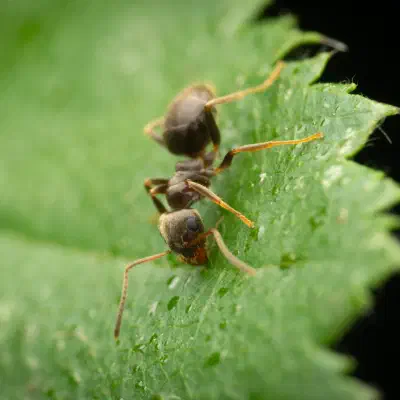
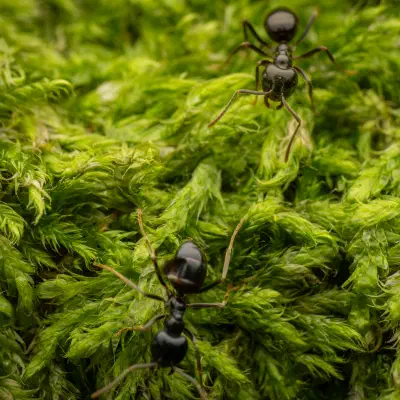
The black garden ant (Lasius niger), also known as the common black ant, is a formicine ant, the type species of the subgenus Lasius, found all over Europe and in some parts of North America, South America, Asia and Australasia. The European species was split into two species; L. niger is found in open areas, while L. platythorax is found in forest habitats. It is monogynous, meaning colonies have a single queen.

Black Garden Ant – Long-lived queens

Long-lived queens

Although worker ants live for a couple of months, queens typically survive for almost 15 years but there have been instances of queens living up to 29 years, the longest recorded lifespan for any eusocial insect. Understanding the basis for the greater longevity of queens has a bearing on the general unsolved problem in biology of the causes of aging. In the study of long-lived queen ants it was found that queens have a higher expression than genetically identical workers of genes involved in processing damaged macromolecules. Genes with higher expression included those that are necessary for repair of DNA damage (see DNA damage theory of aging) and genes involved in proteasome-mediated, ubiquitin-dependent, protein catabolic processes.

Black Garden Ant – Mutualisms

Mutualisms

Lasius niger removes predators such as ladybirds from the vicinity of black bean aphid thus keeping their “milch cows” safe. On a test plot of field beans (Vicia faba), plants without black bean aphids yielded an average of 56 seeds per plant, those with aphids and no ants yielded 17 seeds, and those with both ants and aphids averaged eight seeds per plant. Vicia faba also produces extrafloral nectaries that Lasius niger can feed from directly. The Plebejus argus butterfly lays eggs near nests of L. niger, forming a mutualistic relationship. This mutualistic relationship benefits the adult butterfly by reducing the need for parental investment. Once the eggs hatch, the ants chaperone the larvae, averting the attacks of predatory organisms like wasps and spiders as well as parasites. In return, the ants receive a saccharine secretion fortified with amino acids from an eversible gland on the larvae’s back. As first instar larvae prepare to pupate, the ants carry the larvae into their nests. Once the larvae become pupae, the ants continue to provide protection against predation and parasitism. The butterfly leaves the nest when it emerges in June.

Black Garden Ant – External links

Antkeepers has an article on Lasius niger Myrm’s Ant Colonies, including Lasius niger The Kurt Kuene Antpage: Kurt Kuene shows how he keeps Lasius niger. With many pictures

Ancestry graph

Arthropods Insects Narrow-waisted Wasps, Ants, and Bees Ants Black Garden Ant Brown Tree Ant Jet Ant Myrmicine Ants Odorous Ants Wood, Mound, and Field Ants

Copyright and source information

This project wouldn’t exist without Wikipedia and iNaturalist! As citizen scientists, we benefit enormously from the community’s shared knowledge. This article uses material from Wikipedia and iNaturalist. The images on this website are licensed under Attribution-NonCommercial-ShareAlike 4.0 International.

This article uses material from the Wikipedia article Lasius niger the free encyclopedia Wikipedia which is released under Creative Commons Attribution-ShareAlike 4.0 International License). On Wikipedia a list of authors is available.

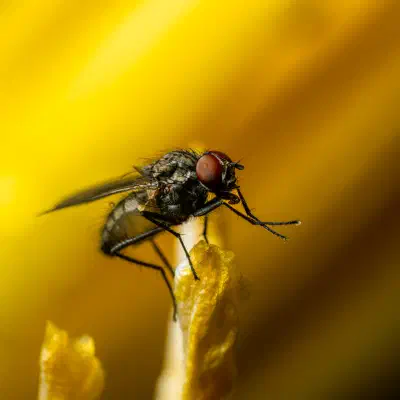
This is not intended to be a dry lexicon. Personal stories and sensitive articles form the framework for our pictures: „“Yuck,” said the poodle – A lesser housefly in the dog salon“ We really ought to talk about the value of every living being.

Full post

“Yuck,” said the poodle – A lesser housefly in the dog salon

Black Garden Ant – image 1
Black Garden Ant – image 2
Black Garden Ant – image 3
Black Garden Ant – image 4
Black Garden Ant – image 5
Black Garden Ant – image 6
Black Garden Ant – image 7
Black Garden Ant – image 8
Black Garden Ant – image 9
Black Garden Ant – image 10
Black Garden Ant – image 11
Black Garden Ant – image 12
Black Garden Ant – image 13
Black Garden Ant – image 14
Black Garden Ant – image 15
Black Garden Ant – image 16
Black Garden Ant – image 17
Black Garden Ant – image 18
Black Garden Ant – image 19
Black Garden Ant – image 20
Black Garden Ant – image 21
Black Garden Ant – image 22
Black Garden Ant – image 23