Life cycle
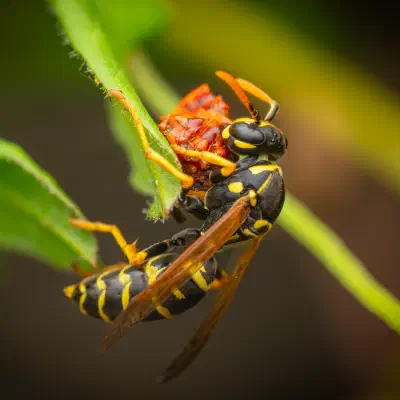
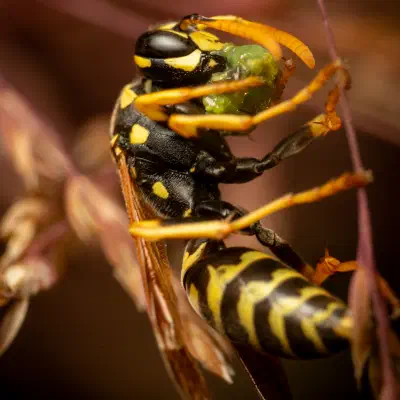
Overwintering founding queens, or foundresses, spend about a month in the spring constructing a nest and provisioning offspring, the first of which become daughter workers in the growing colony. One or more foundresses begin the colonies in the spring. If multiple foundresses are present, the one that lays the most eggs will be the dominant queen. The remaining foundresses will be subordinate and do work to help the colony.
Males are produced later, and when they start to appear, a few daughters may mate and leave their nest to become foundresses the next season. The switch from production of workers to production of future foundresses (gynes) is not utterly abrupt, as has been considered the case for other species of Polistes. Males are often distinguished from female wasps by their curled antennae and lack of a stinger.
The colony disperses in the late summer, with only males and future foundresses produced instead of workers, and individuals frequently clustering in groups (called a hibernaculum) to overwinter. Hibernation does not usually take place on former nest sites.
Social hierarchies established within the colony can also influence individual P. dominula’s longevity. Queens live longer than the males or the workers because the workers protect the queens from predators. The queen starts laying eggs in late March or early April, immediately after the “founding phase” of the newly built nest. Then, the colony disperses in the late summer, with only males and future foundresses produced instead of workers. Although individuals frequently cluster in groups (to overwinter), neither most nonreproductive males nor nonreproductive females survive the winter because their lifespans are shorter than a year (around 11 months) and they best survive during warm temperatures. Queens may survive the winter by hibernating.