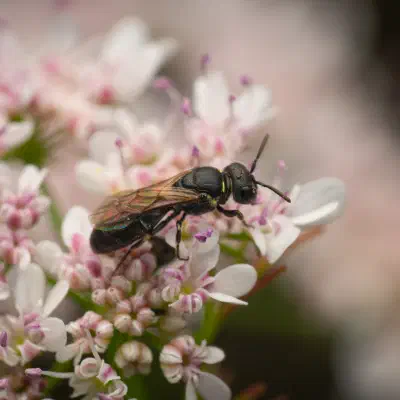

Description
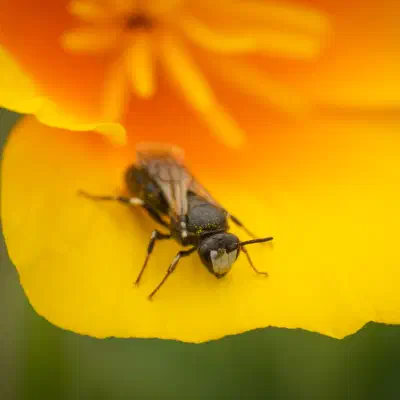
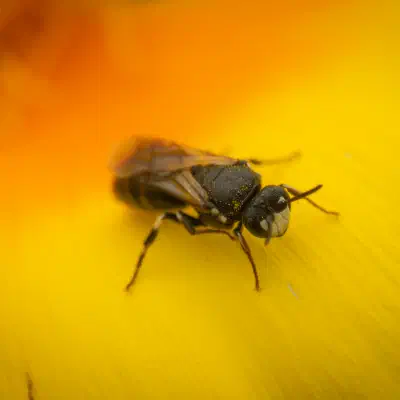
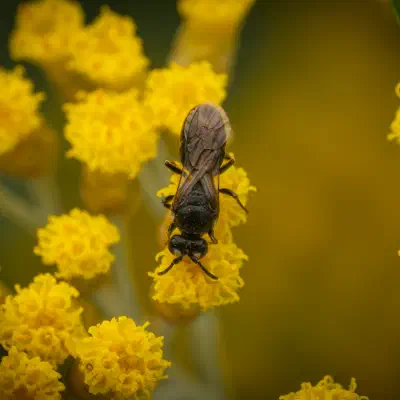
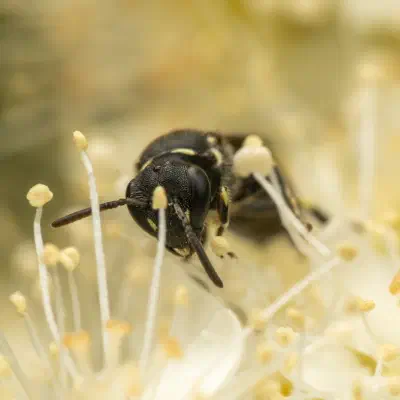
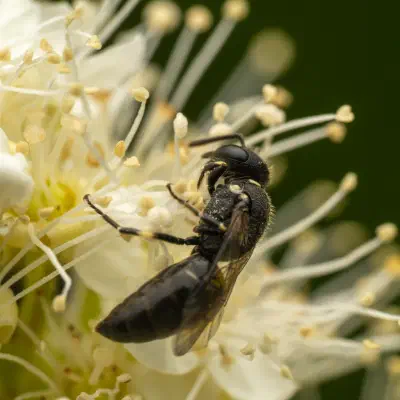
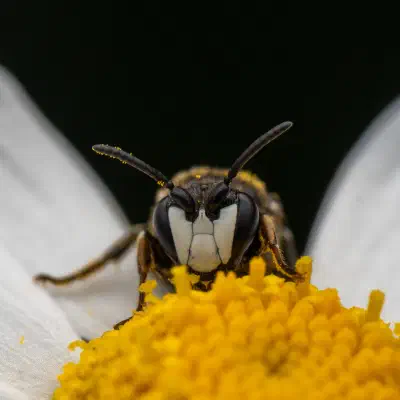
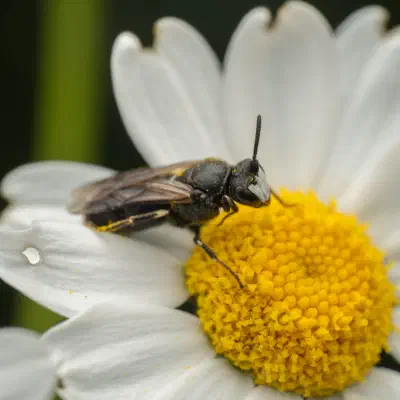
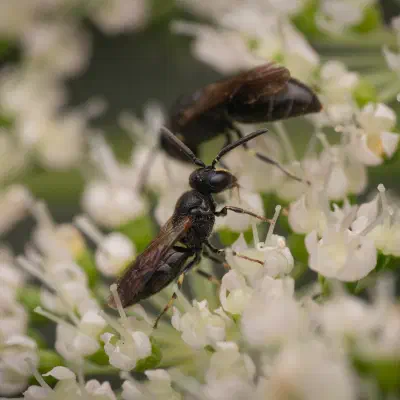
The genus of bees consists of generally small, black-and-yellow or black-and-white wasp-like species. The resemblance to wasps is enhanced by the absence of a scopa, which is atypical among bees. The body form of this genus is described as hylaeiform (slender); the hairs inconspicuous without magnification; and scopa inconspicuous or absent. Males have an intermediate glossal shape with a small to distinct median apical glossal point. Hylaeus carry pollen in the crop, rather than externally, and regurgitate it into the cell where it will be used as larval food. Like most colletids, the liquid provisions are sealed inside a membranous cellophane-like cell lining. Nests are typically made in dead twigs or plant stems, or other similarly small natural cavities, rather than constructing or excavating their own nests as in many other bees. Some species of Hylaeus have been associated with strong scents. In particular, European species such as Hylaeus prosopis are characterised by having a strong “lemon-like” scent. Further investigation has attributed this scent to a substance generated by the mandibular glands of both males and females, composed of neral and geranial. It is believed this substance is used as a defensive secretion and/or a social pheromone.