Description
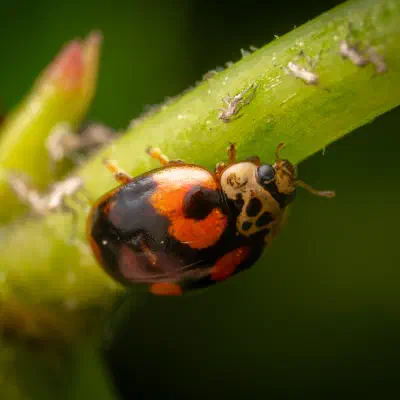
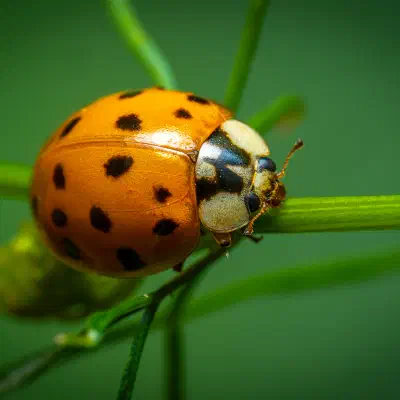
Coccinellids range in size from 0.8 to 18 mm (0.03–0.7 in). Adult females tend to be slightly larger than males. They are generally oval with domed backs and flattened undersides. They have large compound eyes and clubbed antennae with seven to eleven segments. The powerful mandibles (equivalent to jaws) typically have pairs of “teeth” which face each other. The coccinellid prothorax (front of thorax) is broad and convex, and can cover the back of the head. Being beetles, they have hardened, non-overlapping forewings, known as elytra, which cover up the more fragile hindwings when the insects are not in flight. Their legs are relatively short, with a tarsal formula of 4-4-4 (may appear 3-3-3 because the third segment of each tarsus is reduced). The tarsus (end of leg) has two claws at the tip.
As adults, these beetles differ from their closest relatives with the following morphological characteristics:
Five pairs of spiracles (holes) on the abdomen
A tentorium (internal supports inside the head) with separated branches at the front and no bridge
No line dividing the frons and clypeus (frontoclypeal suture)
Maxillary palps with non-needle-shaped tips,
Divided galea and lacinia (lobes at the end of the mouthparts)
Smaller molar (flattened) area of the mandible
Coxal cavities (holes where the leg articulates with the thorax) that open from the back in the front of the thorax and from the front in the middle of the thorax
Epimeron (corner plates) on the metathorax with parallel edges
Lines on the second abdominal sternum
Tube-shaped, siphon-like genitalia in the male
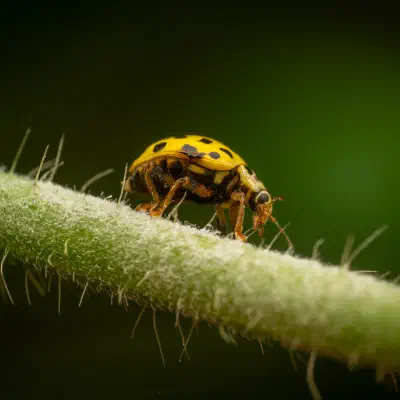
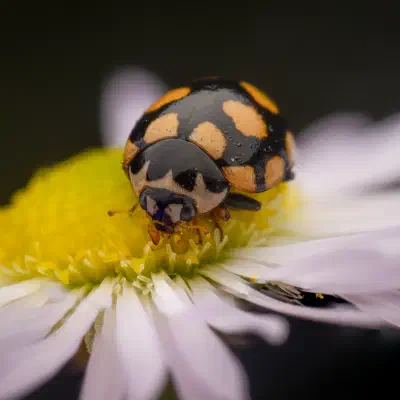
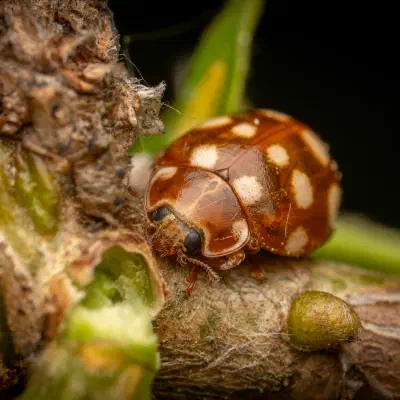
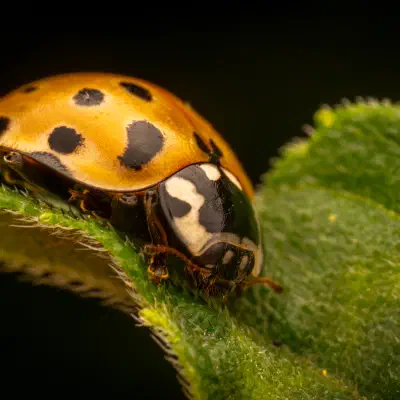
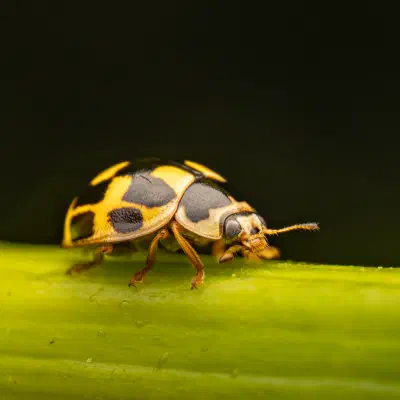
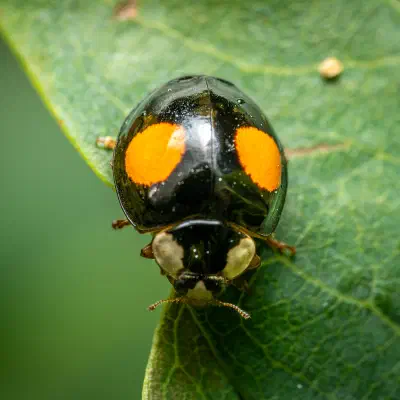
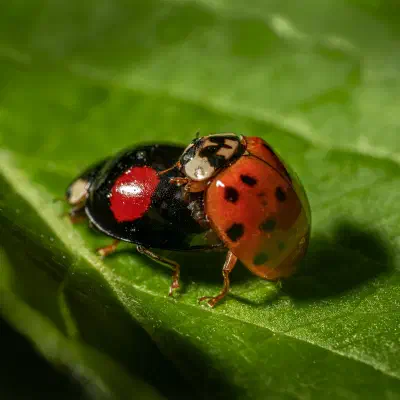
Coccinellids are often distinctively coloured and patterned. The elytron may be light with dark spots or dark with light spots. Light areas are typically yellow, red, orange or brown, and the spots vary in size and shape and numbers. Some species have striped or checkered patterns. The pigment carotene creates the lighter colours, and melanins create darker colours. Other parts of the body also vary in colouration. These colour patterns typically serve as warning colouration, but some can act as camouflage, attract mates or even regulate heat. Several individual species may display polymorphism and even change colour between seasons.
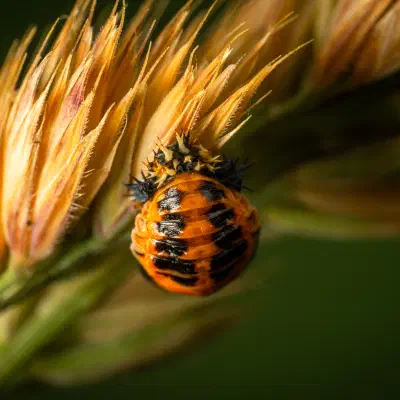
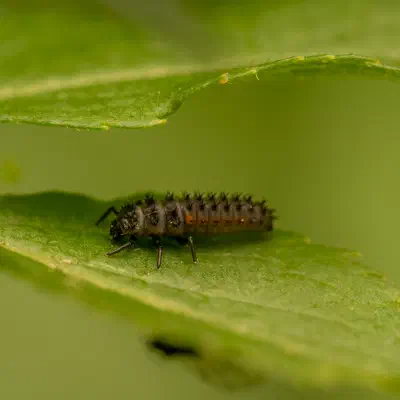
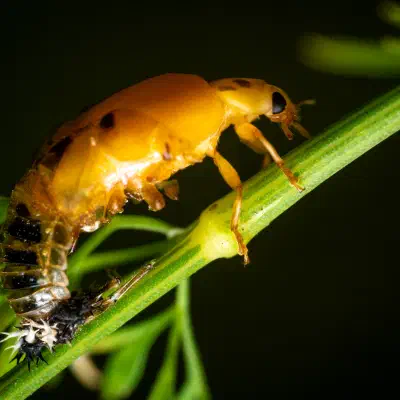
Coccinellid larvae are elongated with square heads. They are covered in hairs or setae, the abdominal segments, in particular, each having six divided into pairs, and one to three segmented antennae. Their colouration varies from grey, blue-grey, grey-brown or brown and spotted with white, yellow, red or orange. They tend to brighten as they get closer to adulthood.