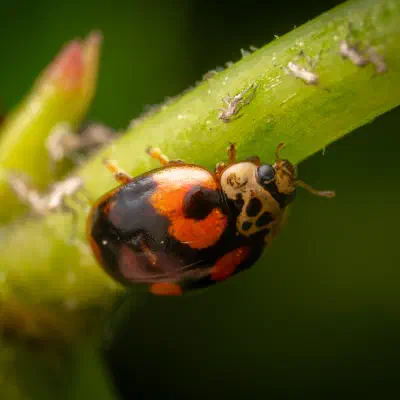
10-spot Ladybird (lat. Adalia decempunctata)

10-spot Ladybird
Scroll to read on

Adalia decempunctata, commonly known as the ten-spotted ladybird or ten-spotted lady beetle, is a carnivorous beetle of the family Coccinellidae.

Varietas

Varietas include:

Adalia decempunctata var. lutea (Rossi) Adalia decempunctata var. quattuorpunctata (Linnaeus) Adalia decempunctata var. octopunctata Müller Adalia decempunctata var. lateripunctata Gradl. Adalia decempunctata var. humeralis Schaller Adalia decempunctata var. guttatopunctata (Linnaeus) Adalia decempunctata var. decempustulata (Linnaeus) Adalia decempunctata var. bipustulata Herbst

Distribution

Adalia decempunctata is a common Palearctic species found in Europe, North Africa, European Russia, the Caucasus, Siberia, Belarus, Ukraine, Moldova, Transcaucasia and western Asia.

Description

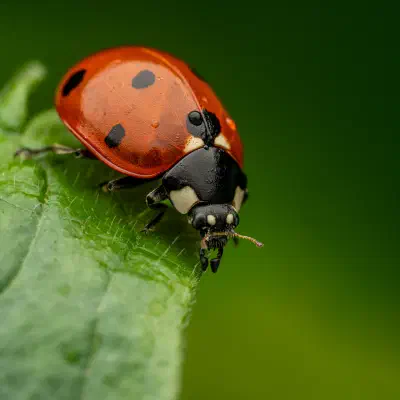
Adalia decempunctata can reach a body length of about 3.5–5 mm (0.14–0.20 in). This species is highly variable. Individuals may in fact have a red, orange or brown ground colour and between 0 and 12 distinct dark elytral spots, although rarely more spots have been recorded, up to 15 spots. These beetles have a glabrous body, with an almost round form. Legs and antennae are usually brown or orange. The species includes eight varietas, with three basic forms. The light form shows five to seven black spots on the pronotum and several black spots on the red-orange elytra. The dark form is mainly black or brown in color, and the pronotum has a light border on the sides and front. The mixed form has black or brown in color elytra, each with five orange to red spots. Sometimes these ladybirds have no spots at all.

Biology

It occurs in western European broadleaf forests eastern deciduous forests, Sarmatic mixed forests, at forest edges, and in parks and gardens wastelands and in Eurasian Steppe, Pannonian Steppe biotopes. It is found on bushes and deciduous trees, on grasses, under bark, in moss on trees, in leaf litter, on brushwood, coarse woody debris and in alluvial soil. The insects feed on aphids on trees and bushes. The adults overwinter in litter and among fallen leaves.

Ancestry graph

Arthropods Insects Beetles Lady Beetles 10-spot Ladybird 16-spot Ladybird 22-spot Ladybird Asian Lady Beetle Coccinula quatuordecimpustulata Cream-spotted Ladybird Eyed Ladybird Beetle Fourteen-spotted Lady Beetle Hieroglyphic Lady Beetle Kidney-spot Ladybird Pine Ladybird Seven-spotted Lady Beetle Water Ladybird

Copyright and source information

This project wouldn’t exist without Wikipedia and iNaturalist! As citizen scientists, we benefit enormously from the community’s shared knowledge. This article uses material from Wikipedia and iNaturalist. The images on this website are licensed under Attribution-NonCommercial-ShareAlike 4.0 International.

This article uses material from the Wikipedia article Adalia decempunctata the free encyclopedia Wikipedia which is released under Creative Commons Attribution-ShareAlike 4.0 International License). On Wikipedia a list of authors is available.

This is not intended to be a dry lexicon. Personal stories and sensitive articles form the framework for our pictures: „Dance of love — our exclusive interview“ Lisa and Linus, two large dragonflies, share their personal mating experiences, often described as a dance, shedding light on the associated challenges and misunderstandings.

Full post

Dance of love — our exclusive interview