



Description
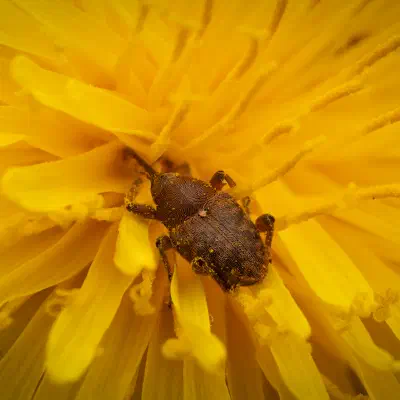
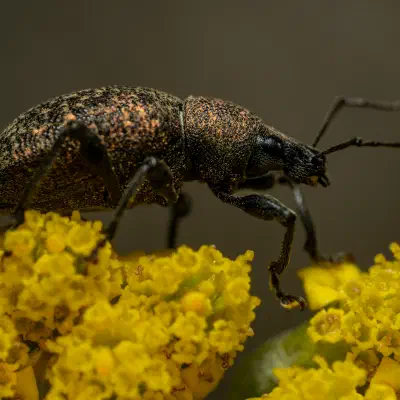
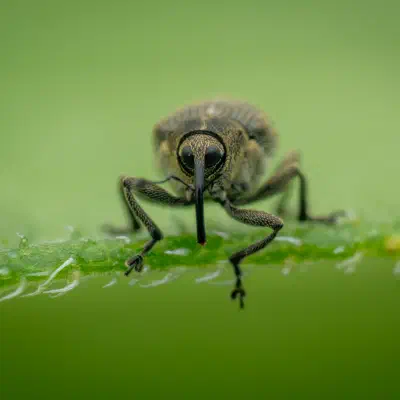
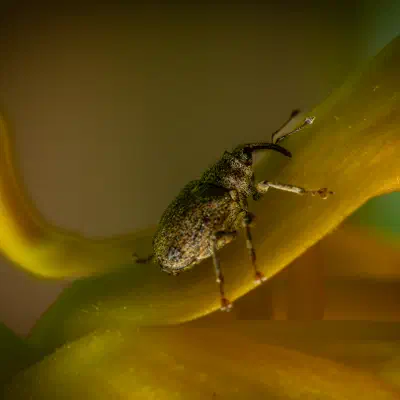
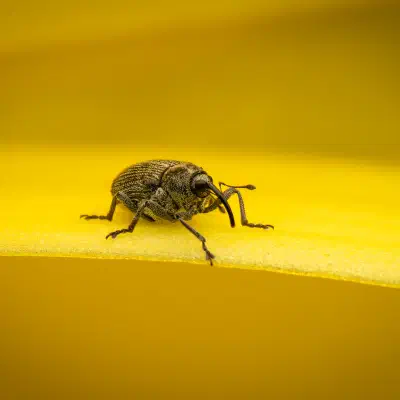
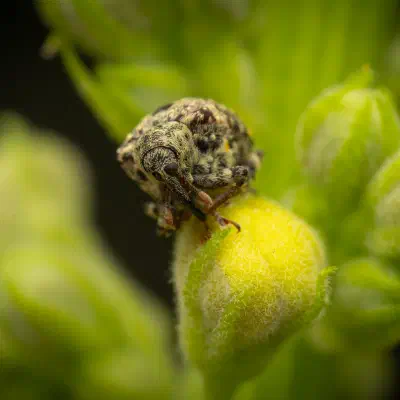
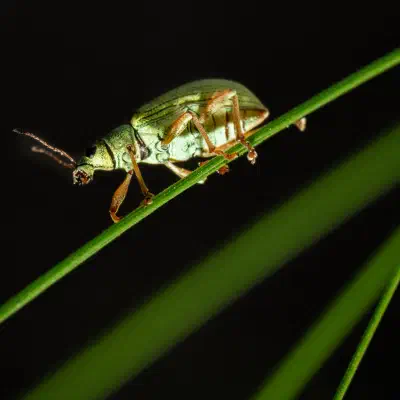
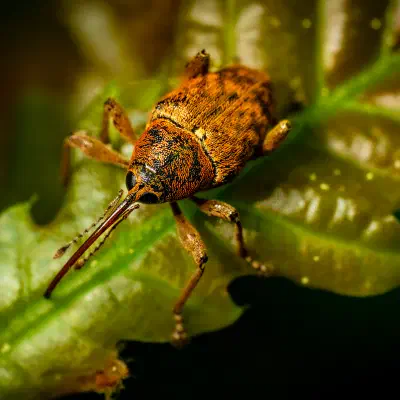
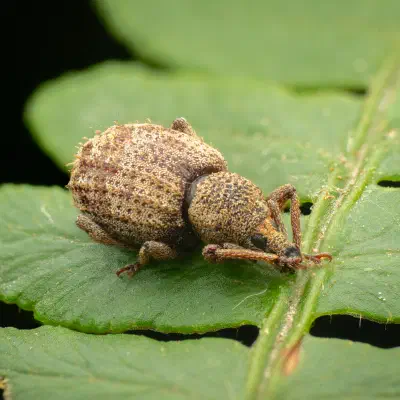
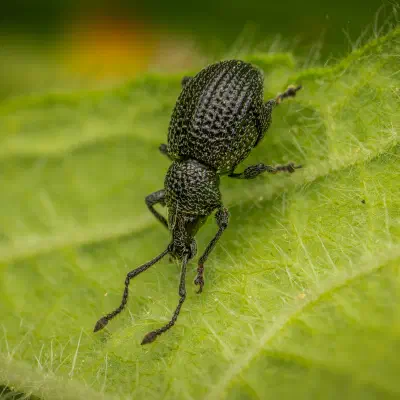
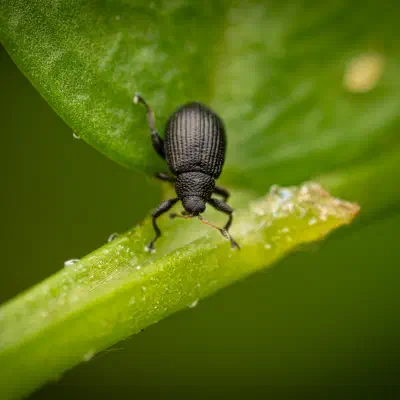
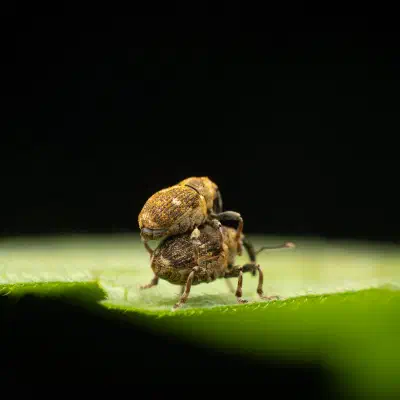
Adult Curculionidae can be recognised by the well-developed, downwards-curved snout (rostrum) possessed by many species, though the rostrum is sometimes short (e.g. Entiminae). They have elbowed antennae that end in clubs, and the first antennal segment often fits into a groove in the side of the rostrum. The body tends to be robust, convex, heavily sclerotised and covered in scales or bristles. Curculionidae range in size from 1–35 mm long, usually being 5–15 mm long. Most Curculionidae are sexually dimorphic with females (compared to males) having antennae positioned more basally and a longer, thinner rostrum. Larval Curculionidae are C-shaped and lightly sclerotised, with minute antennae, robust mandibles and no legs.
Most weevils feed on plants as larvae and adults, and they include important pests of cultivated plants that chew holes in fruits, nuts and other parts. The long rostrum possessed by most adult weevils is used by females to help lay eggs (oviposit) inside plant tissue. Some feed on rotten wood or bark (e.g. Cossoninae and Cryptorhynchinae), and some are wood-borers that feed on ambrosia fungi (Platypodinae and some Scolytinae). Although pesticide resistance hasn’t historically been an issue with these insects, recently a mutation was discovered in association with the voltage-gated sodium channel in the species Sitophilus zeamais, indicating there is a lot to learn about how these insects adapt to changing environments.


