Oviposition
Probably the majority of female tachinids lay white, ovoid eggs with flat undersides onto the skin of the host insect. Imms mentions the genera Gymnosoma, Thrixion, Winthemia, and Eutachina as examples. In a closely related strategy some genera are effectively ovoviviparous (some authorities prefer the term ovolarviparous) and deposit a hatching larva onto the host. For example, this occurs in Tachinidae species which parasitize the butterfly Danaus chrysippus in Ghana. The free larvae immediately bore into the host’s body. Illustrative genera include Exorista and Voria. Many tachinid eggs hatch quickly, having partly developed inside the mother’s uterus, which is long and often coiled for retaining developing eggs. However, it is suggested that the primitive state probably is to stick unembryonated eggs to the surface of the host.
Many other species inject eggs into the host’s body, using the extensible, penetrating part of their ovipositor, sometimes called the oviscapt, which roughly translates to “egg digger”. Species in the genera Ocyptera, Alophora, and Compsilura are examples.
In many species only one egg is laid on or in any individual host, and accordingly such an egg tends to be large, as is typical for eggs laid in small numbers. They are large enough to be clearly visible if stuck onto the outside of the host, and they generally are so firmly stuck that eggs cannot be removed from the skin of the host without killing them. Furthermore, scientists have observed in studies with the host cabbage looper that being glued to the host insect helps maggots burrow into the larva, where they remain until fully developed.
Yet another strategy of oviposition among some Tachinidae is to lay large numbers of small, darkly coloured eggs on the food plants of the host species. Sturmia, Zenillia, and Gonia are such genera.
Many tachinids are important natural enemies of major insect pests, and some species actually are used in biological pest control; for example, some species of tachinid flies have been introduced into North America from their native lands as biocontrols to suppress populations of alien pests. Conversely, certain tachinid flies that prey on useful insects are themselves considered as pests; they can present troublesome problems in the sericulture industry by attacking silkworm larvae. One particularly notorious silkworm pest is the Uzi fly (Exorista bombycis).
Another reproductive strategy is to leave the eggs in the host’s environment; for example, the female might lay on leaves, where the host is likely to ingest them. Some tachinids that are parasitoids of stem-boring caterpillars deposit eggs outside the host’s burrow, letting the first instar larvae do the work of finding the host for themselves. In other species, the maggots use an ambush technique, waiting for the host to pass and then attacking it and burrowing into its body.
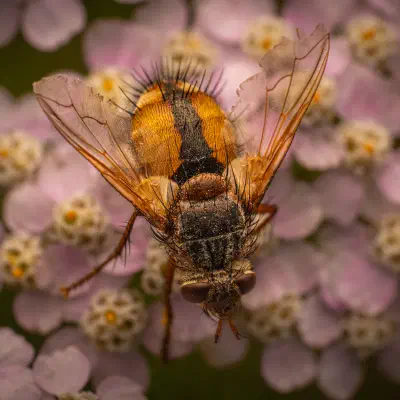
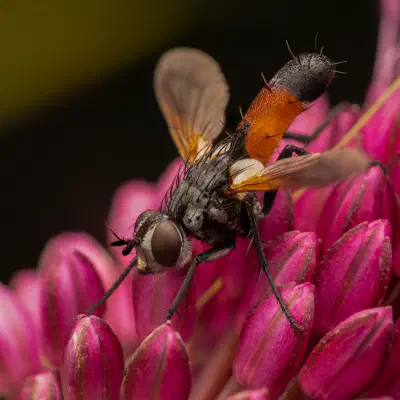
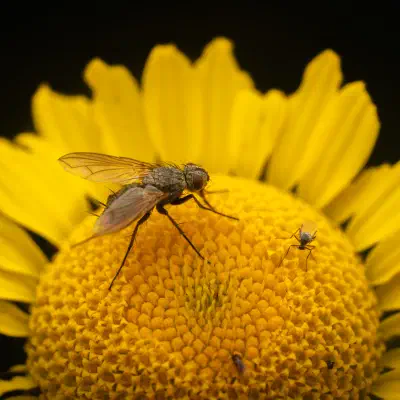
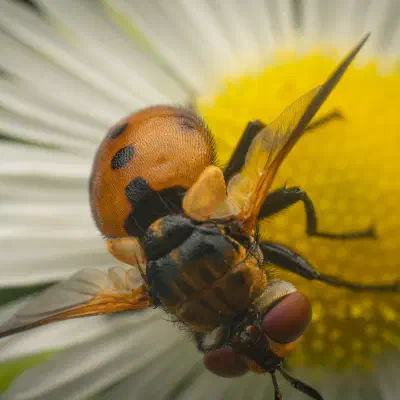
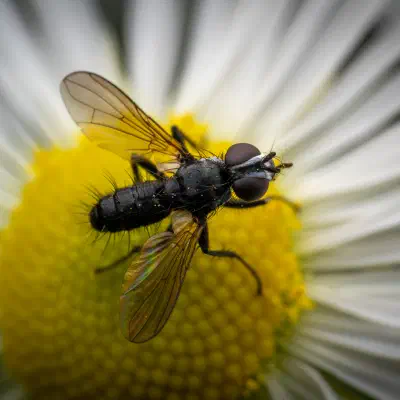
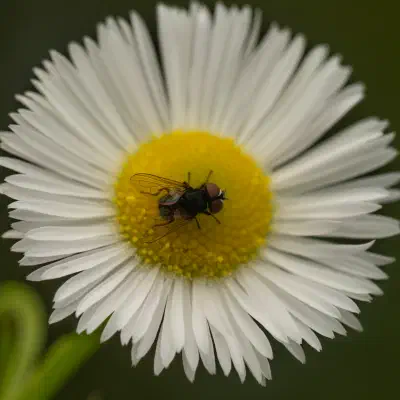
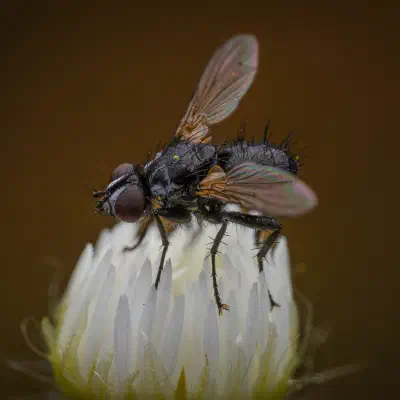
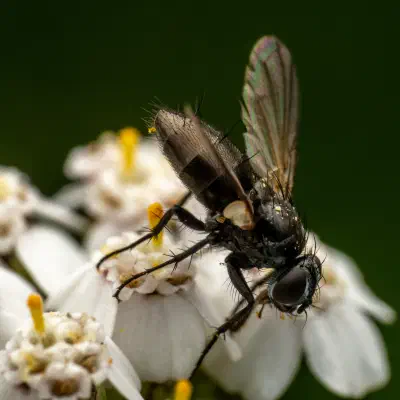
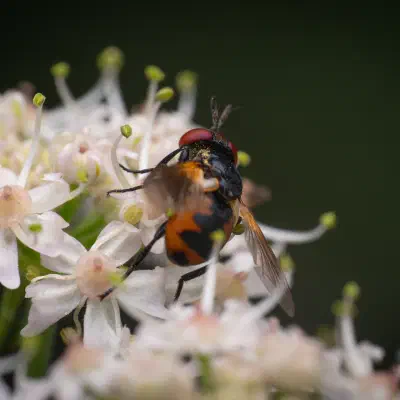
Adult tachinids are not parasitic, but either do not feed at all or visit flowers, decaying matter, or similar sources of energy to sustain themselves until they have concluded their procreative activities. Their non-parasitic behaviour after eclosion from the pupa is what justifies the application of the term “protelean”.