
Ecology
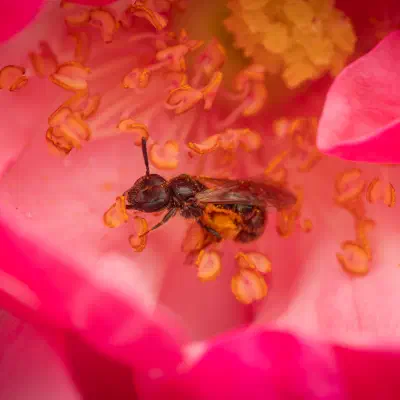
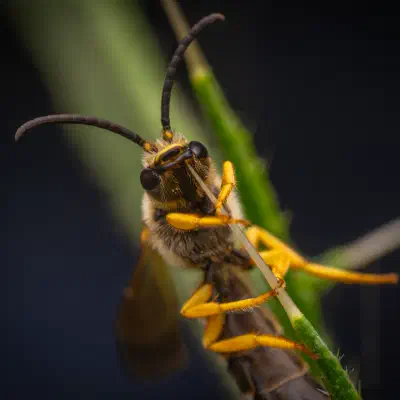
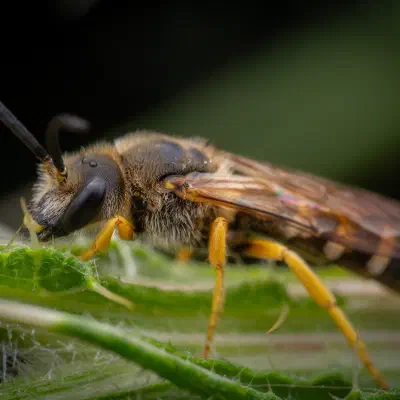
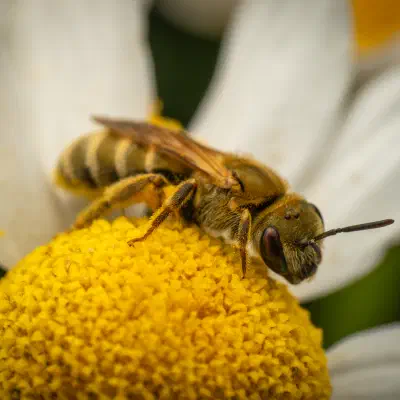
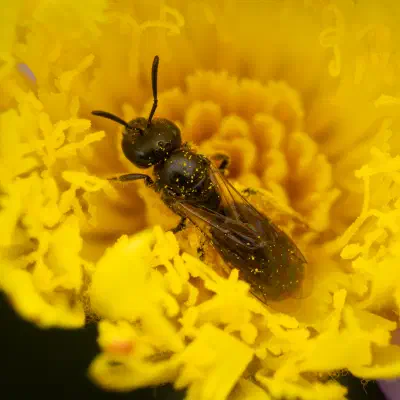
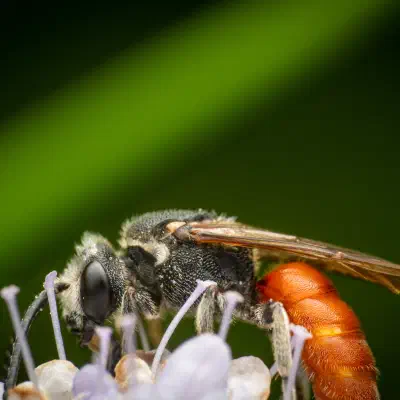
Most halictids nest in the ground, often in habitats like clay soil and river banks, though a few nest in wood. They mass-provision their young; a mass of pollen and nectar is formed inside a waterproof cell, an egg laid upon it, and the cell sealed off, so the larva is given all of its food at one time, as opposed to “progressive provisioning”, where a larva is fed repeatedly as it grows, as in honey bees. Some species line their tunnels with lactone secretions to help workers return to the nest. It is thought that each individual bee has its own unique chemical signature. All species (except for kleptoparasites) are pollen feeders and may be important pollinators.