Rose Aphid (lat. Macrosiphum rosae)

Rose Aphid

Macrosiphum rosae is a species of aphids. It infests rosebushes, especially around new buds.

Rose Aphid – Description

Description

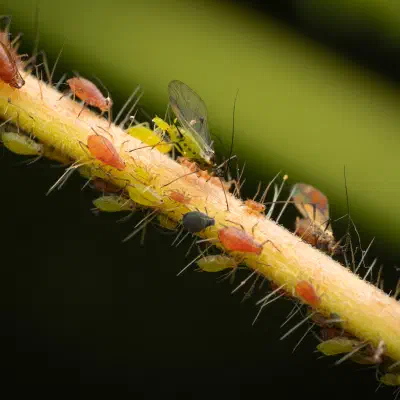
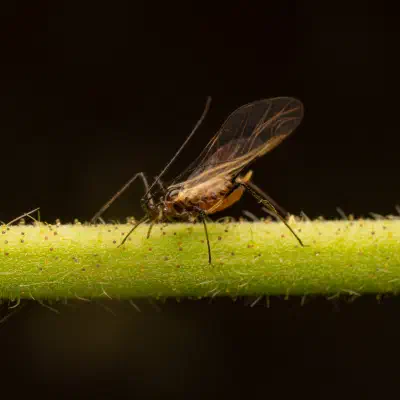
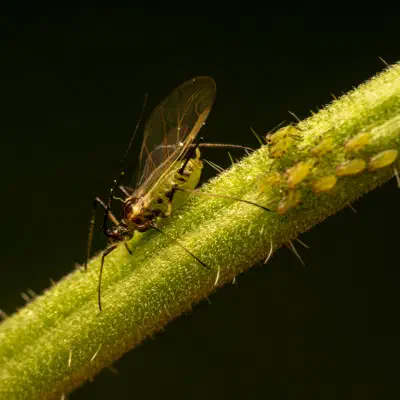
Wingless adults have a spindle-shaped body and are between 1.7 and 3.6 mm (0.07 and 0.14 in) long, slender, varying in colour from green to pink and reddish-brown. The antennae and legs are relatively long, and the cauda (tail-like protrusion) is pale. The siphunculi (pair of small backward-pointing tubes on the abdomen) are long, tapered and black, which distinguishes this aphid from Metopolophium dirhodum, the rose-grain aphid, which has pale siphunculi. Winged individuals are between 2.2 and 3.4 mm (0.09 and 0.13 in) in length, varying from green to pinkish-brown, and having distinctive black lateral markings.

Rose Aphid – Life cycle

Life cycle

This aphid mainly overwinters as eggs on roses, but in mild winters, some adults may survive until spring. The eggs hatch in spring into wingless females which reproduce parthenogenetically, and large colonies can quickly develop, being mainly found on the tips of shoots and around flower buds. The heaviest population densities are in June and July in the northern hemisphere, just when the bushes are flowering, and thereafter the populations decline. This is because at this time of year, some winged females develop, which migrate to other rose bushes or to certain secondary hosts such as holly, teasel, valerian, Knautia and scabious. With the onset of autumn, winged males are also produced, the insects return to roses and the eggs are laid.

Damage done

Rose aphids damage the aesthetic appearance of rosebushes by contorting the flowers and foliage, and by the sticky honeydew they produce, which often provides a surface on which sooty moulds develop.

Data related to Rose aphid at Wikispecies

Ancestry graph

Arthropods Insects Plant-parasitic Hemipterans Aphidoidea Aphids Elder Aphid Macrosiphini Rose Aphid

Copyright and source information

This project wouldn’t exist without Wikipedia and iNaturalist! As citizen scientists, we benefit enormously from the community’s shared knowledge. This article uses material from Wikipedia and iNaturalist. The images on this website are licensed under Attribution-NonCommercial-ShareAlike 4.0 International.

This article uses material from the Wikipedia article Macrosiphum rosae the free encyclopedia Wikipedia which is released under Creative Commons Attribution-ShareAlike 4.0 International License). On Wikipedia a list of authors is available.

This is not intended to be a dry lexicon. Personal stories and sensitive articles form the framework for our pictures: „The last refuge“ In a world suffering from extreme heat, Mario, the mite, discovers a legendary natural refuge that promises protection and cooling. His journey underlines the urgent need to secure sustainable habitats for all species.

Full post

The last refuge

Rose Aphid – image 1
Rose Aphid – image 2
Rose Aphid – image 3