


Characteristics
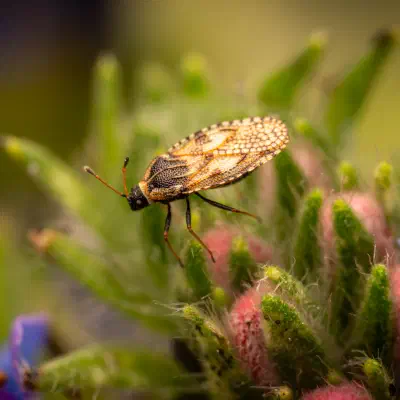
They have two main life stages, nymphal and adult. The nymphal period consists of 5 instar stages each similar but unique in their own manners lasting a total of 8-16 days. The first instar stage occurs after hatching and lasts typically 2-4 days, the molt is oblong shaped and transforms from a pale brown to a brownish-black coloured cuticle. The second instar also typically lasts 2-4 days, it remains a dark brown-black colour but the molt is rounded instead, the abdominal surface have indications of spinal projections along the body’s margin. The third instar typically lasts 2-3 days and the molt remains round but larger in size with short cephalic spines. The fourth instar lasts 1-3 days and the molt continues to grow in size, large cephalic spines as well as a wider paranotum on the thorax are observed. Finally, the fifth instar stage lasts 1-2 days and is very similar to the previous stage but the molt transforms back into an elongated body form. This concludes the nymphal stage, transforming the cuticle into its adult life form. The adult life forms are quite small with typical body size ranging anywhere from 2-10 mm (0.08-0.39 in), varying in shape, from quadrate, broadly oval or narrow. Tingidae are sexually differentiated with females being larger and having an ovipositor while the males are smaller with a genital capsule. They are cryptic in colouration, varying from the whitish-yellow range to dark brown and black. They have very intricate partially transparent hyaline forewings and pronotum wings, the detailing is lace-like giving Tingidae the common name “lace bug”. On the thorax is the pronotum as well as a hollow outgrowth on the dorso-lateral region. They have 2 sets of wings; a pair of forewings and pronotum wings, which vary in size between individuals, typically having reduced forewings and larger pronotum wings. Despite their apparent beauty, the wings are highly decorative and adults are poor fliers, carrying out their sedentary lifestyle on leaves and the shoots of plants. Due to their lifestyle, Tingidae require unique cephalic characteristics. Their heads are either fully concealed or partially obscured under a hood-like projection arising from the pronotum. Some develop spine-like projections while others do not, and all possess a 4-way segmented antennae, with the third one being the longest. The lack of ocelli is a distinguishing feature of the family Tingidae. Due to their habitat, their diet consists of high quality sap which requires their mouth pieces to be both a sucker and a piercer. Tingidae have thin elongated legs with tarsi divided into two tarsomeres, allowing them to maneuver around the plant they are inhabiting.


