Description
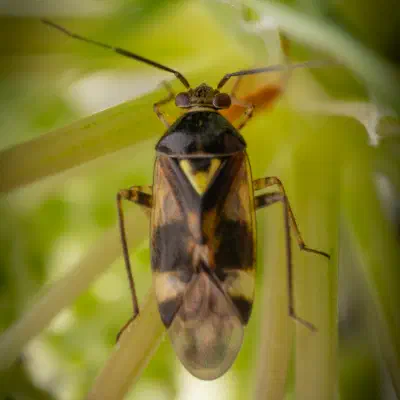
It is 5 millimetres (0.20 in) long and is elongated with males often having three pale spots on the scutellum.

Orthops basalis is a species of plant bugs belonging to the family Miridae, subfamily Mirinae that can be found everywhere in Europe except for Azores, Bosnia and Herzegovina Faroe Islands, Iceland and Cyprus.
It is 5 millimetres (0.20 in) long and is elongated with males often having three pale spots on the scutellum.
Orthops basalis lives on various Apiaceae and have no specialization in certain genera. Both the nymphs and the adult bugs are often on the flowers, especially on the stems directly below the flowers. There they suck on the immature reproductive organs.
Orthops basalis

This article uses material from the Wikipedia article Orthops basalis the free encyclopedia Wikipedia which is released under Creative Commons Attribution-ShareAlike 4.0 International License). On Wikipedia a list of authors is available.
This is not intended to be a dry lexicon. Personal stories and sensitive articles form the framework for our pictures: „The last refuge“
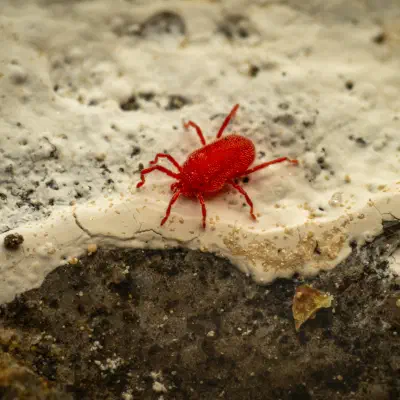
In a world suffering from extreme heat, Mario, the mite, discovers a legendary natural refuge that promises protection and cooling. His journey underlines the urgent need to secure sustainable habitats for all species.